
Meta Take One
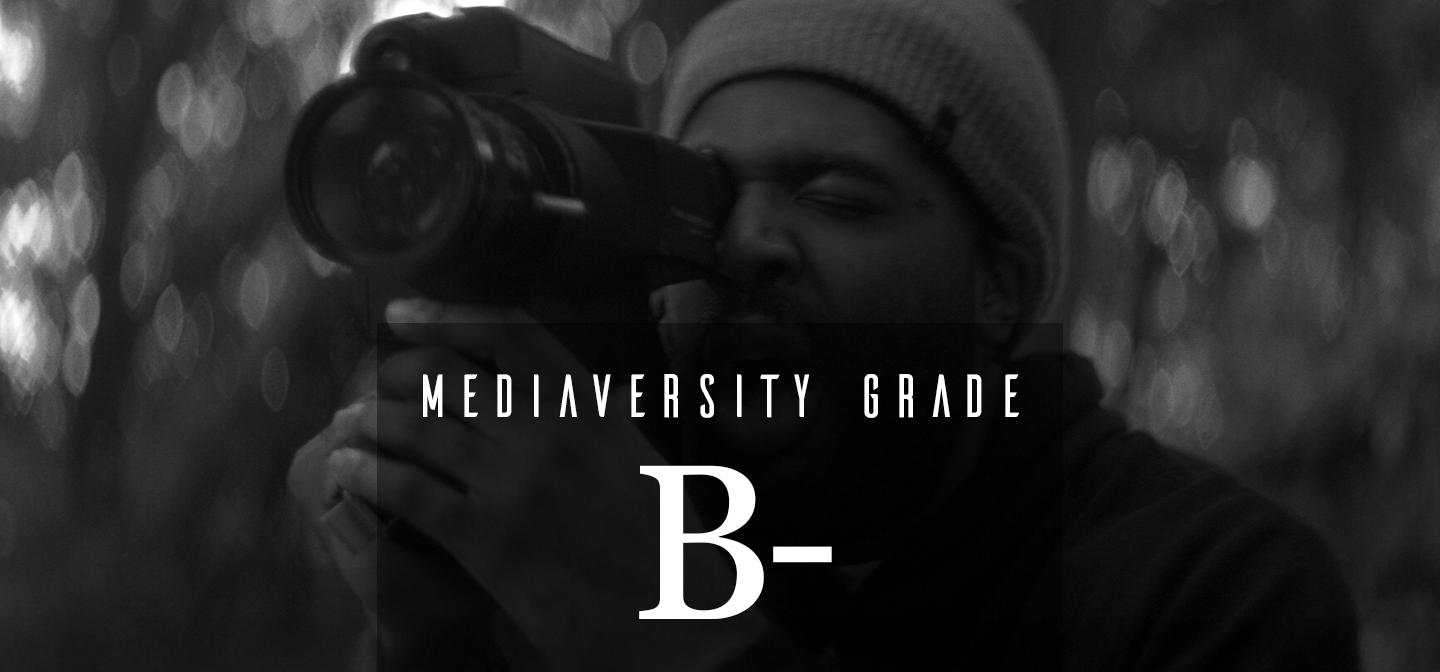
“Meta Take One dares to put Black men in a role Hollywood almost never lets them play: the doomed, self-destructive genius.”
Title: Meta Take One (2025)
Directors: Ryan Dutter 👨🏼🇺🇸 and John Dierre 👨🏾🇺🇸
Writers: Ryan Dutter 👨🏼🇺🇸 and John Dierre 👨🏾🇺🇸
Reviewed by Jose Solís 👨🏽🇭🇳🌈
Note: This review was commissioned. The content and methodology remain 100% independent and in line with Mediaversity's non-commissioned reviews.
—MAJOR SPOILERS AHEAD—
Technical: 4.25/5
Meta Take One earns its comparisons to Drive (2011) and Michael Mann before the opening scene even finishes its first fake-out. A crew, wearing balaclavas and packing heat, turns out to be filming a robbery scene in a low-budget movie. From there, the film never lets go of its jazzy, nocturnal energy.
Black-and-white 35mm widescreen carries most of the runtime, snapping into grainy color in a narrower, 16mm format the instant someone on screen picks up a camera. The trick stops being a gimmick and becomes the film’s main argument about where “real life” ends and the main character, John’s, begins. (John is the guerrilla-style director of the aforementioned low-budget movie, and the film is mostly seen through his artistic, but not always empathic, eye.)
Late-night driving scenes between John and his lead actor, Damon (Ernest Emmanuel Peeples), breathe like Pulp Fiction (1994) at its most conversational. The pacing feels unhurried, even as the robbery turns into a shocking accidental shooting and events spiral. Elsewhere, the film goes full David Lynch: A brain floats into frame in a clear Eraserhead (1977) nod, and an entire sequence lingers on developing fluid and emulsion with the fetishistic patience of a Breaking Bad (2008–13) cook scene. The camera’s love for its own materials—chemicals, grain, light—never feels like style for its own sake. It's mesmerizing and the closest thing the film has to a thesis statement.
Gender: 2/5
Does it pass the Bechdel Test? NOPE
Women have limited screen time in Meta Take One, and the ones who do appear never share a scene with one another. Tess (Aminah Williams), the film-within-the-film’s cinematographer, is purely reactive. She exists to look worried or deliver side-eye, not to desire or want anything.
On the other hand, Yvonne (Laura Poindexter), John’s mother, has a confrontation scene with her son that forms the emotional center of the entire film. Shot almost entirely in close-up, it plays as an homage to Ruby Dee’s monologue in American Gangster (2007)—more on the film's obsession with Denzel to come—completely stripped of spectacle. The camera holds on her face as she asks her son to reckon with what he’s done. Unfortunately, one devastating female-led sequence doesn’t rescue a film where women otherwise are only talked at, ignored, or simply absent.
Race: 3.75/5
Here’s where Meta Take One gets interesting, complex, and messy. The “obsessive genius who’ll burn everything down to finish the work” is one of cinema’s most durable archetypes, and it’s almost always reserved for white men. Think Daniel Day-Lewis in There Will Be Blood (2007), or any number of auteur biopics. A few years ago, Cillian Murphy won an Oscar for his tortured take on Oppenheimer (2023).
Meta Take One hands that role to a Black man instead and lets John’s addiction to his own vision play out with the same moral seriousness usually only afforded white protagonists. The Denzel Washington references and John’s constant refrain of “give me John Q” aren’t just Denzel Easter eggs; rather, they’re indicators of John reaching for a specific lineage of Black leading-man gravity, even as the film slyly asks whether John deserves to inherit it.
But Meta Take One doesn’t stop there, and that’s where things get complicated. Damon is repeatedly promised that he’ll become “a movie star,” and the narrative seems to want us to sit with an uncomfortable question: For Black men in America, how much of “being seen” by a camera has actually meant dying on screen? It’s a bold thing to hint, and to its credit, the film doesn’t spell it out cheaply.
The casting choices around this feel deliberate rather than incidental, down to the unseen gang members referenced as Filipino rather than defaulting to another Black gang—a small but pointed refusal of the easiest cliché. Still, the film leans hard on gang-affiliation backstory for several of its Black characters, with repeated references to Atlanta’s South Side, and it ultimately kills its Black director at the hands of other Black men—not by the police or any external system.
Toni Morrison once said that the true function of racism is distraction, keeping people focused on defending their humanity instead of doing their work. Meta Take One seems to understand that idea intuitively: John’s undoing isn’t racism directly, it’s his own obsession with creating "cinema" regardless of the repercussions it has on others' lives. But by resolving its cycle of violence by having a Black man shoot another Black man, rather than confronting the systems it gestures at, the ending risks pulling its punch right when the film needs to land it. Elsewhere, Rob the Editor (James Choi) barely registers as a presence, appearing too briefly to add much beyond his credited name in what’s otherwise an almost all-Black cast.
Bonus for Disability: +0.75
Damon is played by Peeples, a Black actor with albinism, and the film never turns that into a plot point or a lesson. Instead, Damon serves as John a moral conscience, offering John opportunities to see that making his movie is having a negative effect on those around him. Meanwhile, Rob the Editor's facial difference/bandaged head is never explained, and it plays more like a horror-movie flourish than grounded characterization.
Bonus for Age: +0.25
As several studies have shown, including this one by the Geena Davis Institute from 2025, female characters over 50 are significantly underrepresented in movies—particularly characters of color. In Meta Take One, Yvonne might not get a lot of screentime, but she gives the film a powerful moment of emotional reckoning. The substance and craft of her scene—confronting her son rather than simply worrying over him—nudges this past a neutral +0.00.
Mediaversity Grade: C+ 3.67/5
Meta Take One is a self-funded, visual achievement that dares to put Black men in a role Hollywood almost never lets them play: the doomed, self-destructive genius. But its women are accessories, and its final nod toward Black death as spectacle raises a question sharper than the film seems willing to answer.
Like Meta Take One? Try these other titles starring tortured Black male leads.
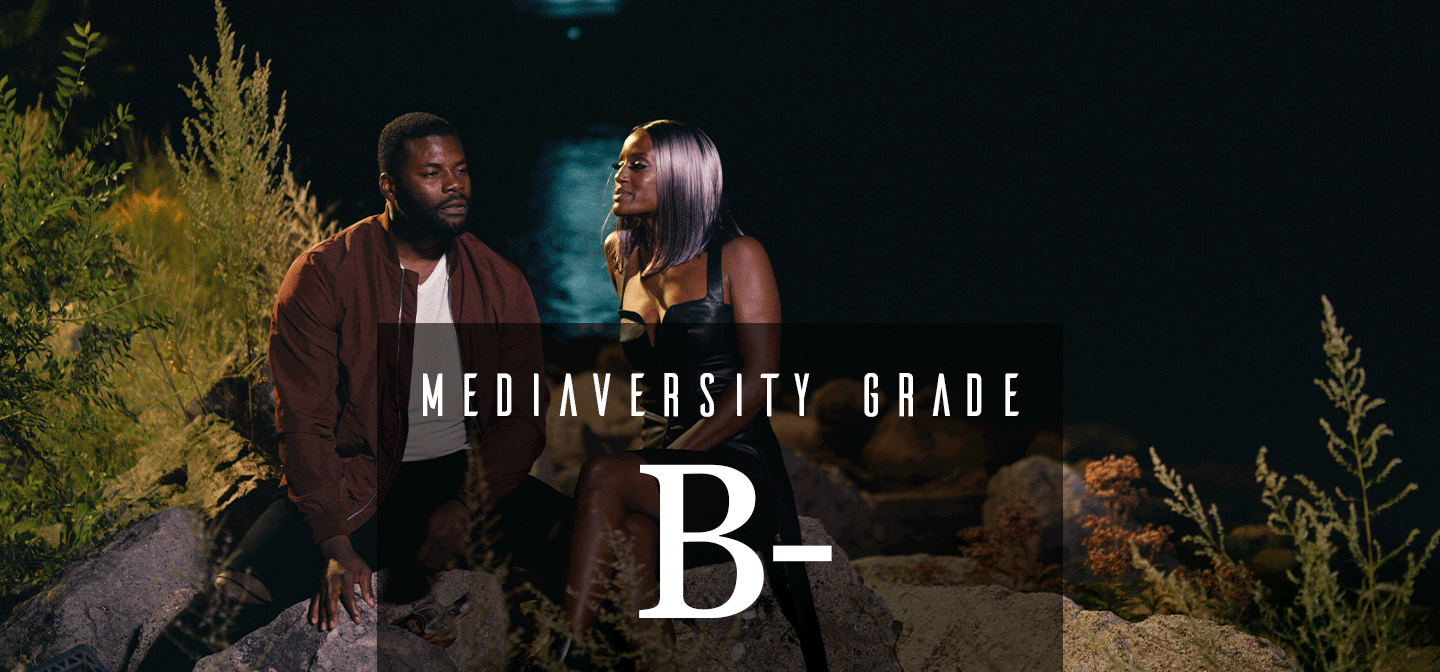
To Live and Die and Live (2023)
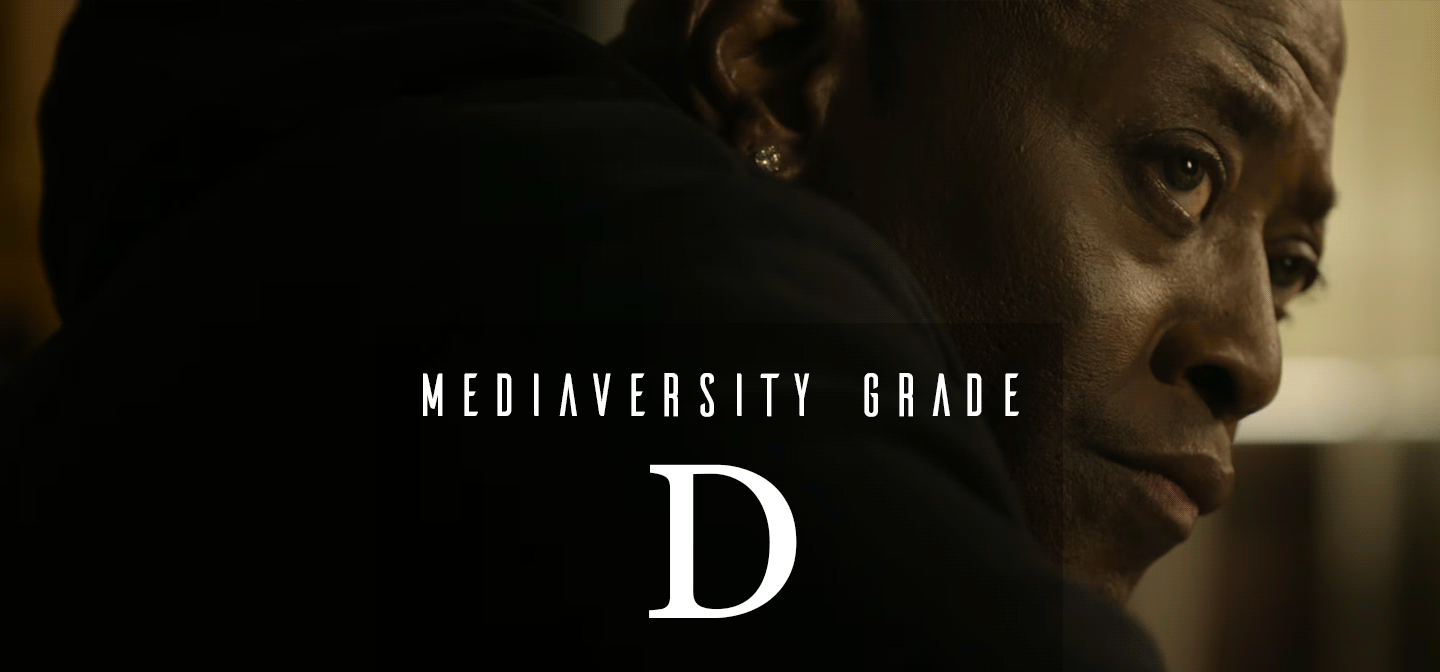
Moses the Black (2026)
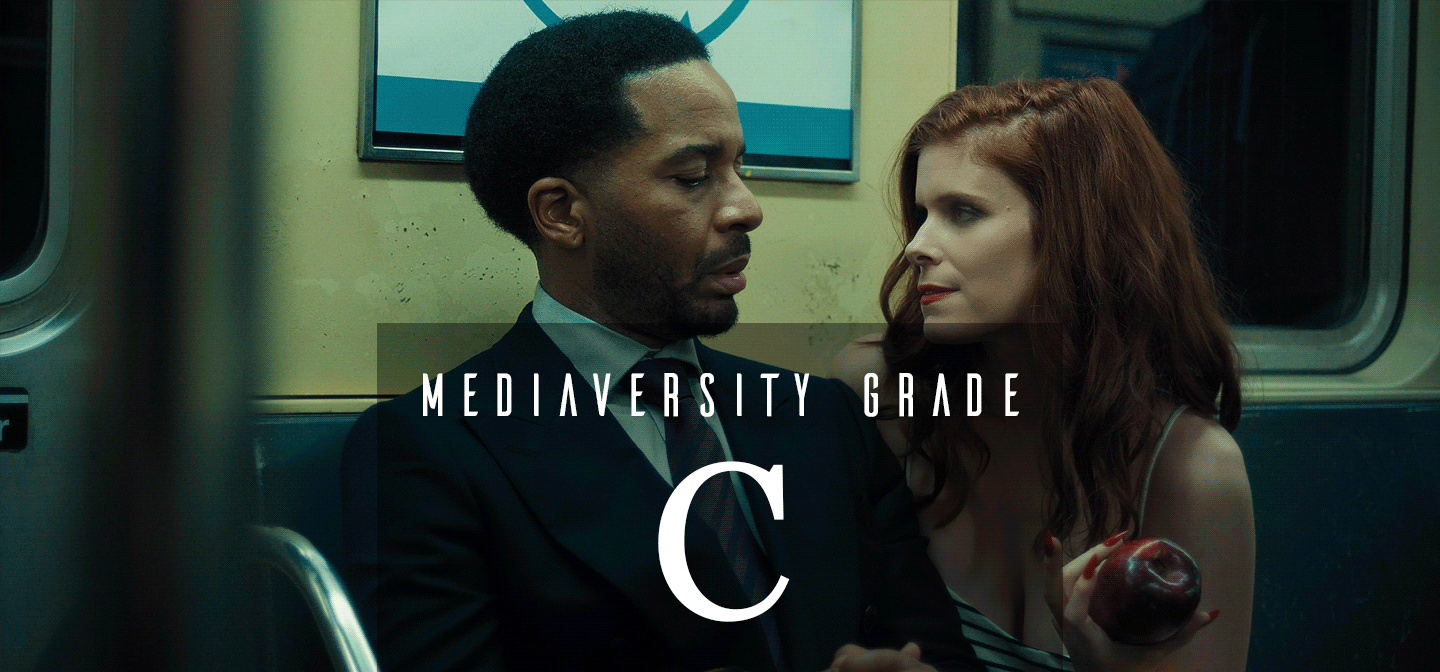
The Dutchman (2026)