
The Dutchman
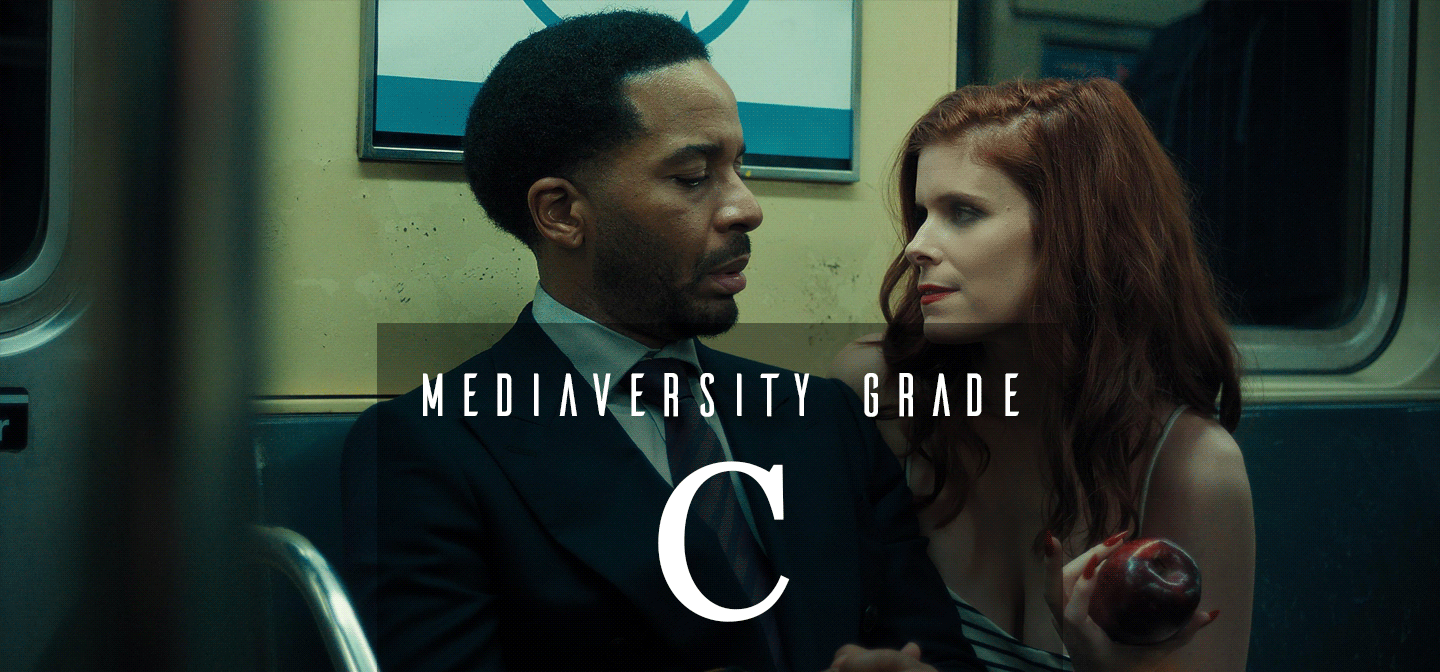
“Andre Gaines overworks The Dutchman, adding too much meta to the point of weighing it down.”
Title: The Dutchman (2026)
Director: Andre Gaines 👨🏾🇺🇸
Writers: Qasim Basir 👨🏾🇺🇸 and Andre Gaines based on the play by Amiri Baraka 👨🏾🇺🇸
Reviewed by Li 👩🏻🇺🇸
Technical: 2/5
The Dutchman is a psychological thriller inspired by Amiri Baraka's 1964 play, Dutchman—a one-act scene between a Black man and a white woman on a subway car, whose freewheeling dialogue touches on themes of sexuality and race. Director Andre Gaines, in his narrative feature debut, co-writes with Qasim Basir to create a metatextual adaptation that gives Clay (André Holland), the Black male protagonist, greater agency.
In theory, this reimagining of Baraka’s play holds exciting potential. But The Dutchman has a hard time chewing what it’s bitten off. The film’s staged origins work against it, with long monologues and flowery dialogue that doesn't suit the movie’s realistic settings on the subway; in a boudoir-like basement studio; or at a vibrant party. Similarly, Holland and his counterpart, Kate Mara (in the role of the white commuter, Lula), opt for theatrical acting that feels too canned for the silver screen.
Gaines’ interpretation of Dutchman goes big in every direction, with Lula turning into a demonic cipher, and Clay getting an extra storyline about marriage troubles with the exasperated Kaya (Zazie Beetz). Clay and Kaya’s counselor, the cheekily named Dr. Amiri (Stephen McKinley Henderson), also arrives in a fantasy-like role, popping up periodically as Clay experiences flashbacks and visions, the fragmented narrative breaking and reflecting like a shattered mirror.
It’s too much razzle dazzle for what could have been an interesting concept had it been executed with restraint. As it stands, The Dutchman takes itself too seriously yet never says anything profound. It fares better as a mood piece: Set entirely at night, the oppressive atmosphere amplifies the sense of dread that wends through the story, aided by a strings-heavy score. But The Dutchman’s attempts to gather topics of Blackness, double consciousness, Harlem gentrification, infidelity, communication issues, and sexual temptation—all while adding a supernatural layer to the noise—quickly becomes illegible.
Gender: 3/5
Does it pass the Bechdel Test? YES
The Dutchman casts women into important roles and increases their presence from the play. While Lula always had a major role, matching Clay head-to-head in their dark dance, Kaya’s added into a supporting role, and newcomer Mystic Lady (Sally Stewart) appears in brief but pivotal scenes, helping Clay understand his purpose.
Their inclusions are welcome, but female characters remain one-dimensional. Kaya covers familiar ground as a woman who’s unhappily married to an emotionally stunted man, while Lula—who’s already one-note in the play—is further reduced to mere symbolism, implied to be an incarnation of human vice and white supremacy.
Race: 5/5
Though not especially coherent or nuanced, The Dutchman does pull in several issues related to Blackness. It’s no surprise, given Baraka’s position as a notable author within the Black Arts Movement of the 1960s and ‘70s.
On screen, the cast is predominantly Black. Thematically, Clay embodies the state of double consciousness that people of color are forced to bear in American society. Meanwhile, white characters in The Dutchman embody systemic racism—Lula gleefully threatens to falsely accuse Clay of rape as a means to control him, and white police officers automatically assume Clay's culpability, searching his bags at the train station and handcuffing him during an altercation in which he’s the victim.
With this preference for archetypes over character development, it’s hard to say that The Dutchman adds anything new to existing conversations about race in the United States, but it makes its arguments forcefully, and with style.
Deduction for Age: -0.50
True to horror trope form, an older version of Lula (Frances Feil) is used as jump scares and meant to embody supernatural evil, as shots of Mara occasionally flash in and out with the older Feil. There's no need for it; this doesn’t happen in the source material, and on screen, it could've been Mara the whole time without a single thing being lost.
Deduction for LGBTQ: -0.00
Deduction for Religion: -0.00
While it doesn’t show up in Gaines’ film itself, it should be noted that Baraka’s legacy is marred by antisemitic and homophobic sentiments. The playwright’s work frequently included words like “f--got” and denunciations of Jewish people.
Mediaversity Grade: C 3.17/5
As I watched The Dutchman, I was reminded of Regina King’s adaptation of Kemp Powers’ play, One Night in Miami (2020). Both films have a staged sensibility, with long soliloquies on how it feels to be a Black man in white America propelling its narratives. But King kept things simple and let the strength of Powers’ writing sing its song, making a movie that feels as relevant as ever, regardless of its 1960s setting. On the flipside, Gaines overworks Dutchman, building on Baraka’s original indictment but adding too much meta to the point of weighing it down.
Like The Dutchman? Try these other film adaptations that center around Black men.
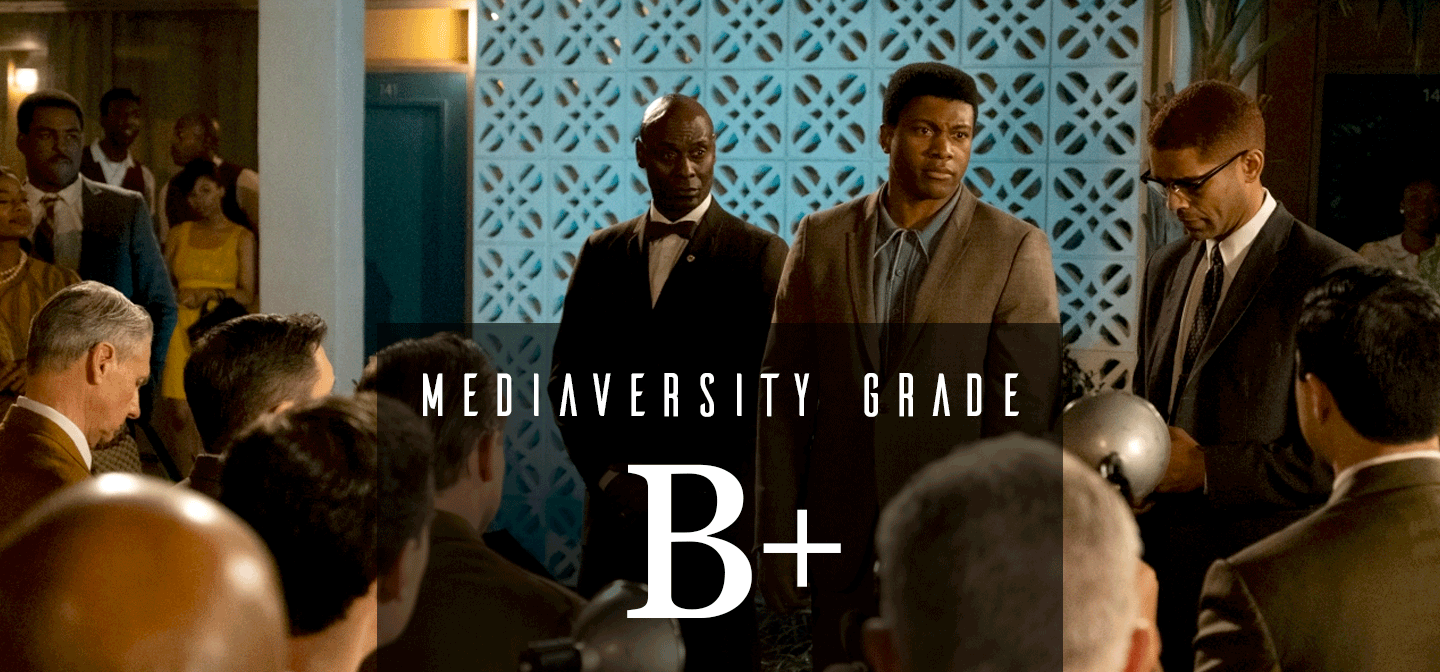
One Night in Miami (2020)
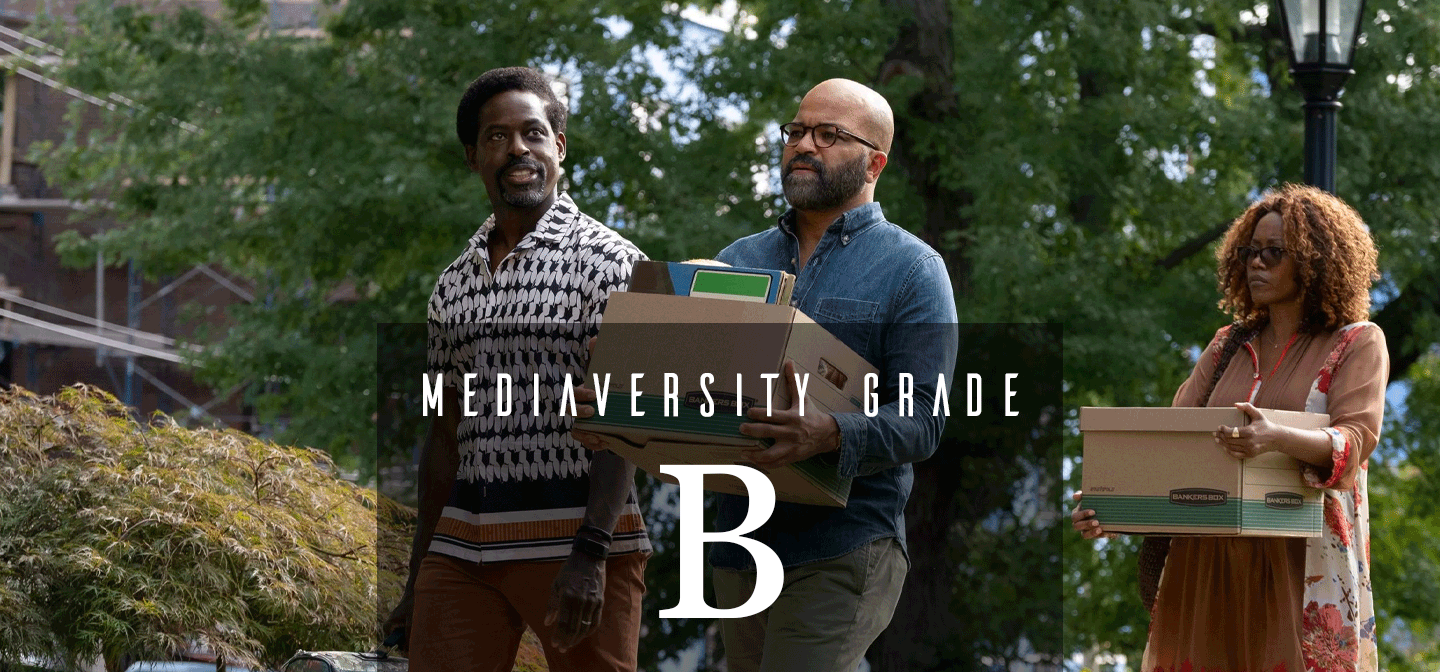
American Fiction (2023)
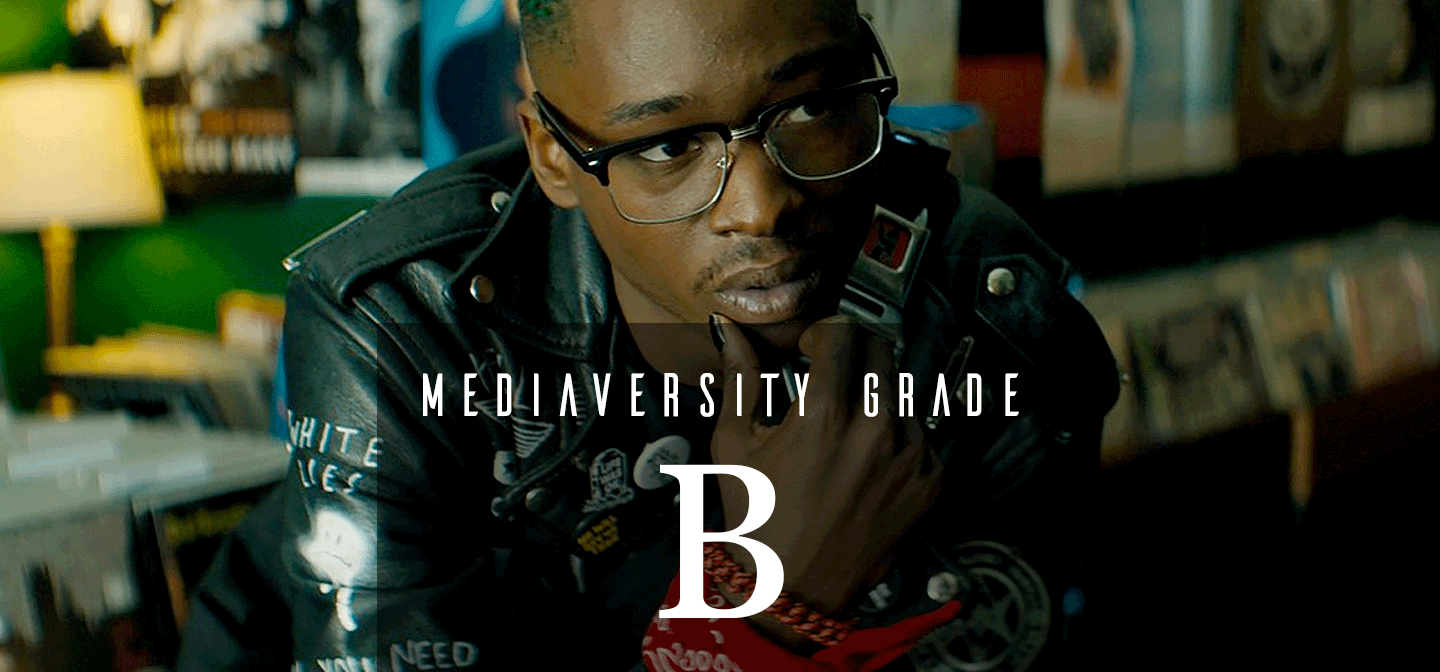
Native Son (2019)