
The Odyssey
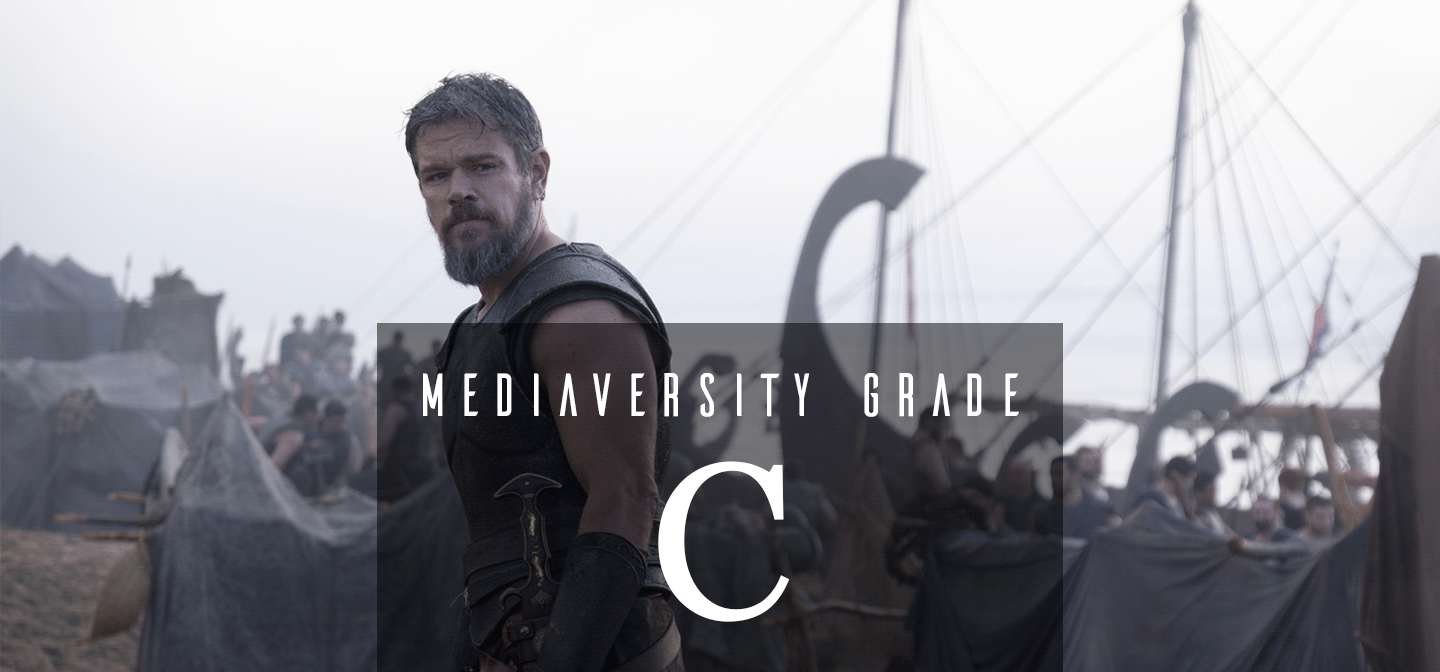
“The Odyssey casts inclusively but still reserves its leading roles for white men and jarringly excludes Greek talent from this iconically Greek tale.”
Title: The Odyssey (2026)
Director: Christopher Nolan 👨🏼🇬🇧🇺🇸
Writers: Screenplay by Christopher Nolan 👨🏼🇬🇧🇺🇸 based on the poem by Homer 👨🏼🇬🇷
Reviewed by Li 👩🏻🇺🇸
—SPOILERS AHEAD—
Technical: 3.75/5
Despite its epic source material, Christopher Nolan’s beautiful but shallow adaptation, The Odyssey, falls short. The film follows hero Odysseus (Matt Damon) through a series of vignettes, with lots of talking and small-group dynamics on display. While stirring battle scenes might be more the purview of the Iliad, which is set during the Trojan War, I was still hoping for The Odyssey to feel bigger in scope. But the pacing mirrors that of a linear roleplaying game—sans the added interest of actually getting to play.
The film makes familiar pit stops at various Greek myths, all of which culminate in an expected victory: Odysseus and his son Telemachus (Tom Holland) triumph over the scheming suitor, Antinous (Robert Pattinson), who had been vying for the hand of Penelope (Anne Hathaway), Odysseus’ wife. Whereas other interpretations of Homer’s classic have explored alternate angles, such as novels Circe and A Thousand Ships centering women’s voices, or the Coen brothers employing a comedic, Depression-era spin with O Brother, Where Art Thou? (2000), Nolan sticks with the original material more closely. They’re accompanied by lovely, moody cinematography, but without much creativity beyond some pruning to make the story fit a 3-hour runtime, and an adjusted ending to emphasize themes of remorse and redemption, the adaptation feels like it was otherwise done at face value.
Furthermore, The Odyssey continues Nolan’s penchant for celebrity bloat—a habit that had me throwing my hands up when Gary Oldman turned up in Oppenheimer (2023) for a random role. Here, the starry cast do their jobs, but they’re more distracting than additive.
Gender: 2/5
Does it pass the Bechdel Test? NOPE
The Odyssey is a dude’s tale, through and through. Women have a few supporting roles: Among them, Penelope has the most screentime as she hosts a swarm of suitors, year after year, all while loyally waiting for her husband, Odysseus, to come home. In other roles, Penelope’s servant Melantho (Mia Goth) plays a turncoat, Helen of Troy (Lupita Nyong’o) and Athena (Zendaya) blip on screen a few times, Circe (Samantha Morton) has a subplot as a jaded witch, and Calypso (Charlize Theron) doesn’t appear often but serves as the film’s framework, supporting Odysseus as a companion while he tries to remember his past.
While the roster of women looks robust—and it is—the overall cast is still overwhelmingly composed of male soldiers and male suitors. In fact, the aforementioned characters never exchange more than a single line of dialogue with one another, failing the laughably easy Bechdel Test.
One thing they all have in common, though, is a lack of agency. Some of the women are perfectly helpless—notably, Nolan’s version of Helen gives her a scar on one side of her face, implying domestic violence by her husband, Menalaus (Jon Bernthal). Others try to command their own lives, such as Circe turning Odysseus’ men into pigs, or when Penelope flies into a rage at being constantly told that Ithaca has had an “empty throne” for 20 years while she’s been their queen all this time. But their attempts at self-determination are futile; Circe relents after Odysseus’ superior negotiation skills, and Penelope is saved by her husband upon his return. Flickers of depth in these characters do humanize women more than in Homer’s original, but it’s probably a testament to the actors’ skills rather than a concerted effort to empower women in the script. A more interesting move would be to actually critique sexism (rather than merely pointing out its existence), or to champion the women’s subversive actions. As it stands, The Odyssey prefers to paint its women as one-dimensional archetypes—the traitors, the women who bewitch, the loyal wife, and so on.
Race: 2/5
The main characters—Odysseus, Penelope, Telemachus, and villain Antinous—are all white. Secondary characters have some diversity, such as Odysseus’ cowardly crew member Eurylochus (Himesh Patel, who’s Gujarati), truehearted follower Eumaeus (John Leguizamo, Colombian-born and multiracial), and cruel suitor Polybus (Corey Hawkins, African American). Zendaya (biracial white and African American) has a symbolic role as Athena, who feels wasted as she mostly sits around and stares enigmatically at Odysseus while he goes through hard times. In minor roles, soldiers and suitors are also predominantly white—but to the film’s credit, Black, Asian, and Latino characters are visibly present in group shots.
Still, it should be noted that no Greek actors play any characters of significance in The Odyssey. Colorblind casting is welcome when it includes people of color to reflect its modern audience; however, the complete dismissal of authenticity feels a bit flippant. A balancing act of both characters of color, plus Greek actors in some of the main roles, would’ve gone down better.
Bonus for Disability: +0.50
Among Nolan’s changes from the source material is Helen of Troy’s scar across her face. Unfortunately, she’s largely defined by victimization (as implied by said facial difference). On the other hand, Leguizamo’s Eumaeus is a much better example of disability representation. Eumaeus is blind, and characters reference it frequently, but it’s not his sole character trait. He has a crucial part and stands out most for his wisdom and loyalty.
Bonus for LGBTQ: +0.50
Sinon, one of Odysseus’ soldiers, is played by trans actor Elliot Page. Sinon is warmly portrayed and has a fairly significant role, though he does fall into the trope of tragically dying to advance straight characters’ narratives.
Mediaversity Grade: C 2.92/5
The Odyssey casts inclusively but still reserves its leading roles for white men and jarringly excludes Greek talent from this iconically Greek tale. This type of box-ticking diversity is welcome over none at all. But anyone looking for a fresh perspective will be disappointed. Instead, Matt Damon is, once again, The Smartest Guy in the Room™ (see The Martian, Good Will Hunting, etc.). That doesn’t have to be a bad thing, though, if atmospheric visuals and impactful sound design are enough to tide you over.
Like The Odyssey? Try these other titles steeped in mythology.

Siren - Season 1
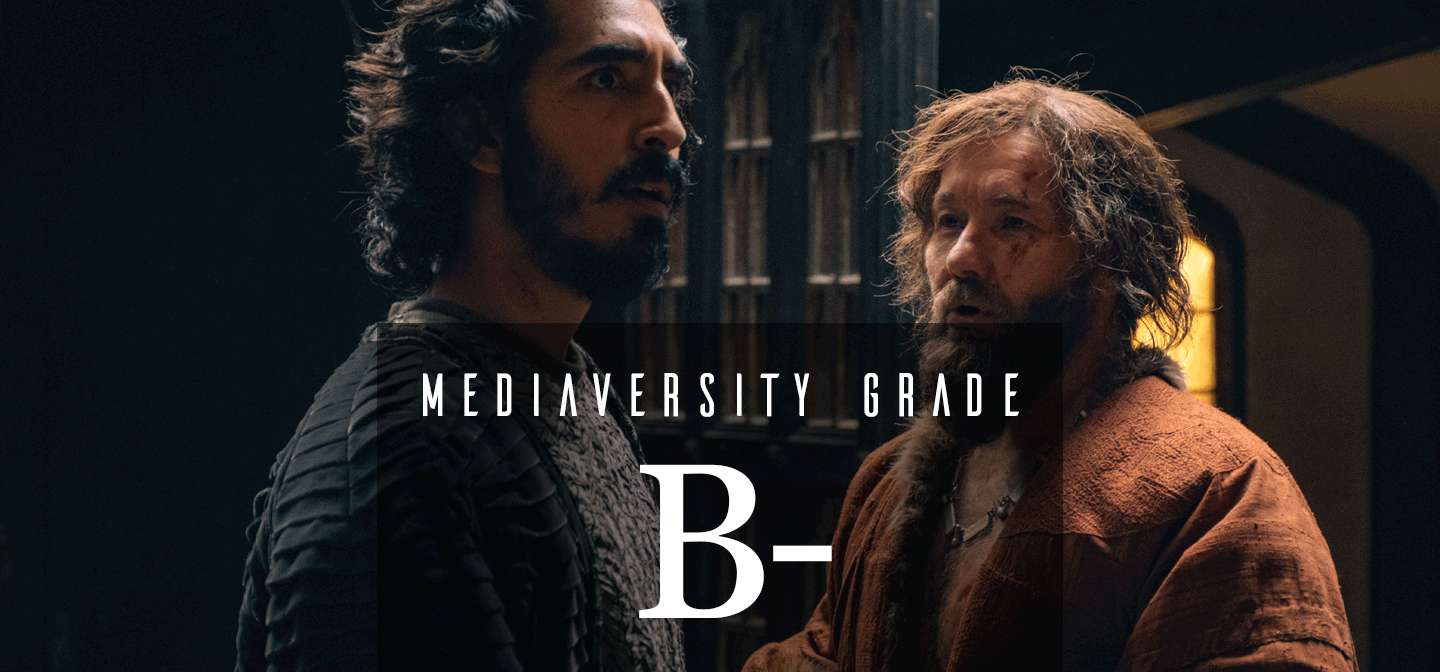
The Green Knight (2021)
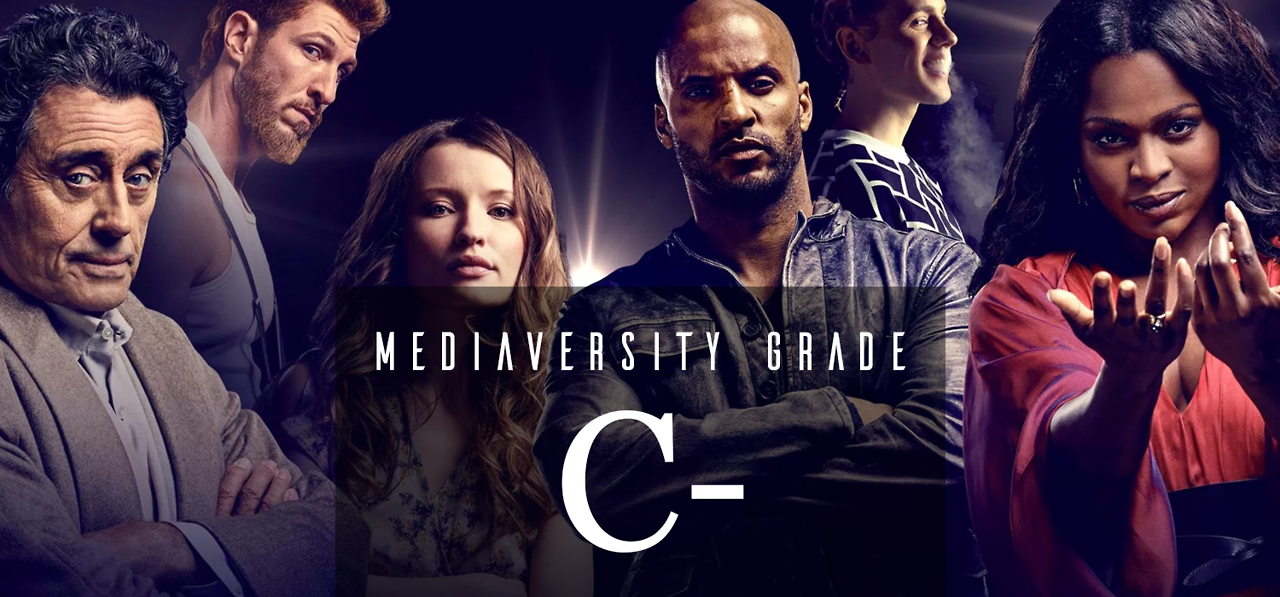
American Gods - Season 1