
Interview with the Vampire - Seasons 1-2
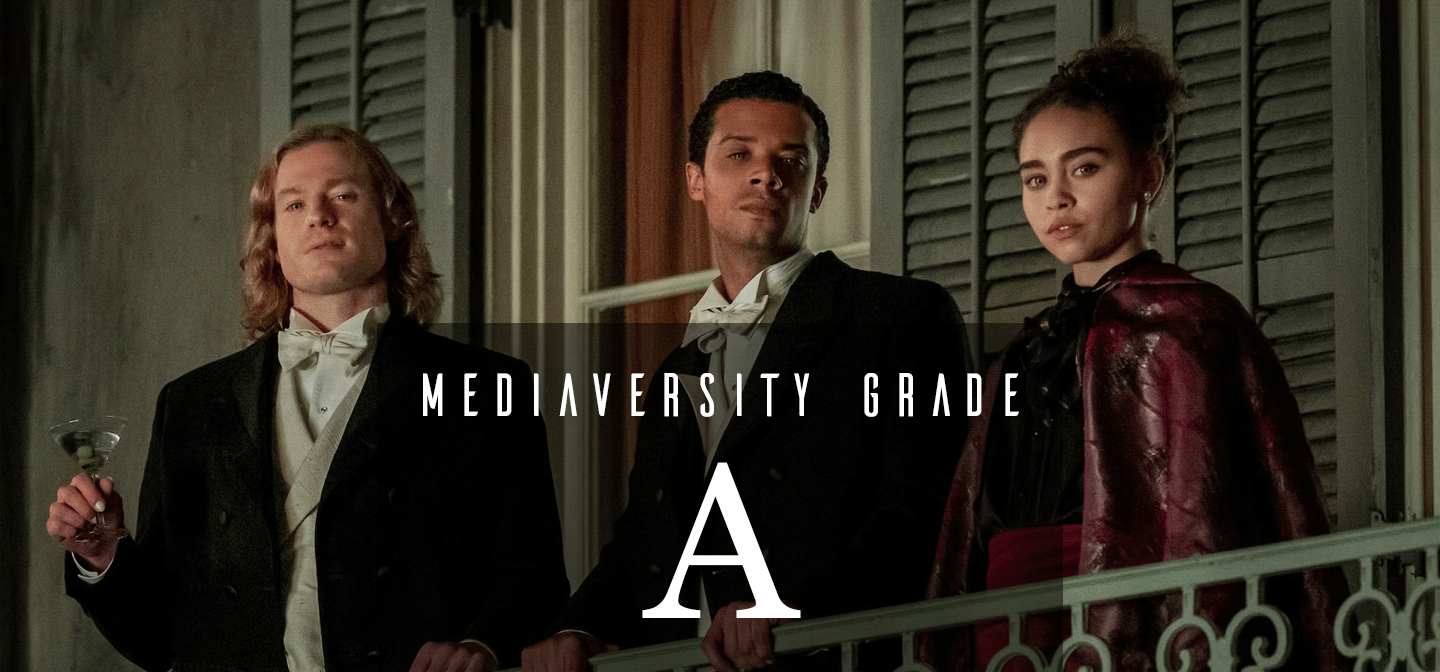
“I’m happy to finally see an Interview with the Vampire adaptation openly confront the queer themes that we always knew were there.”
Title: Interview with the Vampire
Episodes Reviewed: Seasons 1-2
Creator: Rolin Jones 👨🏼🇺🇸
Writers: Hannah Moscovitch 👩🏼🇺🇸 (5 eps), Rolin Jones 👨🏼🇺🇸 (5 eps), Jonathan Ceniceroz 👨🏽🇺🇸🌈 (3 eps), Coline Abert 👩🏼🇫🇷🇺🇸 (2 eps), Shane Munson 👩🏼🇺🇸 (2 eps), and others based on the books by Anne Rice 👩🏼🇺🇸
Reviewed by Sam 🧑🏻🇺🇸🌈
—MAJOR SPOILERS AHEAD—
Technical: 5/5
When adapting books as beloved as Anne Rice’s Vampire Chronicles series, there’s enormous pressure to deliver innovation while staying true to the original material. AMC’s Interview with the Vampire has managed to do exactly that and more. Led by showrunner Rolin Jones (Perry Mason), the series can even draw in those who aren’t big on horror with its rich, unfolding drama.
While the general storyline follows the books, the show reimagines the protagonist, Louis De Pointe Du Lac (Jacob Anderson), as a Black vampire from New Orleans who invites journalist Daniel Molloy (Eric Bogosian) to interview him. The series seamlessly moves between Louis’ present-day retelling of his life and his past turbulent romance with the French vampire Lestat De Lioncourt (Sam Reid) and their care for the teen vampire Claudia (Bailey Bass and Delainey Hayles). Additionally, each episode operates as a single recording session covering specific memories. This strategy keeps the overarching story both cohesive and engaging.
Even though it’s set in a fantastical, gothic world, Interview with the Vampire grounds itself in relatable themes of grief, memory, and forgiveness. The gorgeous dialogue and nuanced writing warrant several rewatches to fully appreciate. People often simplify its popularity to being a well-made series about queer vampires, but at its core, Interview with the Vampire is about the humanity in us all.
Gender: 4/5
Does it pass the Bechdel Test? YES, sometimes
Louis may be the main character, but Claudia is the heart of the show. When Louis and Lestat first take her in, Claudia seems like the carefree teenager that she was before turning into a vampire. But as she gets older, she grows bitter about being stuck in an unchanging body. The tension between her naivety and her desperation to be respected remains a central theme throughout the series, offering powerful commentary on society’s belittling of young women.
But other than Claudia, the show is male-centric. The show only regularly passes the Bechdel test when Claudia strikes up a romance with dress shop owner Madeline Eparvier (Roxane Duran) in Season 2. Still, Claudia gets substantial, richly drawn screentime.
Race: 4.75/5
As Sinners’ (2025) popularity demonstrates, the vampire genre is finally expanding beyond the pale-skinned Dracula. In the books, Louis is a white plantation owner, but in the show, he’s a gay Black man, portrayed by biracial Black and white British actor Jacob Anderson, who owns a brothel. Louis’ racial identity adds a lovely layer to the shifting power dynamics he experiences from his vampirism. He often faces racist remarks from white business owners in New Orleans, but once he becomes a vampire, he retaliates by killing wealthy white people.
Additionally, Louis’ status as Black Southerner comes up in his relationship with Lestat, a white French person who often fails to understand American racism. This schism forms the basis of Louis’ bond with Claudia, a young Black girl portrayed by biracial Black and white actresses Bailey Bass (Season 1) and Delainey Hayles (Season 2). The writers incorporate Louis’ and Claudia’s race into the story, constantly interrogating what it means to be a Black vampire.
Similarly, Interview with the Vampire offers a different take on Armand. In the books, he’s a European white vampire, but in the show, he’s played by British Bangladeshi actor Assad Zaman. Armand’s tragic backstory confronts colonization, as he recounts his past when slave traders took him from Delhi, India, to Europe and sold him to a brothel. His subsequent romance with Louis is notable for being a rare instance of two people of color in an interracial, queer relationship. Given the confidence with which the show develops Louis, Claudia, and Armand’s racial identities, it’s surprising that the showrunner and writers are almost entirely white. Regardless, they handle the subject respectfully, adapting white source material to be more than simple, race-swapped casting. Instead, the plotlines meaningfully integrate racial identity.
Given that Season 3 focuses on Lestat, though, the shift away from Armand, Louis, and Claudia raises concerns about their continued development. But the writers’ great track record thus far suggests that they won’t forget about its characters of color.
LGBTQ: 5/5
While the books and the 1994 film imply that Louis and Lestat’s relationship is more than platonic, AMC explicitly acknowledges their romantic and sexual bond. It’s not an exaggeration to say that more characters on Interview with the Vampire identify as queer than straight.
In line with period-typical homophobia, Louis’ memories from the early 1900s depict several characters who scorn Louis and Lestat’s relationship. However, the two constantly affirm their love, even forming a pseudo-nuclear family as Claudia’s caregivers. Louis has a harder time accepting his sexuality during the first few episodes, but by the present day, he has established full confidence in his identity. Meanwhile, Lestat openly embraces his bisexuality and has sex with both men and women throughout the show.
In addition to this central romance, Interview with the Vampire features several other queer relationships. The second season focuses on Louis’ romance with Armand; Claudia pursues both men and women; and journalist Daniel often flashes back to scenes from an LGBTQ-friendly 1970s San Francisco, where he pursues his attraction to Louis in a gay bar and grapples with his queerness. Jones has also teased that Season 3 will spotlight Daniel and Armand’s romance.
It’s incredibly refreshing to see how Interview with the Vampire embraces homosexuality in the vampiric canon. The show allows queer characters to be flawed and evil without ever assigning that immorality to their sexuality.
Bonus for Disability: +0.75
Another significant change from the books is that Daniel has Parkinson’s Disease. The show considers how his disability affects his day-to-day experiences. He openly struggles with tremors and undergoes Levodopa treatment during the interview.
The series also implies that Louis’ family has a history of mental illness. Louis himself experiences hallucinations of Lestat during Season 2, framed as a manifestation of his accumulated trauma. Better yet, the writers treat trauma holistically, showing how it leaves a lasting impact on one’s memory but never sensationalizing it just to create drama.
Mediaversity Grade: A 4.88/5
Interview with the Vampire incorporates commentary on race, gender, queerness, and disability, all while succeeding as a faithful book adaptation. The show’s beautiful writing may not have been recognized by the Emmys or Golden Globes yet. Still, it quickly became a critical darling, beloved by LGBTQ fans in particular, who are happy to finally see a classic vampire story openly confront the queer themes we always knew were there.
Like Interview with the Vampire? Try these other titles featuring vampires.
Sinners (2025)

Shadowhunters - Seasons 1-2
What We Do in the Shadows - Season 1