
Bugonia
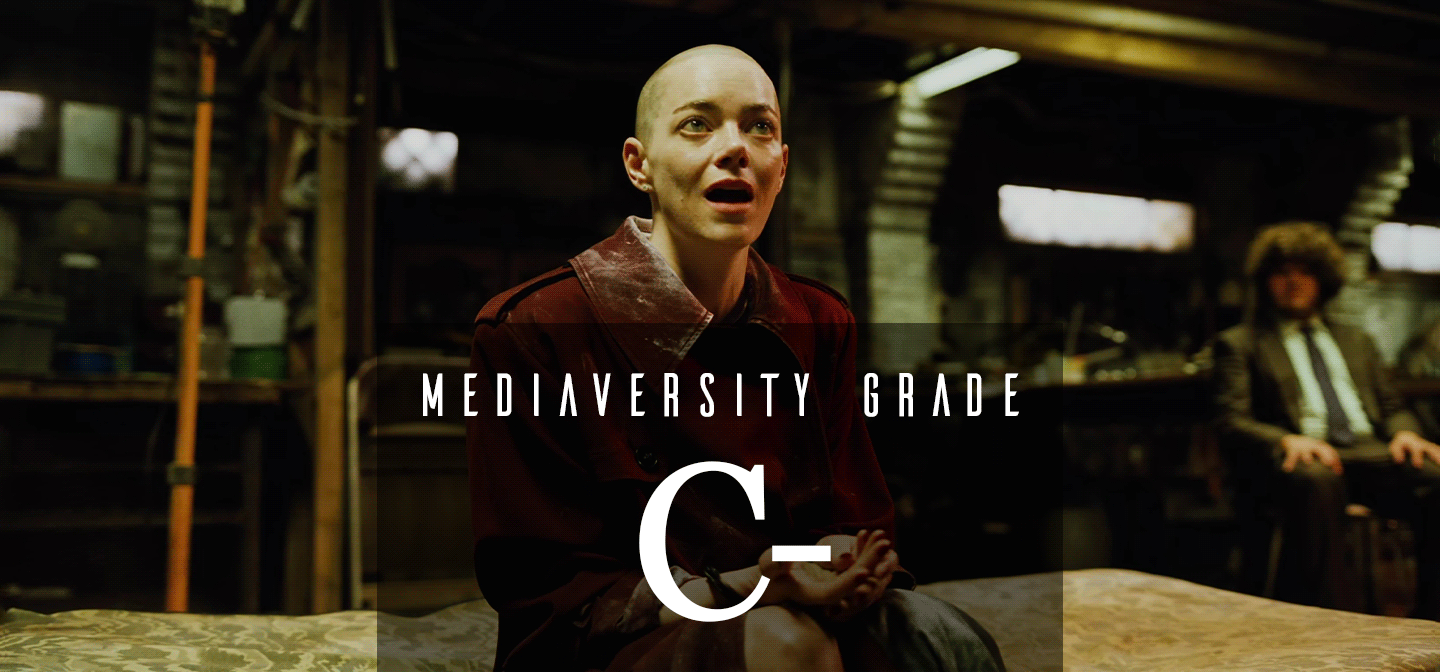
“Bugonia’s treatment of Don, the autistic character, recalls more than a tidge of Lenny from Of Mice and Men.”
Title: Bugonia (2025)
Director: Yorgos Lanthimos 👨🏼🇬🇷
Writer: Will Tracy 👨🏼🇺🇸
Reviewed by Clint Worthington 👨🏼🌈🇺🇸
—MAJOR SPOILERS AHEAD—
Technical: 4.5/5
Based on Jang Joon-hwan’s Save the Green Planet! (2003), Yorgos Lanthimos’ third film in as many years is a chilling, darkly funny chamber piece that blends conspiracy thriller, alien-invasion movie, and dark social satire. Jesse Plemons plays a paranoid, traumatized beekeeper named Teddy who, along with his gullible cousin Don (Aidan Delbis), hatches a scheme to kidnap a powerful pharmaceutical CEO named Michelle Fuller (Emma Stone). Teddy’s become increasingly convinced that aliens not only walk among us but also occupy our highest positions of power. He thinks that Michelle is one of these “Andromedons,” and he wishes to secure passage on her mothership before the coming lunar eclipse, after which he believes humanity will reach its end.
Lanthimos is one of mainstream filmmaking’s most prominent provocateurs, so the notion of him taking on such potent thematic material—our rapidly declining environment, the death grip of big corporations and oligarchs on the lives of working-class people, the way trauma can draw us into conspiratorial thinking—is enticing. It’s a shame, then, that Bugonia only works in fits and spurts, touching lightly on these deeper issues without mining much insight.
What does work, however, is the film’s technical prowess and its central trio of performances, particularly a committed Stone and Plemons, who verbally spar with enticing electricity. Bugonia’s thrills are in the line-to-line battle of wits they both engage in, aided by the claustrophobic production design and Jerskin Fendrix’s jarring, tragic orchestral score.
Gender: 2.5/5
Does it pass the Bechdel Test? NOPE
Screenwriter Will Tracy’s major change from his adaptation of Save the Green Planet! Is to swap the CEO’s gender, which opens up interesting possibilities for exploring how women in powerful positions navigate their privileged world. In the opening minutes, we see Michelle engaging in ritualistic skin-care routines, taking self-defense classes, and following a regimen of rigorous diet and supplements—the kind of appearance one must maintain as a woman of power. What’s more, her rhetoric, both in focus-tested PR presentations and her desperate attempts to talk her way out of her captivity, feels robotic and rehearsed in ways that echo the diplomatic, "sensitive" approach expected of CEOs of her gender.
However, the film’s very premise requires Michelle to a) be the only woman of prominence in the film, surrounded by men, and b) be the main subject of torture at the hands of said men. She is shouted down, assaulted, and, in one particularly traumatic sequence, strapped to a makeshift electroshock device with which she’s nearly electrocuted to death. What’s more, the film’s eventual reveal is that Teddy is, in fact, right, and Michelle is truly the vanguard of humanity’s demise. But that undercuts the very real points Tracy makes about the way disenfranchised men take out their social and personal malaise on a powerful woman. Instead, the film perversely proves them right.
Race: 1.5/5
The world of Bugonia is a very, very white one, which makes sense given its thematic concerns about white male radicalization and the limitations of corporate girlboss feminism. However, that leaves little room for any actors or characters of color, most of whom exist in the background. We might see them in Michelle’s boardroom in the periphery, or at the end, playing aliens in Michelle’s spaceship as they contemplate the destruction of mankind. That most of her alien compatriots are non-white teeters towards exoticization, framing their non-whiteness as innately Other.
Apart from that, the film feels subtextually about white privilege and class, and who gets to wield it. When Teddy slathers Michelle in white, creamy lotion to arguably suppress her alien powers, Lanthimos adds a literal component to the film’s discussion of how whiteness shapes her place in the world. For all that the film interrogates those structures, though, Bugonia speaks purely through a white perspective. It’s disquieting to see people of color so far on the periphery of that conversation.
Deduction for Disability: -0.50
The character of Don presents some curious wrinkles for Bugonia’s treatment of disability. On the one hand, it’s nice to see an autistic character portrayed by an autistic actor, and Delbis delivers a very compelling, wounded performance. However, Tracy’s script presents Don as a kind of gullible rube simply going along with whatever Teddy says, blindly following him down his self-destructive path. Furthermore, his violent end feels mean-spirited, especially considering that it’s the result of two neurotypical characters pushing him to his psychological breaking point. There’s more than a tidge of Lenny from Of Mice and Men in Bugonia’s treatment of Don as a doe-eyed innocent meant to suffer and die for maximum pathos.
Mediaversity Grade: C- 2.67/5
Bugonia makes for edgy thrills, especially given the dark comedy of its conspiratorial premise. But its bleak tone, closed-off characters, and lack of insight into the topics it touches on leave you with little to take away besides abject cruelty. It’s the kind of film that posits that humanity, as a whole, might just deserve to be destroyed.
Like Bugonia? Try these other dark, absurdist titles.
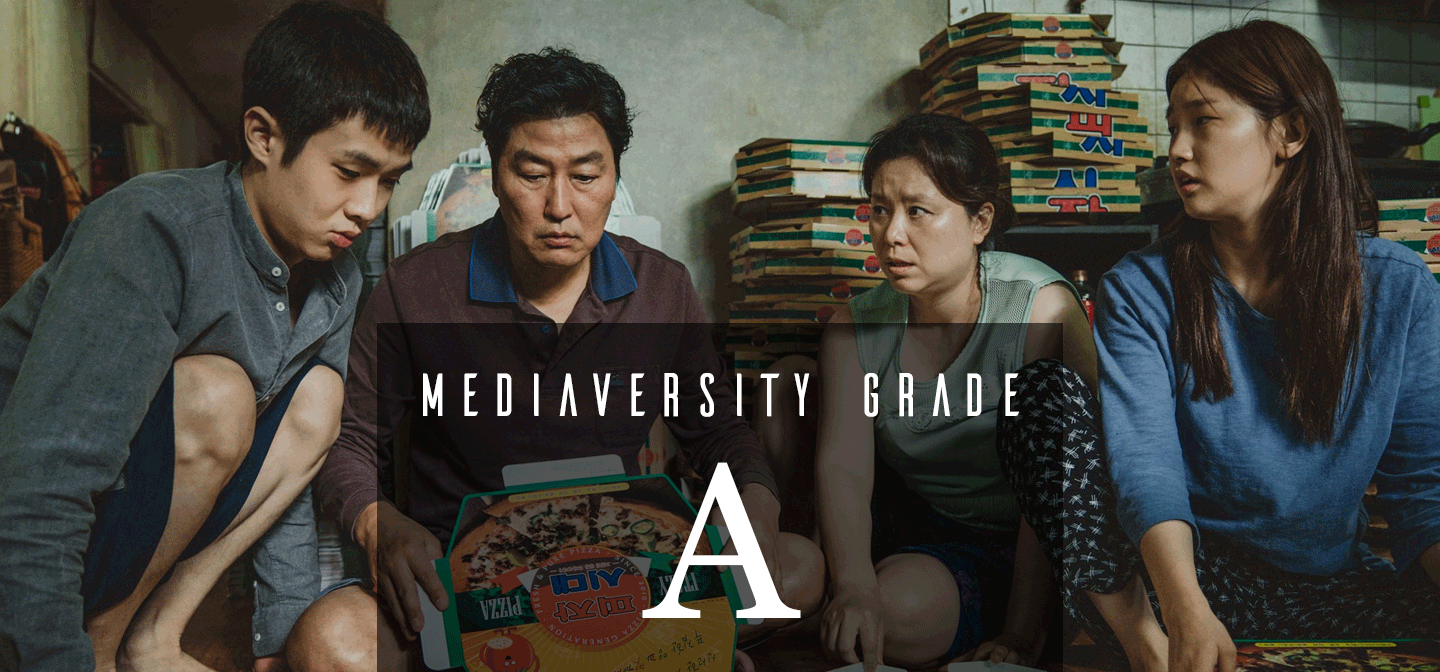
Parasite (2019)
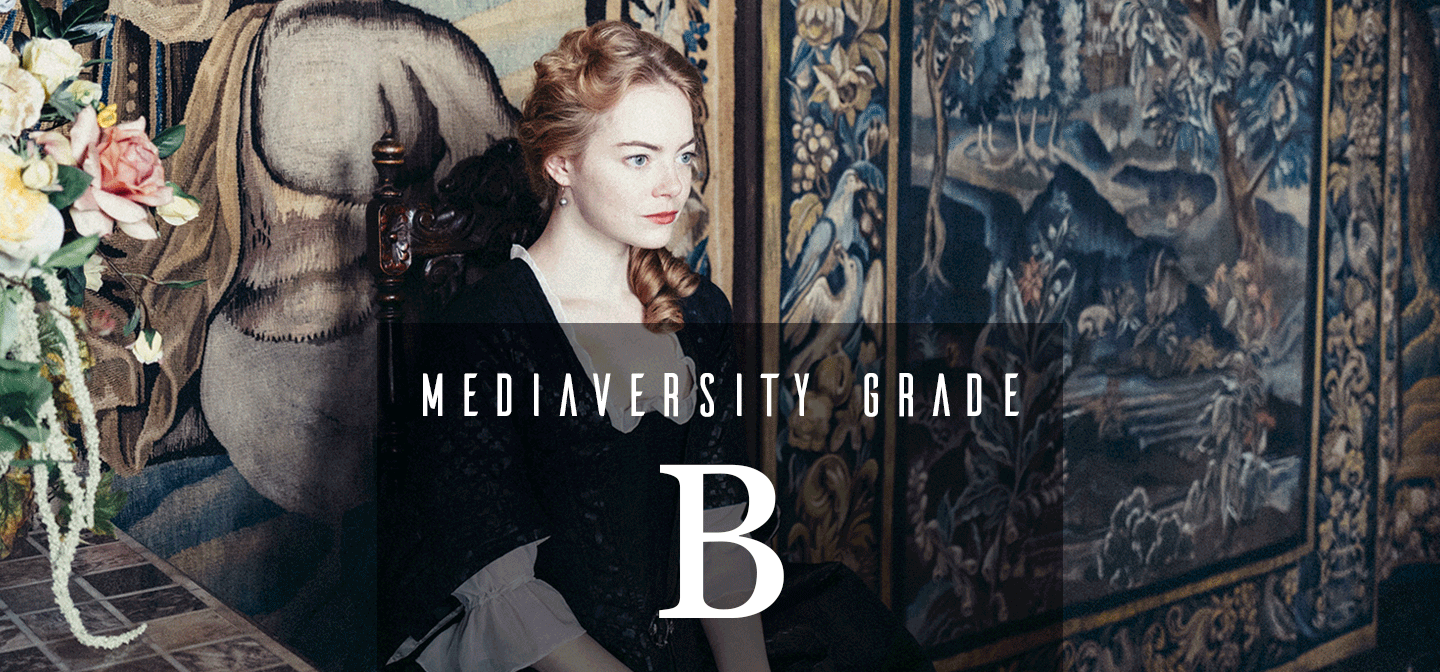
The Favourite (2018)
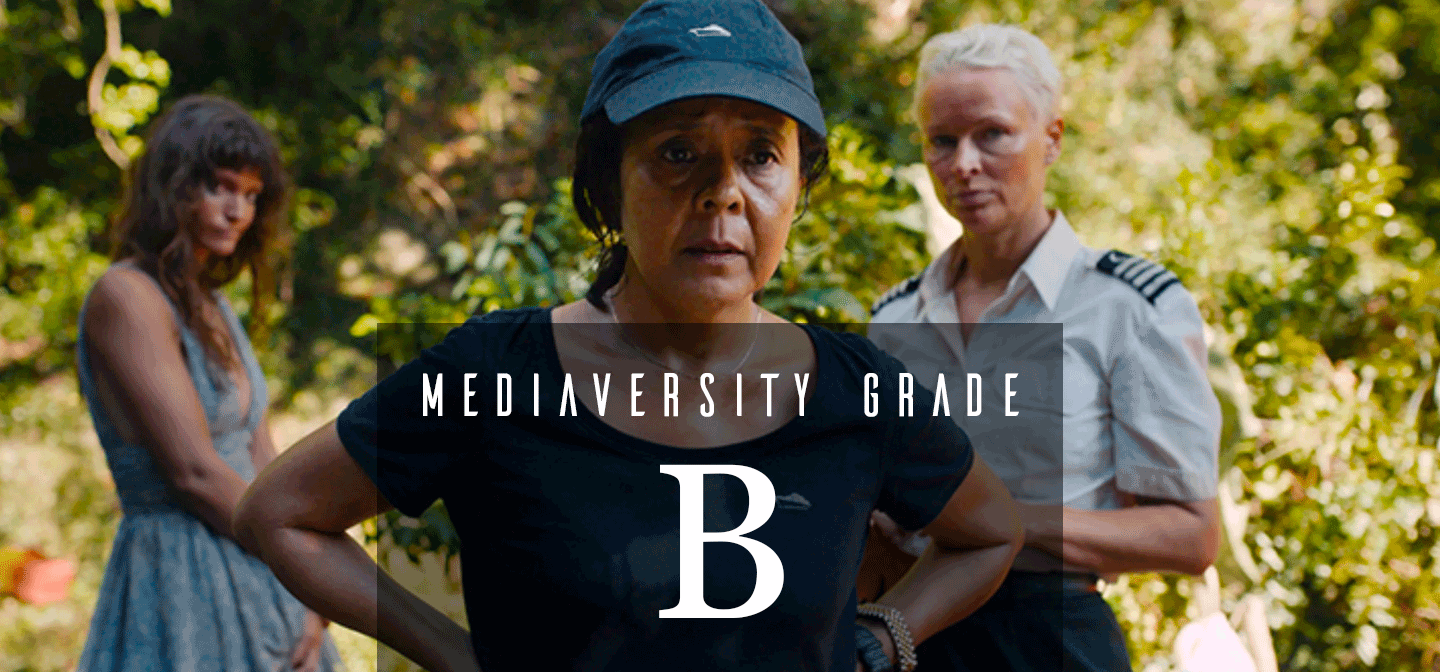
Triangle of Sadness (2022)