
The Secret Agent
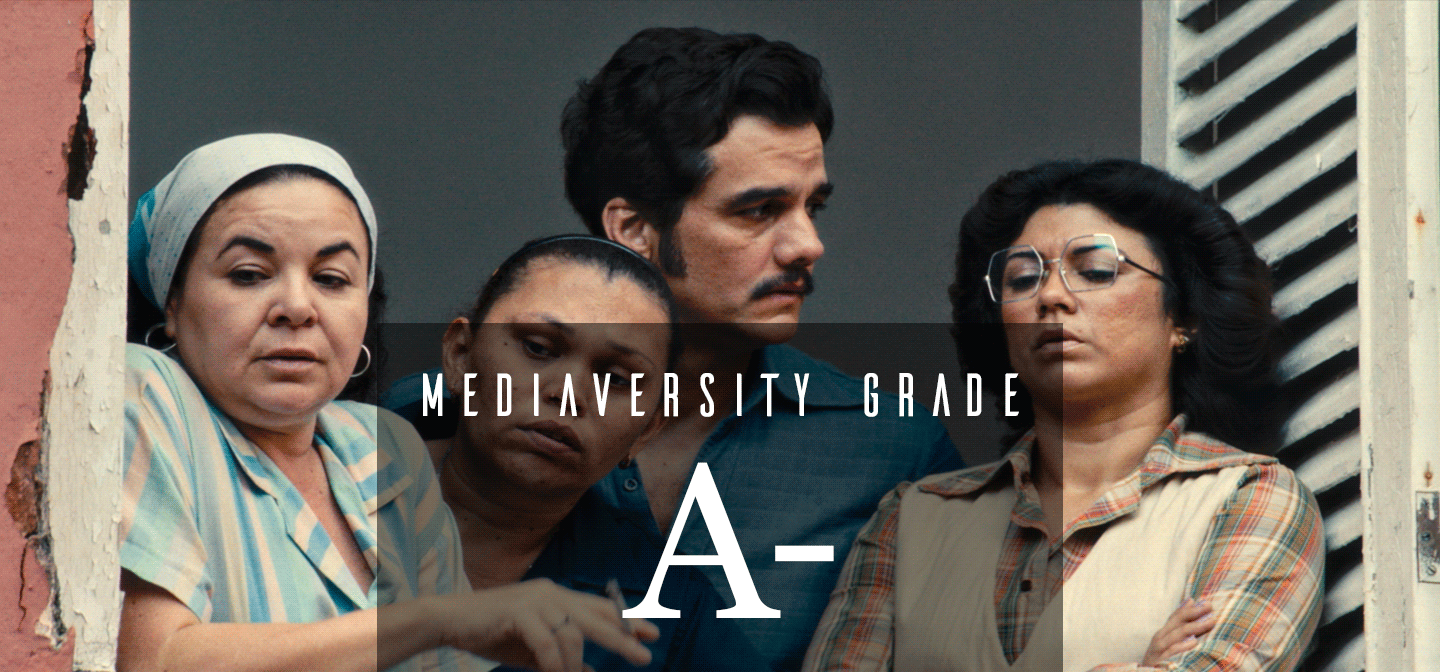
“The Secret Agent weaves a tapestry of world history, showing how our future is headed toward a collision with our ugly past.”
Title: The Secret Agent (2025) / Portuguese: O Agente Secreto
Director: Kleber Mendonça Filho 👨🏼🇧🇷
Writer: Kleber Mendonça Filho 👨🏼🇧🇷
Reviewed by Carolyn Hinds 👩🏾🇧🇧🇨🇦♿️
—MILD SPOILERS AHEAD—
Technical: 5/5
The Secret Agent is an original screenplay by film critic-turned-filmmaker Kleber Mendonça Filho (Aquarius) set in the coastal city of Recife. It’s 1977, “a period of great mischief,” as the narrator deems it, and Brazil is under the ever looming spectre of military dictatorship. We meet a former science professor in his 40s, Armando Solimões (Wagner Moura), who seeks obscurity during this time of political upheaval and oppression.
Mendonça Filho brilliantly uses metaphor to paint a picture of Brazilian life under a corrupt government. In the film’s opening sequence, Armando drives his small yellow beetle to a one-pump countryside gas station, where a decaying corpse lies under the blazing sun. A police car drives up; one officer leans against their yellow-and-blue patrol car, lighting a cigarette, while the other pressures Armando for a bribe. Neither officer is interested in the dead body, showing where their priorities lie. Armando carefully extricates himself from the tense situation before heading back onto the highway to Recife, where his 6-year-old son Fernando lives with his maternal grandparents. Behind him, the gas station attendant chases away hungry wild dogs—brown and tan, not unlike the police officers in their uniforms—that are picking at the corpse.
Adding to the atmosphere is The Secret Agent’s use of music, from Brazilian folk and samba to American hits like Donna Summer’s sultry “Love to Love You Baby.” These deliberate selections create a sinister tone, their happy rhythms out of sync with the grim events happening on screen. It reinforces The Secret Agent’s theme of duplicity, and American music serves as the pointed soundtrack for a dictatorship that the United States helped to establish.
At 161 minutes, The Secret Agent can feel slow and unwieldy, with a large cast of characters to keep track of. But this density is easily forgiven, thanks in large part to Moura’s spectacular performance. Armando’s expressions reveal his fluctuating feelings of intense fear, anger, confusion, and desperation. All Armando wants is to be with his son, but he has an unfair target on his back and has to resort to subterfuge just to be reunited with his child. With this storyline, Mendonça Filho does a spectacular job of showing how ordinary people bear the heartbreaking burdens of imperialism.
Gender: 3.5/5
Does it pass the Bechdel Test? YES
In Recife, Armando—now using the name Marcelo—finds himself surrounded by women with their own mysterious pasts, secrets, and agendas. There’s Dona Sebastiana (Tânia Maria), the 77-year-old landlord of a safehouse called Ofir that takes in all kinds, including a house cat born with two faces that Dona affectionately calls Eliza and Elis. Dona turns out to be Armando’s contact in an underground communist network, and she arranges for him to meet Elza (Maria Fernanda Cândido), a journalist and resistance leader conducting a secret investigation into the murders of researchers, including Armando’s late wife, Fátima (Alice Carvalho).
Between Dona, Elza, and Fátima, The Secret Agent depicts women as strong-willed and refusing to be dismissed. Through flashbacks, we learn that Fátima played a vital role in Armando’s research into an alternative energy source. During an ill-fated dinner with the head of an electric utilities company, Henrique Ghirotti (Luciano Chirolli), and his son, Ghirotti insults Armando for his suspected communist leanings and lower socioeconomic status. Incensed, Fátima defends her husband and tells Ghirotti and his son to go to hell.
Things don’t end well for her, but even among minor characters, women are shown to stand up for themselves. Armando sees a housekeeper publicly condemn her rich female employer for the death of the housekeeper’s young daughter. (The 3-year-old was killed in a road accident while her mother was buying bread for the socialite.) These women aren’t the main characters—that credit goes to Armando, who’s on screen for the majority of the film. But Mendonça Filho wrings plenty of meaning from these scenes, offering a glimpse into the seething resentment and grief that Brazilian women felt during this time.
Race: 5/5
Also staying at the Ofir are Tereza Victória (Isabél Zuaa) and her husband, António (Licínio Januário), refugees who fled the deadly civil war in Angola that lasted from 1975 to 2002. The couple’s presence not only points to the environment of global fascism in the 1970s, but also the commonalities between people experiencing imperialism. Both Brazil and Angola were invaded by the Portuguese in the 1500s, resulting in their shared spoken language. But whether or not it’s in South America or Africa, the destruction wrought by colonization lasts for centuries, and it’s everyday people like Armando, Tereza, and Antonio who suffer most.
But The Secret Agent isn’t only interested in race relations that cross borders. It shows local prejudices, too. Raised by his paternal grandparents, Armando was never allowed to know his mother. She was a poor, Indigenous teen hired to be a maid for a wealthy family, then impregnated and abandoned by their son. The only information Armando has is her name, Maria Aparecida dos Santos, and that she was known as “India,” a term white Brazilians used to refer to Indigenous people—and a derogatory label that demonstrates their bigotry.
These small but constant indignities include ethnic persecution, too. Another refugee Armando encounters is Hans (the late Udo Kier), a Jew who fled Belgium during the Holocaust and now lives in Recife as a tailor, working with his two Black, German-speaking Brazilian assistants. While Armando is in the shop, Euclides (Robério Diógenes), an ignorant local police chief who wrongly believes Hans is a former Nazi soldier evading justice, enters and forces the tailor to expose horrendous bullet-wound scars he’d sustained in a Nazi attack. Hans resentfully complies to avoid further trouble.
Mendonça Filho uses cruel moments like this to tie all of The Secret Agent’s characters and subplots together. He weaves a tapestry of world history and modern imperialism, showing how our future is headed toward a collision with our ugly past.
Bonus for LGBTQ: +0.25
In the background of all of the political intrigue, a severed human leg from an unidentified murder suspect is found in the stomach of a caught female tiger shark. This leg is stolen from the city morgue by Euclides’ sons (who are also his subordinates), thrown into the Capibaribe River, from which it washes ashore.
It’s inferred throughout the film that the victim was targeted and killed by Euclides or his hitmen. But viewers learn about the severed leg as local Brazilians do: Tereza reads a newspaper article, during which a fantastical reenactment of her words shows the disembodied leg finding dozens of queer people and sex workers at night in a park. Couples and threesomes are having sex and making out, none the wiser, before the camera shifts to first-person perspective and campy music comes online, à la Jaws, as the leg brutally attacks them.
On the face of it, this absurd sequence departs from the rest of the film’s more serious tone. But it still serves The Secret Agent’s overarching points about dictatorship. With the press so staunchly under the control of the government, even a ridiculous, clearly made-up story is being “written about as if it’s the news,” as Tereza incredulously remarks while reading the sensational piece.
As for the LGBTQ representation, The Secret Agent seems to be including queer people in its large tent of sympathetic folks who are persecuted by fascist regimes. Like women—and Angolan refugees and Jewish survivors—queer Brazilians suffer greatly under imperialism.
Mediaversity Grade: A- 4.58/5
Most film titles are on the nose, telling us exactly what to expect. Other times, there’s more nuance involved. The latter applies to The Secret Agent because Mendonça Filho redefines what a secret agent is under fascism.
Traditionally, they’re trained operatives who arrange clandestine meetings in dark corners, use special communication methods, and pledge their loyalty to a government or organization. But in watching The Secret Agent, I began to think about how ordinary citizens adapt the same techniques to survive. I thought about how Armando, Tereza, Hans, and other characters have to take on fake identities and contort themselves to pretend everything is normal.
But there’s nothing normal about being forced to hide who you are to survive. Sadly, the world seems to be doubling back to this unsavory reality, where trusting the wrong person could mean imprisonment or death. In the United States, unlawful deployments of ICE (Immigration and Customs Enforcement) and the National Guard are taking place against its own people. Genocides are being perpetrated in West Asia, and imperialist nations are bullying parts of the Caribbean and Latin America. Mendonça Filho has made a film that serves as a timely cautionary tale. He’s asking audiences to consider the error of man’s ways lest the cycle of violence and trauma keep turning, and children like Fernando—played by Moura as an adult—tragically grow up with incomplete pictures and memories of their families.
Like The Secret Agent? Try these other titles that explore collective trauma wrought by political oppression, told through personal history.

I’m Still Here (2024)

Queens (2024)

Sentimental Value (2025)