
Pretty Lethal
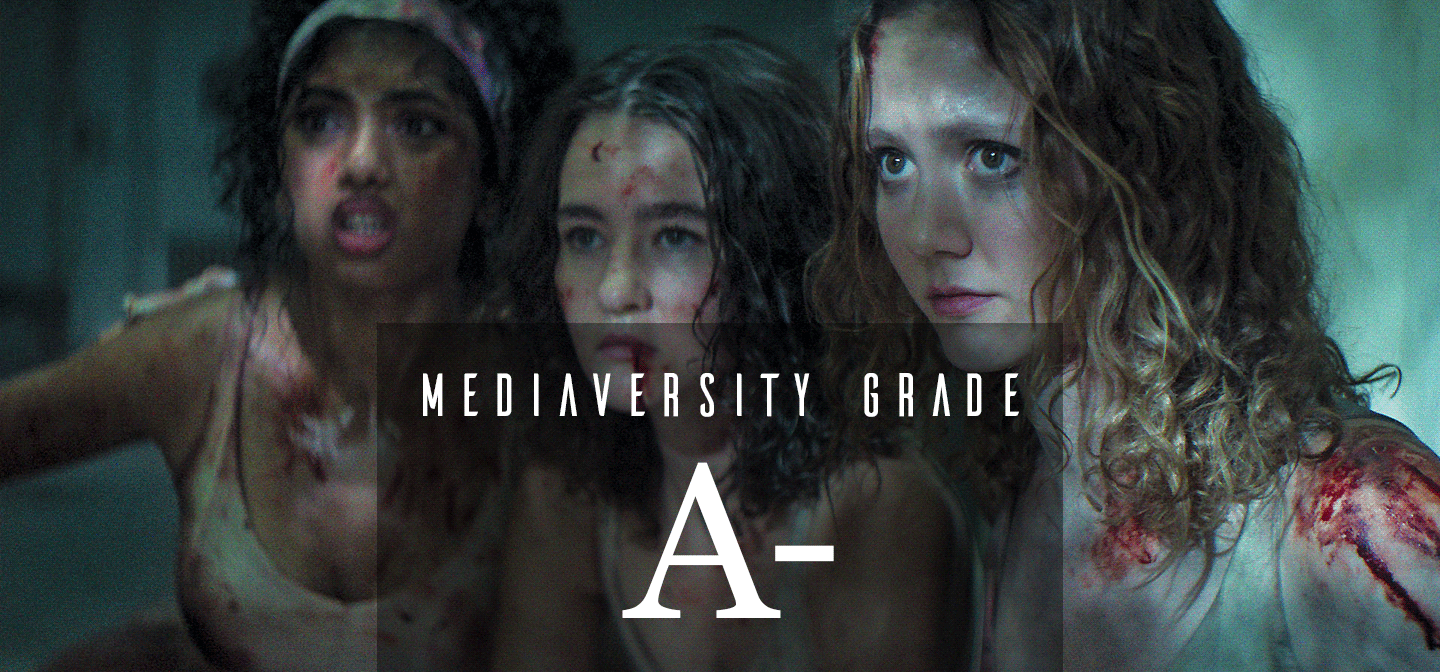
“In Pretty Lethal, femininity isn’t stripped away to access power; it’s precisely what enables it.”
Title: Pretty Lethal (2026)
Director: Vicky Jewson 👩🏼🏴
Writer: Kate Freund 👩🏼🇺🇸
Reviewed by Weiting 👩🏻🇨🇳🇺🇸
—MAJOR SPOILERS AHEAD—
Technical: 3.75/5
Less than two weeks after its world premiere at SXSW 2026, director Vicky Jewson’s crowd-pleasing action thriller Pretty Lethal was released on Prime Video to a wider audience. This rousing genre piece compels on a sensory level, even if its sometimes lazy writing takes away from its visceral visuals.
It follows a group of elite young ballerinas: the fierce Bones (Maddie Ziegler), her spoiled rival Princess (Lana Condor), the naive Grace (Avantika), and affectionate sisters Zoe (Iris Apatow) and Chloe (Millicent Simmonds). Traveling to a prestigious competition in Hungary on a bus that breaks down in the woods, they have no choice but to seek shelter at a remote inn run by the mysterious former ballet star Devora (Uma Thurman).
Art director Tibor Lázár, alongside production designers Zsuzsa Kismarty-Lechner and Charlotte Pearson, crafts the inn's interiors with arched stone corridors, wrought-iron detailing, and richly textured wood and velvet that evoke both grandeur and decay. This gothic ambiance pairs strikingly with the clever costume design by Ildikó Andó and Diana Marton; as the ballerinas realize they’ve walked into a deadly trap, the delicate fabrics of their tutus become increasingly distressed.
The group must weaponize their years of dance training into combat. Through this premise, Jewson and cinematographer Bridger Nielson deliver the film’s most compelling achievement: It’s stylized but never becomes trite or loses momentum. Close-ups highlight physical impact. Slow-motion plays with emphasis and rhythm, and a kinetic camera mirrors the dancers’ dynamism.
Writer Kate Freund, drawing on her own ballet experience as a young woman, also infuses the screenplay with authentic details that translate effectively into action. The practicalities of ballet, such as using blades to care for pointe shoes, are cleverly reimagined as tools of survival. But the plot itself lacks real stakes, to the point that it dampens the audience’s full potential to truly get behind the ballerinas.
Gender: 5/5
Does it pass the Bechdel Test? YES
Written and directed by women, Pretty Lethal presents female bodies not as spectacles, but as agents of strength and control. The ballerinas’ training—including team choreography, pain tolerance, and heightened bodily awareness—becomes their armor. The result is an effective subversion, where femininity isn’t stripped away to access power; it’s precisely what enables it.
This subversion is made explicit in a scene where Bones gets tortured by a sadistic doctor who pulls off her big toenail with a tweezer. Instead of reacting with fear, she laughs, revealing that this kind of pain is routine for her. She regularly removes her damaged toenails herself after intense training, only to keep dancing.
In addition, the film’s most gory injuries are inflicted on male villains. This doubles down on its reversal of harmful body horror tropes, which normally brutalize women over men.
Female relationships also defy expectations. Early on, Bones and Princess compete against each other, but their rivalry never develops into the kind of internalized misogyny that fractures female ensembles or falls into gender-based clichés. As Bones and Princess face lethal dangers together, they also develop respect for each other. Even Devora, who works for the male villains, gets inspired by the girls and redeems herself in the end by protecting her younglings.
In this sense, Pretty Lethal also resists the familiar “final girl” trope. Rather than isolating a single surviving woman who emerges morally or physically superior to her peers, the film distributes that narrative privilege across several women. The ballerinas endure, and ultimately prevail, as a unit, retaining both their individuality and their shared identity.
Race: 4/5
Within its five-member group, Pretty Lethal includes two ballerinas of color: Princess, played by Vietnamese American Condor, and Grace, played by Telugu American Avantika. Both are integral and given narratives free from stereotype or tokenism.
Princess, in particular, goes through the most substantial character development of all the ballerinas. Introduced as selfish and status-driven, she initially relies on her family’s wealth to assert dominance as she tries to bully Bones and separate the group into cliques. She’s then forced to confront the limits of her independence and gradually becomes a valuable team player.
Grace, in comparison, gets characterized by her openness. Rather than stripping her of this vulnerability, the film lets her innocence become everyone’s lucky charm. Much of the film’s humor depends on Grace’s unpredictable nature and accidental victories, and she also proves crucial in supporting the other ballerinas in return.
—MAJOR SPOILERS IN THE NEXT CATEGORY—
Bonus for Disability: +0.75
Authentically portrayed by Deaf actor Simmonds, Chloe is a ballerina whose deafness is neither brushed over nor sensationalized. She communicates fluently in sign language with her Hearing sister, Zoe, demonstrating family support. After Chloe loses her hearing aid, the film uses this setback as a source of suspense. She disappears from the group for a long stretch in the middle of the film, only to rejoin in the third act, limiting her overall impact. But she does fight with precision and confidence, even without the hearing aid.
Devora, in comparison, gets framed in an equally capable lens but falls into some disability clichés. A former ballerina whose leg was amputated by a cruel mafia don to end her dance career, she now wears a prosthetic leg. Her disability is tied directly to the loss of her professional identity and shapes her complex motivations that are both self-destructive and self-redemptive. Jewson intends for Devora to reclaim her power: In the climactic revenge sequence, Devora’s prosthetic leg becomes the statement piece of her metallic ballerina costume, powerfully integrating both her past identity as a dancer and her current one as an amputee. But this arc ultimately culminates in Devora’s death, fitting into the “Bury Your Disabled” trope and undercutting that empowerment.
Ultimately, both disabled characters are strong and resilient. But Devora’s storyline gets caught between thoughtful inclusion and stereotypical narrative sacrifice, landing a mixed result.
—END SPOILERS—
Mediaversity Grade: A- 4.50/5
Across gender, race, and disability, Pretty Lethal constructs an ensemble where diversity actively shapes the film’s vision of empowerment. Jewson and Freund subvert action movie tropes, especially those concerning gender and race, and redefine who gets to fight, survive, and matter.
Like Pretty Lethal? Try these other action titles featuring women doling out carnage.
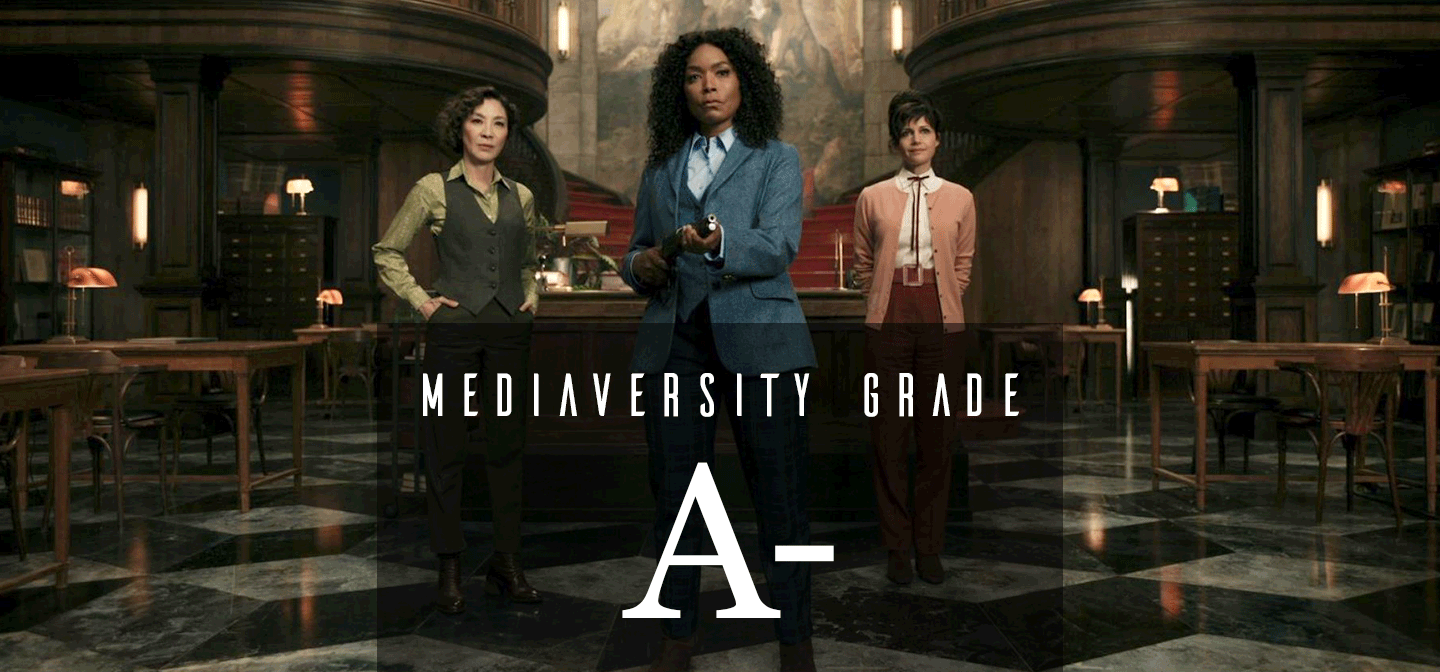
Gunpowder Milkshake (2021)
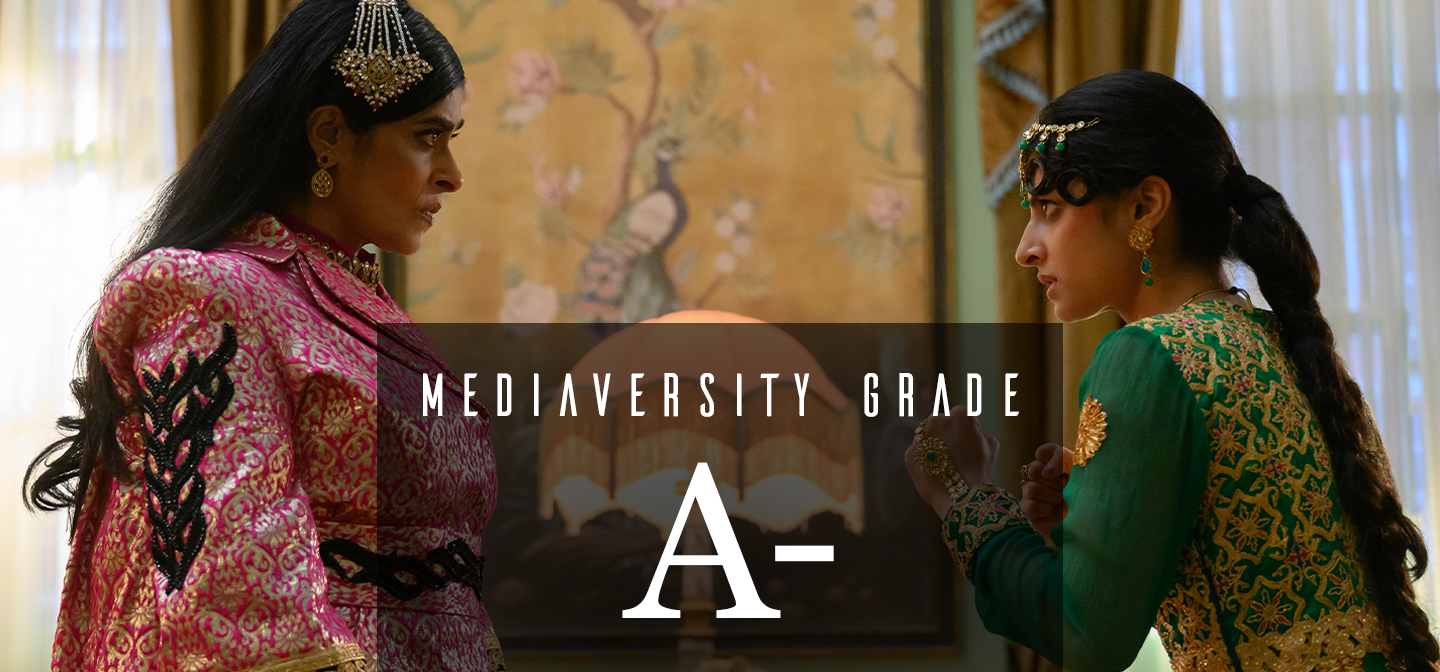
Polite Society (2023)

Atomic Blonde (2017)