
Youngblood (2026)
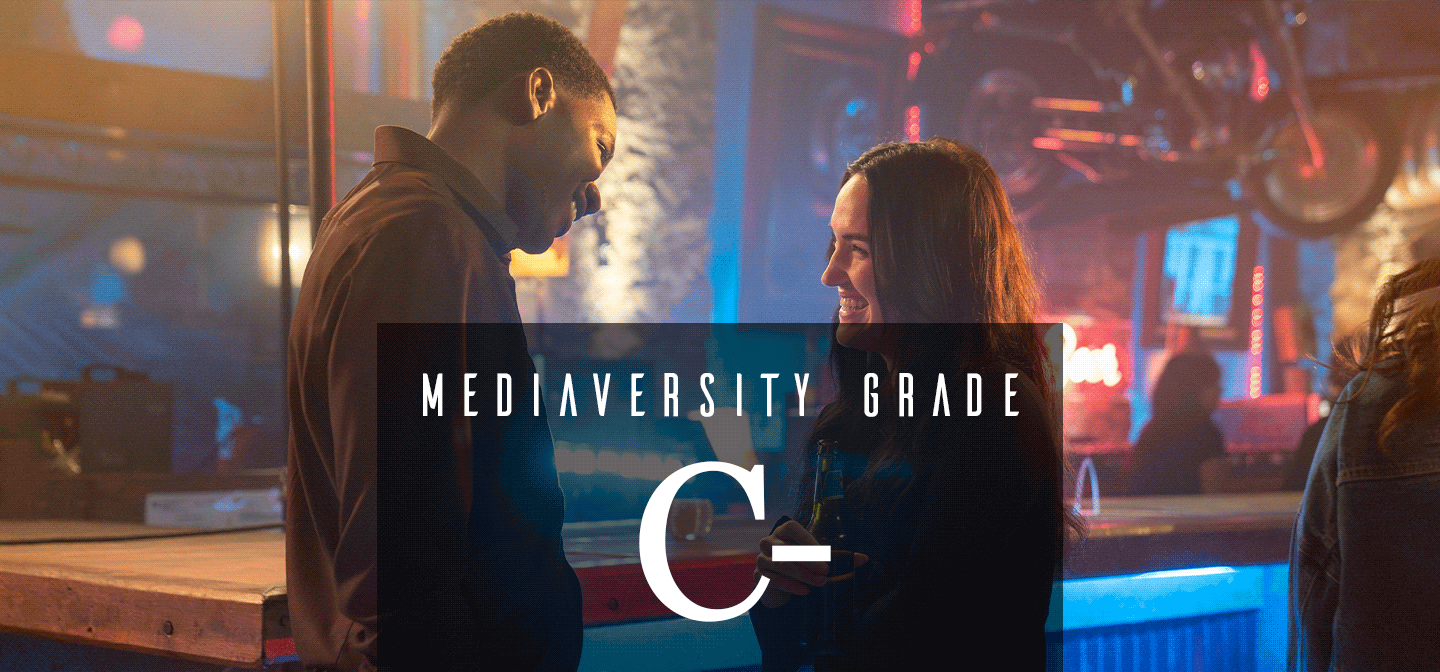
“I love seeing the hockey film Youngblood remade with a Black male lead, but the writing steps on women just so that he can have an emotional arc.”
Title: Youngblood (2026)
Director: Hubert Davis 👨🏾🇨🇦
Writers: Seneca Aaron 👨🏾🇨🇦, Josh Epstein 👨🏼🇨🇦, Charles Officer 👨🏾🇨🇦, and Kyle Rideout 👨🏼🇨🇦
Reviewed by Li 👩🏻🇺🇸
Technical: 2/5
A remake of a 1986 Rob Lowe hockey film, Youngblood follows Dean Youngblood (Ashton James), a talented Black hockey player who has a shot at making it into the junior leagues. But between a difficult-to-please dad and unprocessed grief from his mother’s death, Dean’s personal demons threaten to hold him back from his dreams.
It’s a premise with potential, but the film squanders it with sluggish pacing and underbaked character work. Despite being a hockey movie that charts a rookie’s ascent—crowdpleasing fodder—what we get is a lot of talking, punctuated by occasional training and game scenes.
The action hits that middling bar I was hoping for: nothing stands out, but it’s entertaining enough to warrant the broad label of a “sports movie.” The playoff sequences, especially, deliver genuine momentum. But the writing, cobbled together by a group of four screenwriters, deflates every plot turn with predictable outcomes. Does Dean meet a girl? Of course he does. Does she turn out to be the coach’s daughter? Yup. There are dad issues, a tough coach, a team captain who takes Dean under his wing, and so on.
Tropes aren’t inherently bad, but they need better writing to be engaging. Unfortunately, Youngblood overrelies on dialogue, leaving the film stagnant. Characters stand around and talk a lot, yet Dean’s emotional arc never satisfies. He starts the film with a chip on his shoulder, ready to punch anyone who disrespects him. By the end, he can absorb provocations without retaliating. But even though we eavesdrop on Dean in conversation after conversation, none of them do the necessary work of explaining why or how he changes. We’re asked to accept Dean’s growth without being shown it.
Gender: 2/5
Does it pass the Bechdel Test? NOPE
Within the first five minutes, Youngblood lazily flings out the dead mother trope, reheating tiresome scenes of Mom loves me! Oh no she’s dead! that plop like a wet towel on a locker room floor. It can only go up from there, and thankfully, it does (a little).
Besides Dead Mom (a glowing Olunike Adeliyi, who deserves better), there’s only one female character of significance: Jessie (Alexandra McDonald), Coach Chadwick’s (Shawn Doyle) daughter. She’s also Dean’s love interest, of course; heaven forbid a woman exist outside of male desire. But Jessie has a few other things going for her. She doesn’t play the overly supportive girlfriend—someone who takes on a man’s toxicity and smiles throughout. Jessie shoulders Dean’s problems, yes, but she at least gets to be annoyed about it. In her best line, Jessie interrupts another one of Dean’s woe-is-me moods to snap that she’s tired of the hockey men around her "acting like the world owes you something just for lacing up." She’s a goalie herself, working just as hard, if not harder, than all the guys around her, and for a fraction of their career prospects. (The average salary for an NHL player is $3.5 million. In the PWHL, it’s $75,000.)
In this vein, Jessie carves out a minor arc of her own, defying her father’s wishes to pursue the hockey program of her choice. But at the end of the day, her storyline only surfaces because it parallels Dean’s own relationship with his father. Without the male lead to anchor her scenes, Jessie needn’t be in Youngblood at all.
Race: 4/5
Black Canadian director Hubert Davis is on firmer footing here. But as the documentarian behind Black Ice (2023), which powerfully examines racism in professional hockey, it’s surprising that Youngblood stops short on this front.
First, the positives. The main character, Dean, is a Black hockey player played by St. Lucian actor James, and the film avoids tokenizing him by making his dad (Blair Underwood, African American) and brother (Emidio Lopes, Angolan Canadian) integral to Dean’s story. It’s also good that race isn’t completely ignored. Dean’s father grumbles that his son’s suspension was racially motivated, for example, and in a cameo, former NHL player Akim Aliu (who’s Nigerian-born and outspoken about the industry’s racism) greets Dean at the rink.
But the film doesn’t follow through on these threads, seeming reluctant to engage with them. While a character-driven story that happens to explore a Black male lead in depth is perfectly welcome, the specificity of the film’s Ontario Hockey League and NHL settings makes it puzzling that the movie tiptoes around the topic of race. Professional hockey has a well-documented, very public history of racism, where NHL players like P.K. Subban, Evander Kane, and others have faced overt hostility, not to mention the systemic hurdles that discourage young players of color from joining the sport.
Perhaps Davis felt that Youngblood’s subtext was sufficient—that the film didn’t need bananas thrown at Black players to convey anti-Blackness. But scenes showing a biased interview or unfair press coverage, or a joyful exchange with Black friends so that Dean can decompress from being in all-white spaces all day, would’ve gone a long way to flesh out a more color-conscious narrative.
Mediaversity Grade: C- 2.67/5
I love seeing a Black protagonist in a hockey movie that’s written and directed by Black filmmakers. But if we can get some stories that don’t step on women just so that men can have emotional arcs, even better. As it stands, Youngblood is both too obvious in parts, yet frustratingly oblique where it matters.
Like Youngblood? Try these other titles featuring Black sports dads.
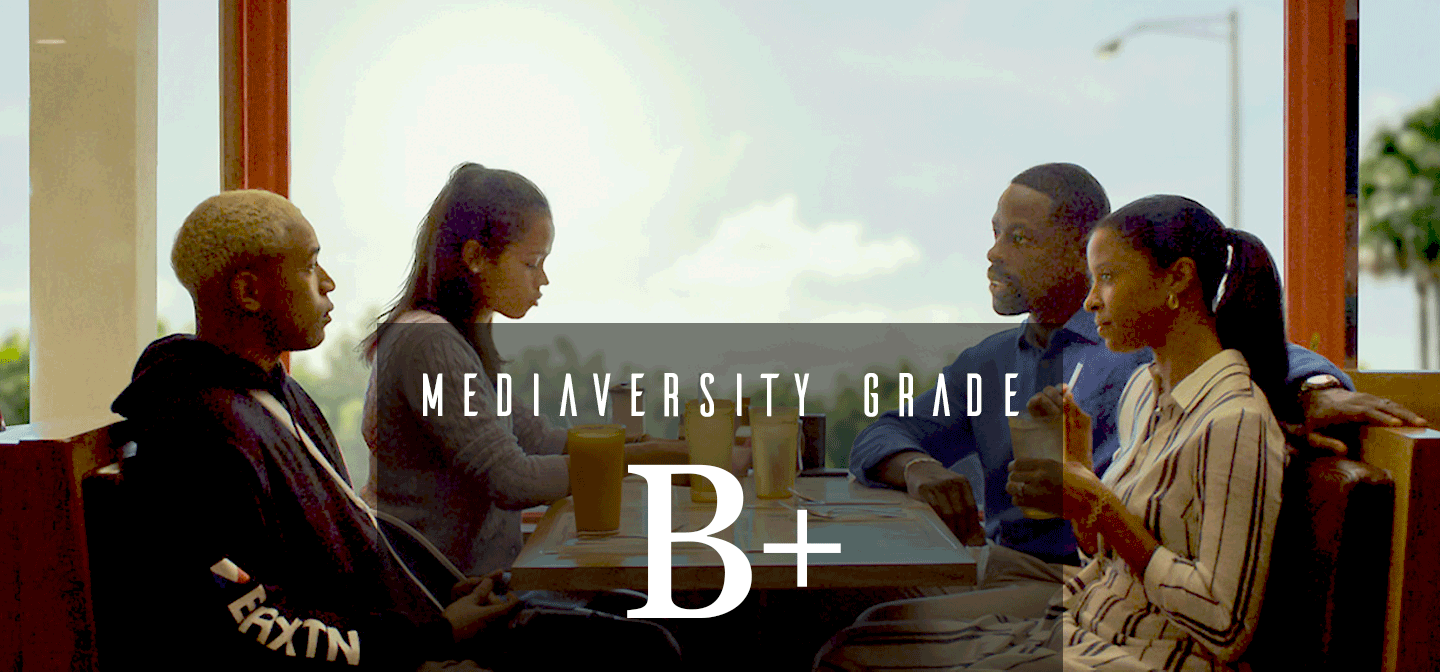
Waves (2019)
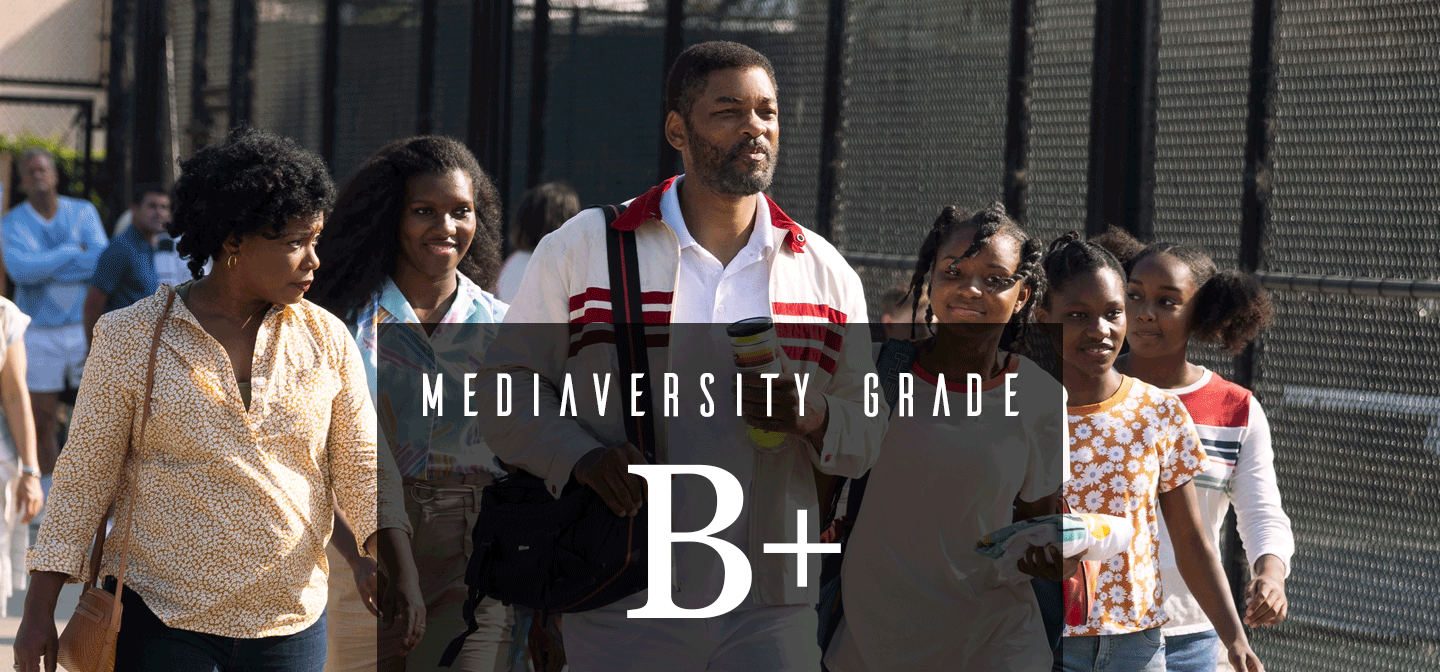
King Richard (2021)
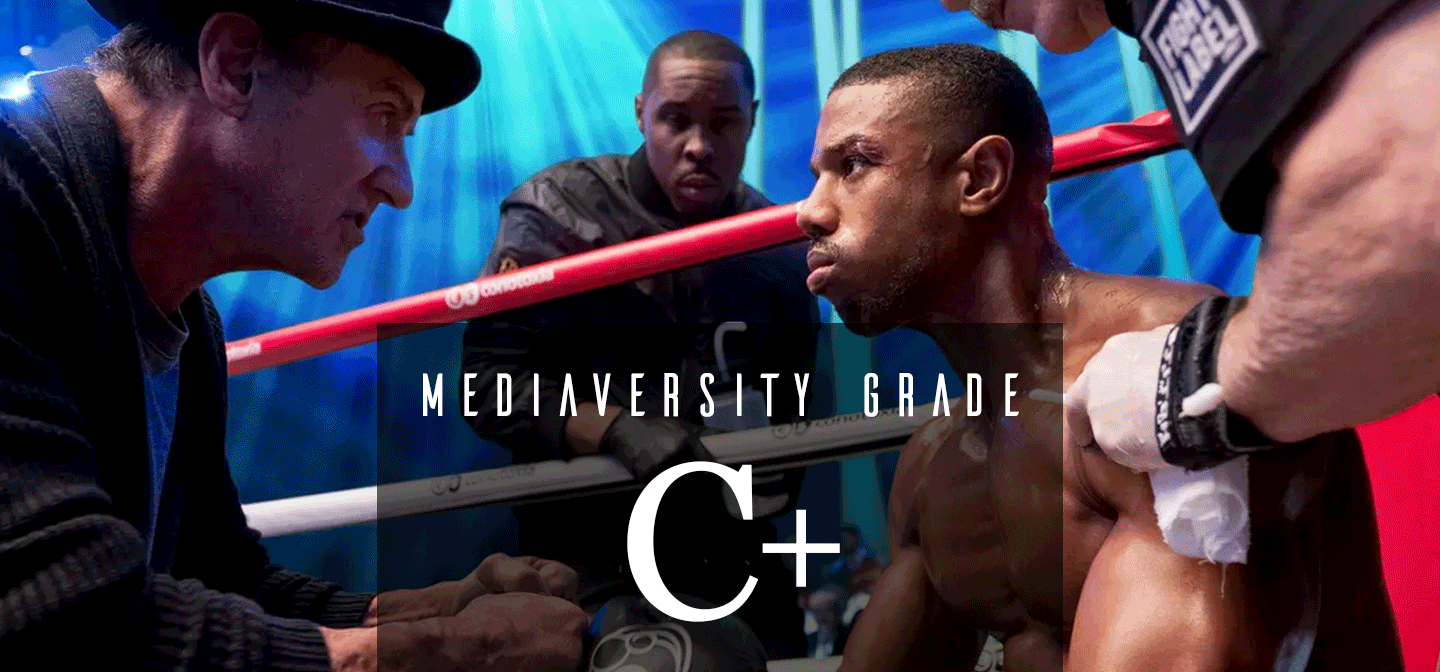
Creed II (2018)