
The Hunger Games: Sunrise on the Reaping

“The Hunger Games: Sunrise on the Reaping is a huge step back for the franchise on multiple fronts.”
Title: The Hunger Games: Sunrise on the Reaping (2026)
Director: Francis Lawrence 👨🏼🇦🇹🇺🇸
Writers: Screenplay by Billy Ray 👨🏼🇺🇸 and Michael Lesslie 👨🏼🇬🇧 based on the novel by Suzanne Collins 👩🏼🇺🇸
Reviewed by Li 👩🏻🇺🇸
—MAJOR SPOILERS AHEAD—
Technical: 3/5
Director Francis Lawrence follows up his latest Hunger Games movie, The Ballad of Songbirds & Snakes (2023), with The Hunger Games: Sunrise on the Reaping. This marks the sixth movie adaptation in Suzanne Collins’ bestselling book series and takes place 40 years after Ballad of Songbirds & Snakes, which oversaw the rise of villain Cornelius Snow. Audiences may know Haymitch Abernathy as Katniss Everdeen’s (Jennifer Lawrence) mentor, played by Owen Wilson in the original four films (2012–15), but now we get to know him as a teen (Joseph Zada).
Haymitch is your average guy from gritty District 12 who lives with his mom and little brother, and he adores his girlfriend, Lenore Dove (Whitney Peak). Unfortunately, he’s selected as a “tribute,” or competitor for the 50th annual Hunger Games, a battle royale that pits children and teens against one another in a fight to the death.
Lawrence has directed nearly all the Hunger Games films, and that consistency is visible in Sunrise on the Reaping. He brings the usual action, entertainment, and comfortable pacing, but this latest chapter has two major drawbacks: cinematography and story.
Eschewing the lush naturalism of the original series and the grungy rawness of Ballad of Songbirds & Snakes, this latest Hunger Games arena goes all in on surrealist, brightly colored—and obviously CGI—landscapes and animals. Folks will be of different minds, but I found the visuals gaudy, and frankly, ugly. On the one hand, the art direction could be interpreted as a comment on the cruel Hunger Games being deliberately engineered and sickeningly glossy. Director of photography Jo Willems, who has worked on all the franchise’s films since 2013’s Catching Fire, tells Entertainment Weekly that “color was definitely something that we wanted to push.”
But it’s hard to ignore how that artificiality lands in today’s context of AI-driven changes in moviemaking (and their poor reception thus far). Fair or not, Sunrise on the Reaping comes across as if it’s cutting corners with potentially AI-generated VFX. It’s a shame, because the District 12-set scenes retain the franchise's appealing naturalism, which only serves to highlight how cheap the arena looks.
As for the story, per most prequels, the plot feels rote because we always know what happens next. It lends the entire film a sense of predictability and lessens the emotional impact of character deaths and setbacks. Even individual plot points recur, and by the time we’re seeing Haymitch crying over a fourth or fifth dead body in the exact same position of wretchedly rocking back and forth over a new victim, wracked with guilt, it’s too repetitive to feel much at all.
Gender: 3/5
Does it pass the Bechdel Test? YES
It's disappointing that the first four movies, which embodied feminism through the hero of Katniss, have been watered down in recent years. Ballad of Songbirds & Snakes presented co-leads played by Tom Blyth and Rachel Zegler, and now Sunrise on the Reaping is entirely male-centric. Women like fellow District 12 tribute Maysilee Donner (Mckenna Grace) still are shown to be cunning and athletic, but she's firmly in a supporting role. Worse yet is Haymitch’s girlfriend, Lenore, who exists as a two-dimensional, idealized symbol who inspires Haymitch before being fridged. She and other girls, like District 12’s youngest tribute, Louella McCoy (Molly McCann), are ultimately cannon fodder in the broader goal of explaining Haymitch’s trauma and alcohol addiction.
Race: 1/5
While many, many characters die in Sunrise on the Reaping, including several white characters, the way it paints (and kills) characters of color falls into racist tropes that I was surprised to see. Thus far, The Hunger Games films have had a decent track record of casting with racial diversity. Ballad of Songbirds & Snakes even co-stars Zegler, who’s Polish-Colombian American.
But it’s clear early on that Sunrise on the Reaping is going in a different direction. The first tribute to die among District 12’s four competitors is the only one who’s not white—an Asian teen named Wyatt Callow (Ben Wang). Wyatt is stereotypically awkward but kind and sacrifices himself to save a white character. On the other end of the spectrum, a Black male teen, Panache (Jhaleil Swaby), is a “career tribute” who’s trained his entire life to succeed in the Hunger Games. He’s portrayed as a senseless beast, and when he snarls and rips his shirt off to display bulging muscles and a thirst for killing, it’s deeply uncomfortable to watch. One can’t help but wonder whether Lawrence, or anyone on set, really, was connecting the dots between Panache’s portrayal and America’s ugly history of portraying Black men as violent animals in the media. (It doesn’t help that Panache is murdered by a white character, who’s portrayed as gallantly saving the film’s white lead, Haymitch).
It does slightly offset Panache’s racist depiction when audiences meet other Black male characters, who are positively shown. But even they fall into narrative clichés. A brave, allied tribute, Ampert (Percy Daggs IV), dies so that Haymitch can seem empathetic. Among adults, a handful of conspirators heroically plot against the evil Capitol of Panem, but the only one who’s caught (and implied to be severely tortured and punished) is Black—Beetee (Kelvin Harrison Jr.). He nobly takes all of the blame, saving White co-conspirators like Plutarch Heavensbee (Jesse Plemons) and Wiress (Maya Hawke) from further punishment.
Mediaversity Grade: D 2.33/5
Surprisingly racist and uninterested in the feminism that made the original series so beloved and memorable, The Hunger Games: Sunrise on the Reaping is a huge step back for the franchise on multiple fronts.
Like The Hunger Games: Sunrise on the Reaping? Try these other titles featuring massive melees that leave out the gore.
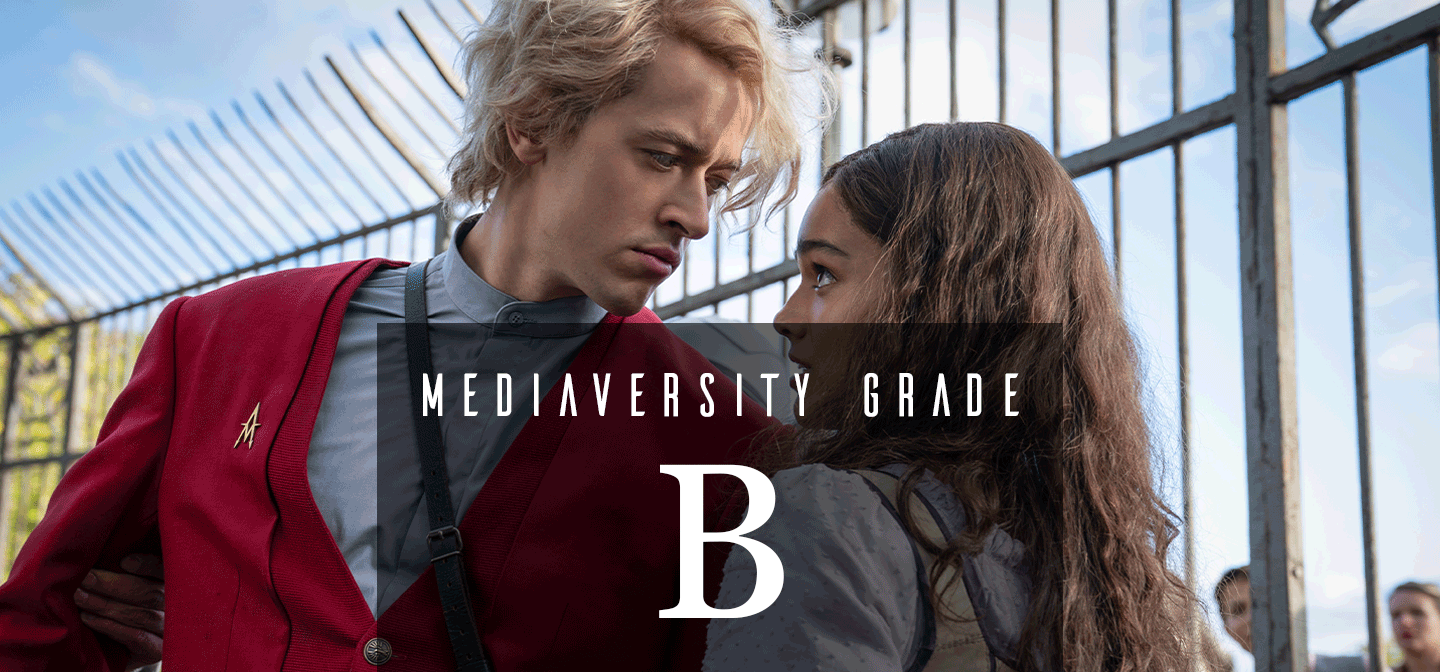
The Hunger Games: The Ballad of Songbirds & Snakes (2023)
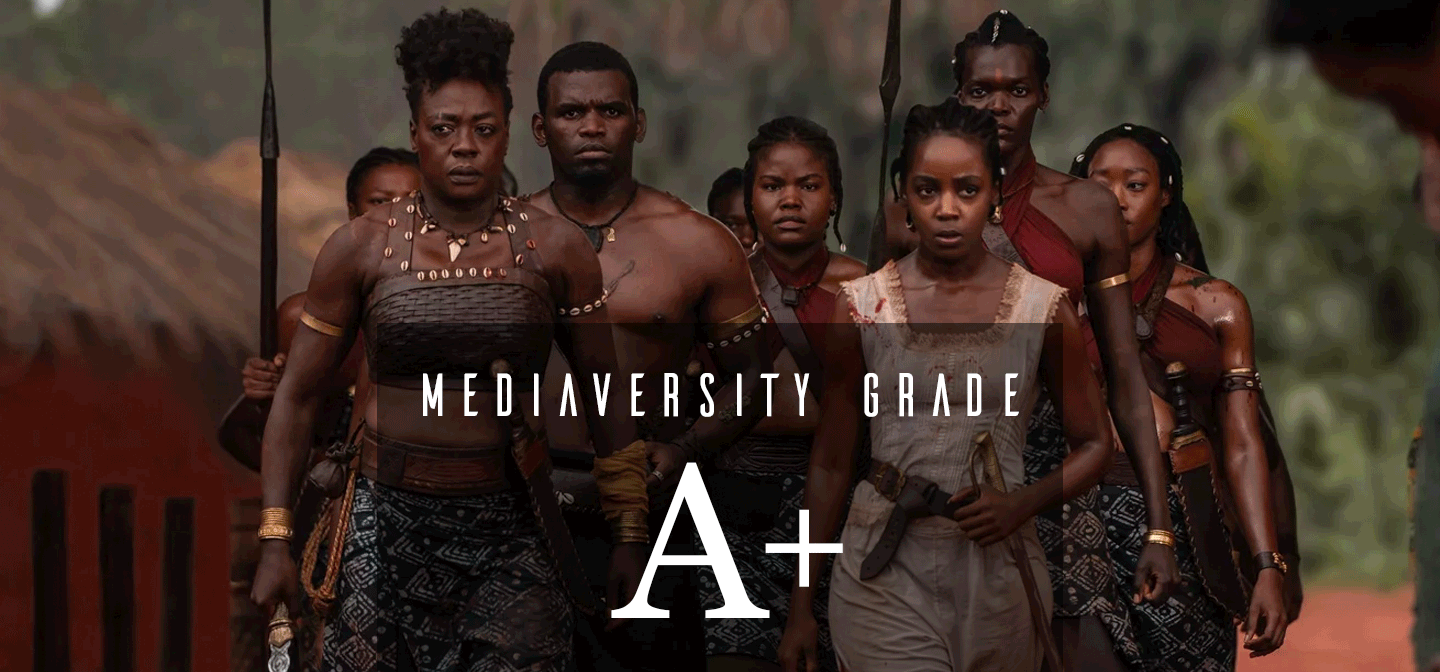
The Woman King (2022)

Avengers: Endgame (2019)