
Wild Horse Nine
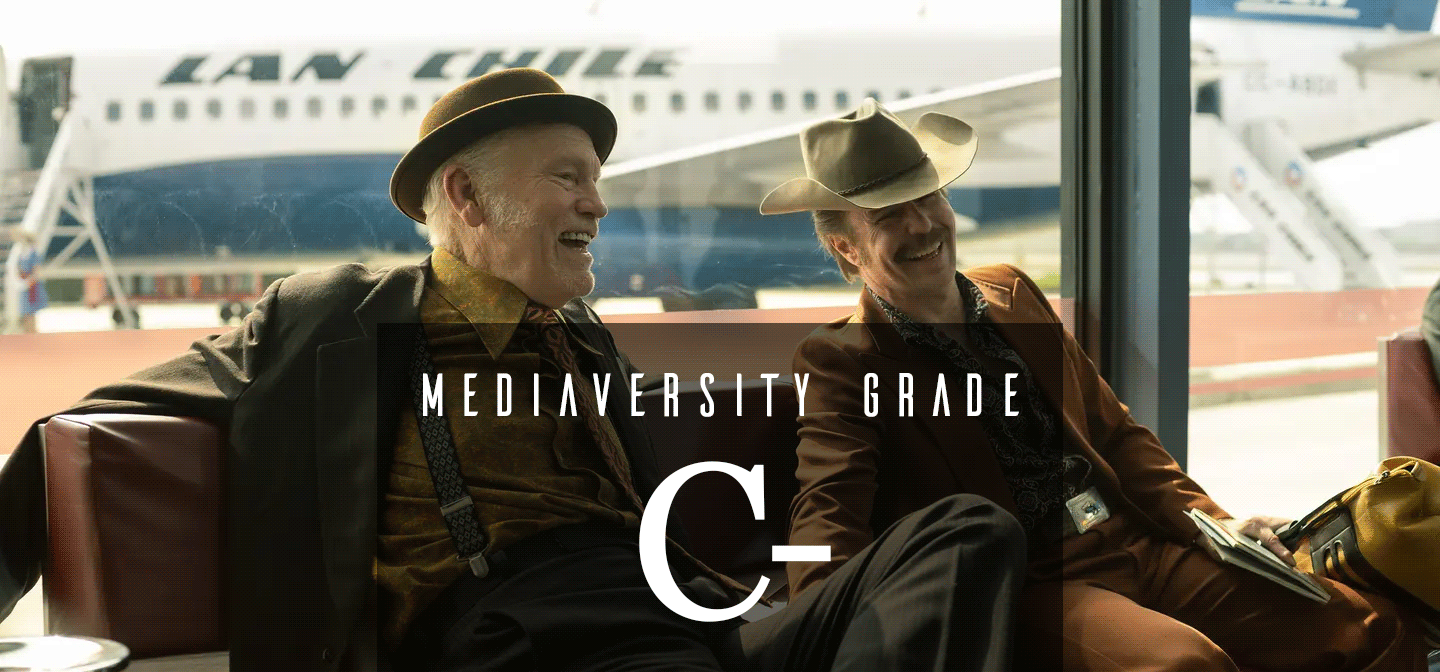
“Wild Horse Nine’s lack of diversity is partially the point. But it follows such a familiar premise that there’s really no excuse not to change it up a bit.”
Title: Wild Horse Nine (2026)
Director: Martin McDonagh 👨🏼🇬🇧🇮🇪
Writer: Martin McDonagh 👨🏼🇬🇧🇮🇪
Reviewed by Sarah Manvel 👩🏼🇮🇪🇺🇲🌈
Technical: 5/5
The funny and pointed Wild Horse Nine will likely result in an Oscar nomination for John Malkovich, who won the Volpi Cup for Best Actor at the Venice Film Festival. It will also draw American attention to the other 9/11: the Chilean coup d’état in September 1973. Wild Horse Nine takes place in the run-up to that event, as two CIA agents working in Chile—Chris (Malkovich) and Lee, played by a very good Sam Rockwell—are packed off on a holiday to Easter Island by their boss, MJ (Steve Buscemi). MJ has deemed Chris, who is privy to crucial intel, to be a liability. Even on vacation, Chris could do great damage to the CIA.
Because Lee is Chris’ best (and maybe only) friend, he’s willing to cut him a lot of slack. As the duo tour the island, seeing the mo’ai statues and making amusing small talk with each other, they bump into a pair of fellow tourists, Monica (Mariana di Girolamo) and Alicia (Ailín Salas). Chris and Monica develop a connection, which becomes risky for both of them. Especially since, despite Lee’s best efforts, Chris has every intention of doing whatever he wants, even if it means angering MJ and the CIA.
This is a movie made by people working at the top of their game. Writer-director Martin McDonagh has finally matured past his early work, such as his plays A Skull in Connemara and The Lieutenant of Inishmore, which found violence hilarious. Here, Chris, Lee, and MJ are all haunted by their choices and struggling to manage regrets. The repeated refrain that sometimes you have to do a terrible thing for the greater good doesn’t shy away from how terrible those things can be. But the friendly Monica and Alicia, supporters of socialist president Salvador Allende, are horrified by Chris’ cynical comments about the CIA’s planned coup. They personify the hope for a better future that Chris no longer has.
The plot twists are shocking, and McDonagh’s signature bursts of vivid violence feel necessary here, not just played for laughs. Ben Davis’ cinematography provides a sunny vacation-style feel that mitigates the tough issues discussed without ever being cloying. Similarly, the 1970s costumes and set dressings are strong without ever being a distraction.
Gender: 2/5
Does it pass the Bechdel Test? YES, but barely
While Monica and Alicia are both distinct characters, their purpose is to react to the male leads. In addition, Lee’s wife, Marge (Parker Posey), appears separately, shown only on long-distance phone calls with her husband from their decadent house. It’s disappointing that within the main cast of six, the three women are very much in supporting roles.
Race: 1/5
The main characters of color, Chilean students Monica and Alicia, are played by Di Girolamo (who’s Chilean) and Salas (Brazilian-born Argentine). In a minor role, a hotel housekeeper is also a woman of color. But despite the film’s settings of Easter Island and Santiago, Chile, Wild Horse Nine focuses squarely on white male Americans. Background characters of color are few and far between, with McDonagh preferring to linger on Easter Island’s natural landscapes or on intimate conversations between Chris and Lee.
Bonus for Age: +0.50
Posey and Rockwell are in their late 50s at the time of this review, Buscemi is in his late 60s, and Malkovich is over 70. Their ages aren’t a focus of the film, yet Chris’ connection with the much younger Monica (Di Girolamo is in her mid-30s playing a college student) could have been fresher. To Chris’ astonishment, he’s finally found someone he wants to speak honestly with. It would have been much more interesting if that woman was at least middle-aged.
Mediaversity Grade: C- 2.83/5
The lack of diversity in Wild Horse Nine’s tale of unforgivable American choices, and their impact on the rest of the world, is partially the point. McDonagh, a British-born Irishman, is making an indictment of the United States’ white male arrogance. But the film still borrows Chile’s history as a backdrop for that indictment and pushes Chileans themselves into supporting roles.
It’s a familiar formula: Missing (1982) also dramatized the Chilean coup through American eyes, Argo (2012) followed Americans during the Iranian Revolution, and Blood Diamond (2006) centers on Leonardo DiCaprio’s mercenary character amid Sierra Leone’s civil war. With such repetitive precedent, there’s really no excuse not to change it up a bit.
Like Wild Horse Nine? Try these other political dark comedies.
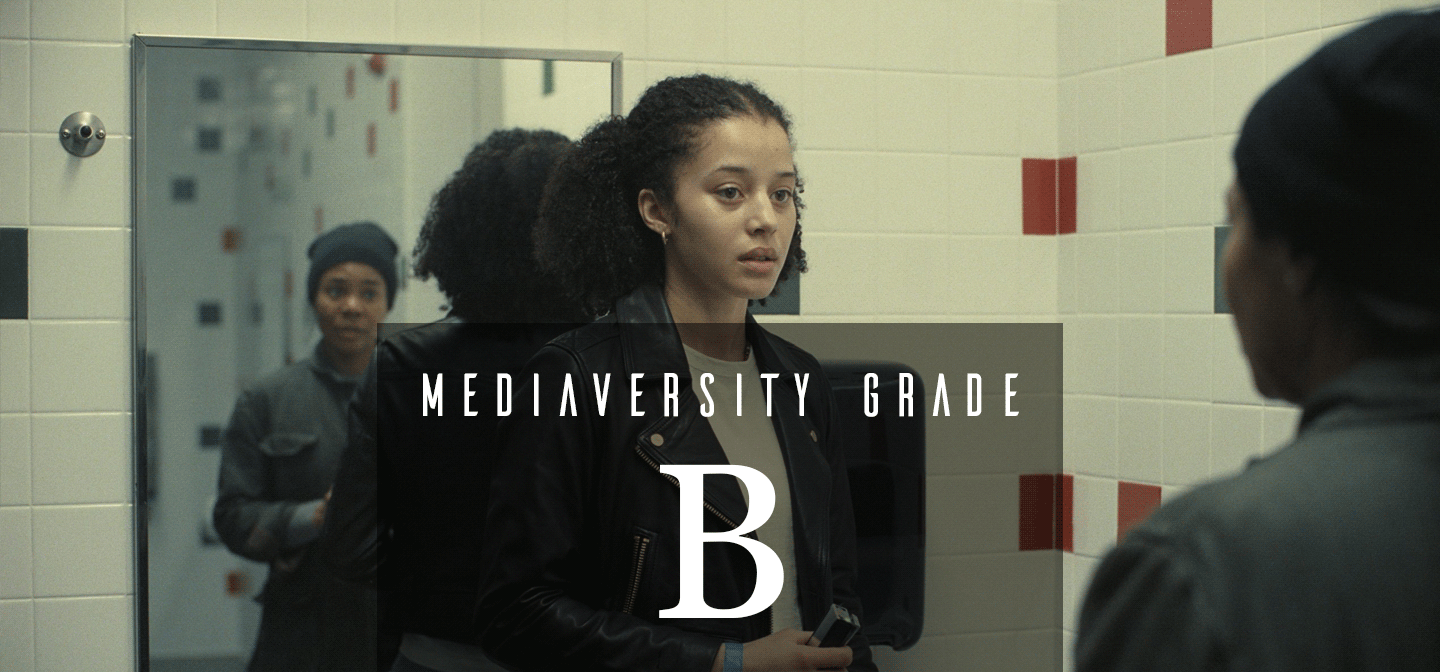
One Battle After Another (2025)
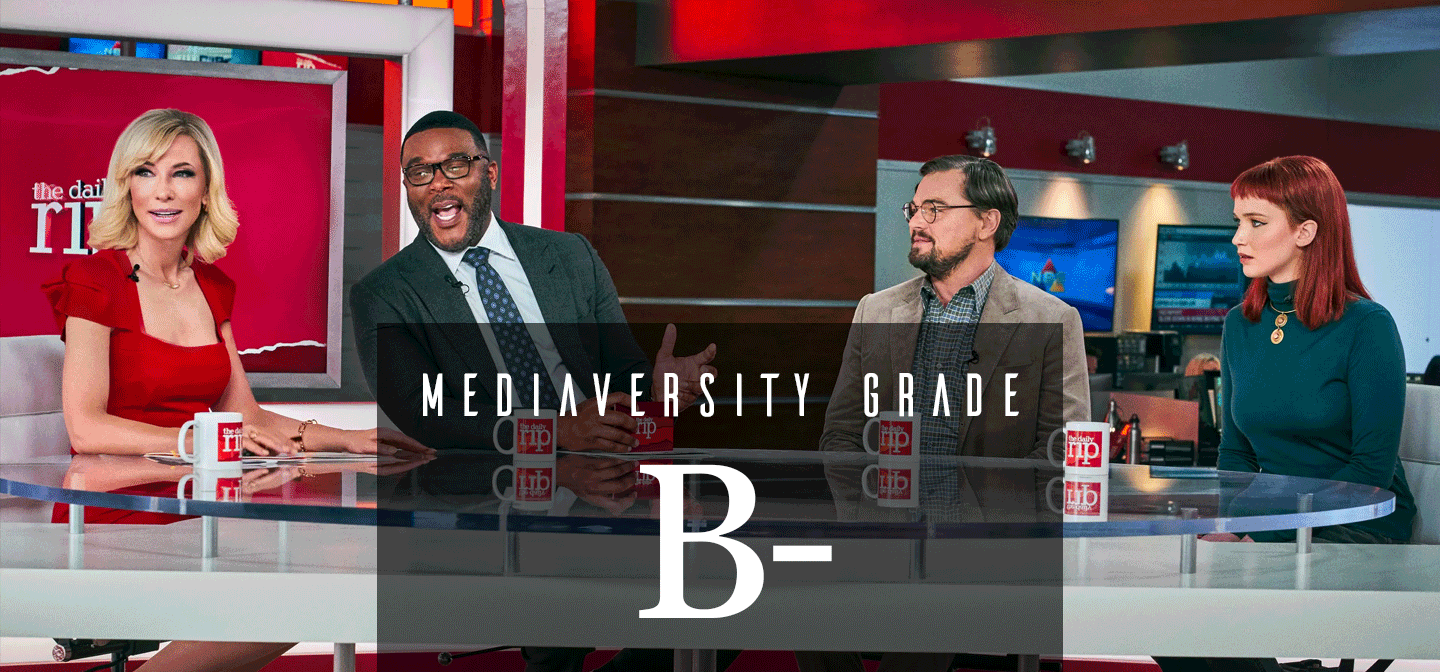
Don’t Look Up (2021)
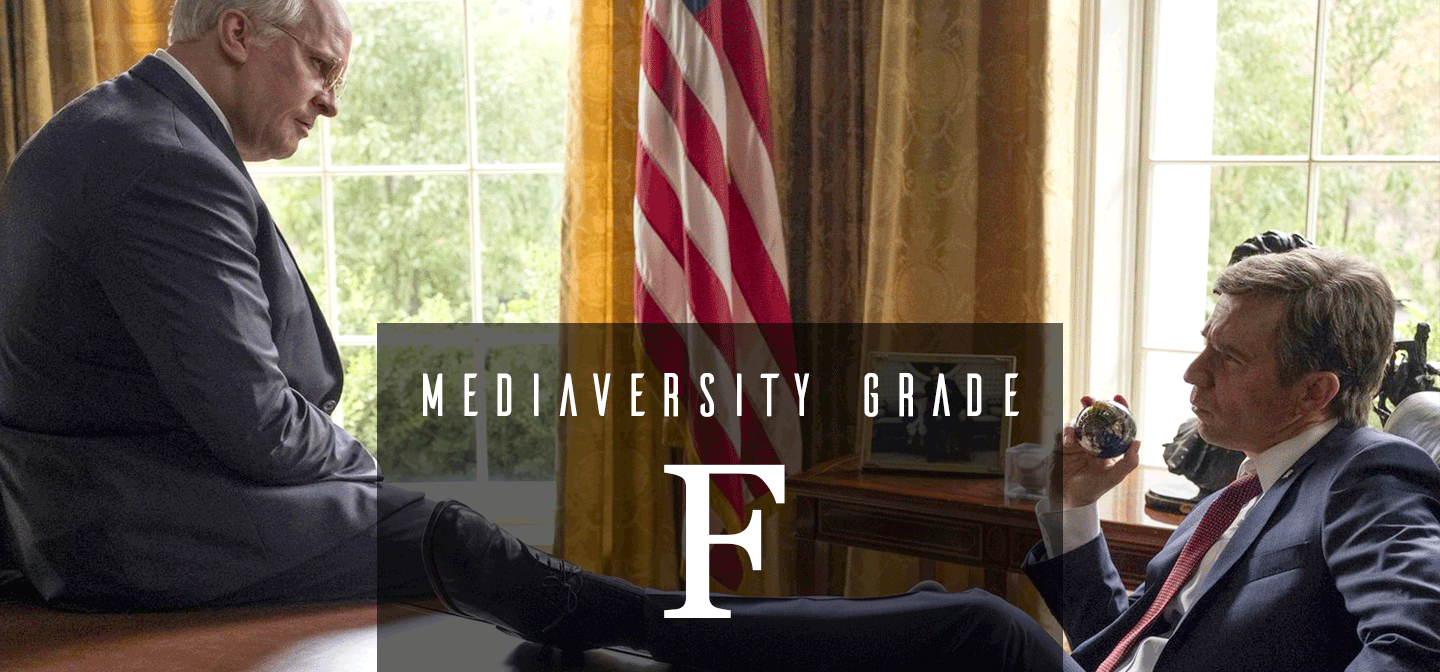
Vice (2018)