
Whalefall

“Whalefall can’t commit to a central idea, and clichéd Inuit references only add to its sense of clumsy overreach.”
Title: Whalefall (2026)
Director: Brian Duffield 👨🏼🇺🇸
Writers: Screenplay by Brian Duffield 👨🏼🇺🇸 and Daniel Kraus 👨🏼🇺🇸 based on the book by Daniel Kraus 👨🏼🇺🇸
Reviewed by Anthony Marcusa 👨🏼🇺🇸🇨🇦🌈♿
Technical: 3.25/5
Based on the book by Daniel Kraus, Whalefall examines the tumultuous relationship between a father and son using a whale as a metaphor. But far too much melodrama sneaks into director Brian Duffield’s survival film, which otherwise provides visceral thrills, unnerving body horror, and haunting imagery.
It opens with Mitt Gardiner (Josh Brolin), clearly ill and coughing, on a small boat with his friend Hewey (Josh Ortiz). Mitt ties a weight around himself and jumps off the boat. Following this suicide, his family gathers to honor his memory. Mitt’s wife, Zara (Elizabeth Shue), and daughters Eva (Jane Levy) and Nan (Emily Rudd) remember him fondly. But the youngest child, Jay (Austin Abrams), has a more difficult time expressing his emotions and reconciling the memory of his loud, demanding, and often drunk and violent father.
Jay sets out to retrieve his father’s bones from the ocean. While scuba diving, he encounters a large sperm whale hunting a giant squid and gets entangled in the squid’s tentacles as they’re both swallowed whole. The next moments within the whale are breathtaking, claustrophobic, and unsettling. Jay awakens in the whale’s first stomach, which has a crushing mechanism, and serves as Jay’s “home base” for most of the movie.
The first two-thirds of the movie feel like a survival thriller, akin to 127 Hours (2010), as Jay suffers from burns, a broken ankle, a cut-up hand, and head injuries as he bleeds from his ears and nose in his quest to escape. But then a sudden tonal shift turns into a half-hearted metaphorical journey of the mind and soul, with Mitt somehow absolved of his past abusive actions. Jay hears his father’s voice as Mitt’s essence, spirit, or energy seems to have merged with the whale. This version of Mitt is apologetic and soft, and during these conversations, the whale (and Jay within) seem to be in an entirely different realm, floating in an empty black void. And then the film jarringly pivots again, concocting an overly convenient ending.
Gender: 1.75/5
Does it pass the Bechdel Test? NOPE
This movie is about masculinity and the relationship between a gruff, alpha father and his young son, who doesn’t want to follow in his dad’s footsteps. Mitt talks about life in terms of nature, dividing people into predators or prey. He’s wary of society and hospitals, choosing to die on his own terms in the sea.
With so much space taken up by male leads, the three women in the film—Zara, Eva, and Nan—feel like afterthoughts. They only have a couple of scenes, and their conversations focus on Mitt or Jay. For example, Jay’s sisters mainly exist to give their brother advice on how to grieve.
Race: 1/5
All of the actors portraying the Gardiner family are white. Ortiz, who plays Hewey, is Puerto Rican. He appears in two scenes and speaks only in one.
Mitt makes a couple of references to Inuit culture, vaguely noting that they honor nature and animals, specifically the whale. In one scene, he insists that he and his son get “Inuit tattoos.” While these comments are fleeting, they do play into a common trope, as seen in Avatar (2009) and Dances with Wolves (1990), where a white man appropriates Indigenous culture to appear wise, spiritual, or pure.
It doesn’t help that Whalefall isn’t entirely clear on whether it endorses or criticizes Mitt’s extreme beliefs. At one point, Mitt rails against what he calls the “industrial complex” of government and public institutions, and when his voice inhabits the whale, the phenomenon builds on the Indigenous-mysticism shorthand of his earlier references—which the film never questions. Adding actual Inuit characters, or taking a clearer stance against Mitt’s toxicity, would’ve gone a long way toward dispelling this flat depiction of Inuit culture.
Bonus for Age: +0.25
Brolin was 58 when the film was released, and his character is generally shown as independent and resourceful. That said, his age is also implicitly tied to illness, which falls into the media trend of portraying adults over 50 as in decline.
Deduction for Disability: -0.25
A character briefly mentions that Mitt had a type of cancer called mesothelioma. When Mitt says that he doesn’t want to spend time in a hospital and chooses to die by suicide instead, it slips into the damaging cliché of associating illness with death, rather than being interested in a sick character while they’re alive. 18.6 million Americans lived with cancer last year, and that number is only expected to grow as survival rates increase.
Mediaversity Grade: D 2.00/5
As a thriller, Whalefall is a fun watch, and it impresses technically with its sights and sounds. But Duffield can’t commit to a central idea, or perhaps doesn’t trust the audience enough to leave his ending ambiguous. Clichéd Inuit references only add to the film’s sense of clumsy overreach.
Like Whalefall? Try these other titles featuring Austin Abrams.
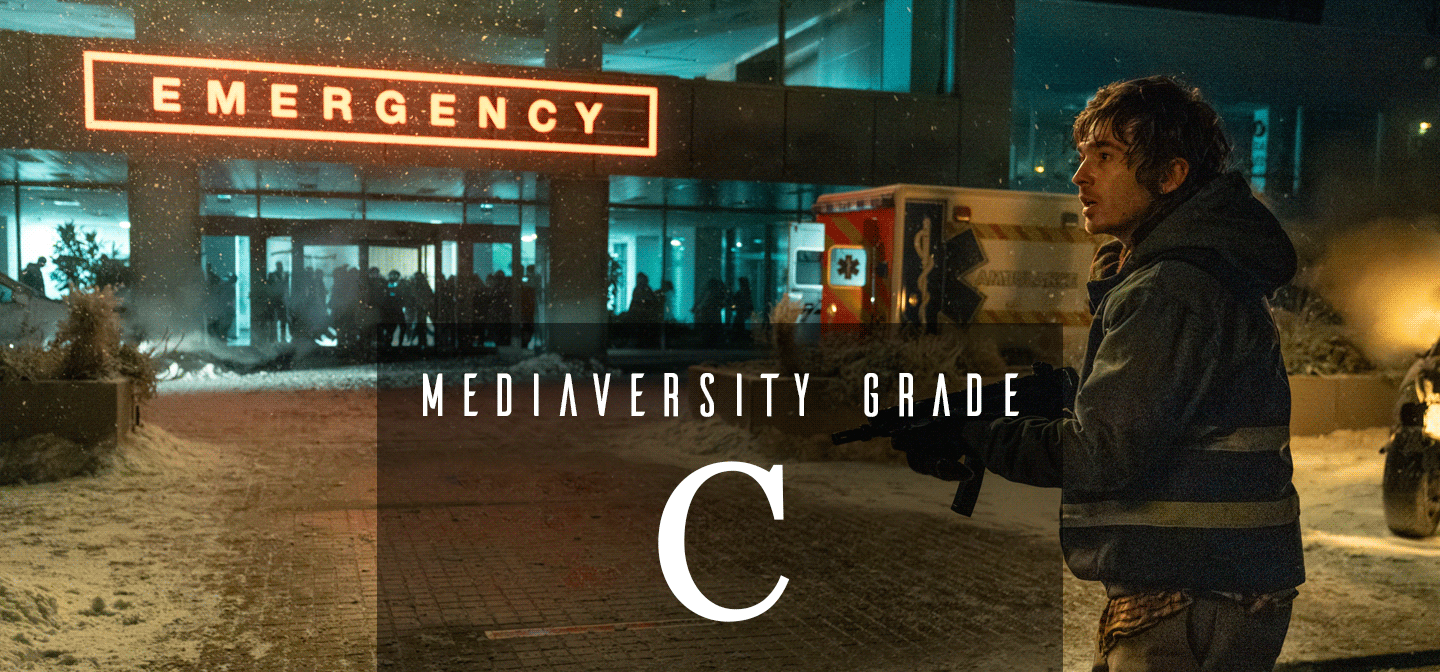
Resident Evil (2026)
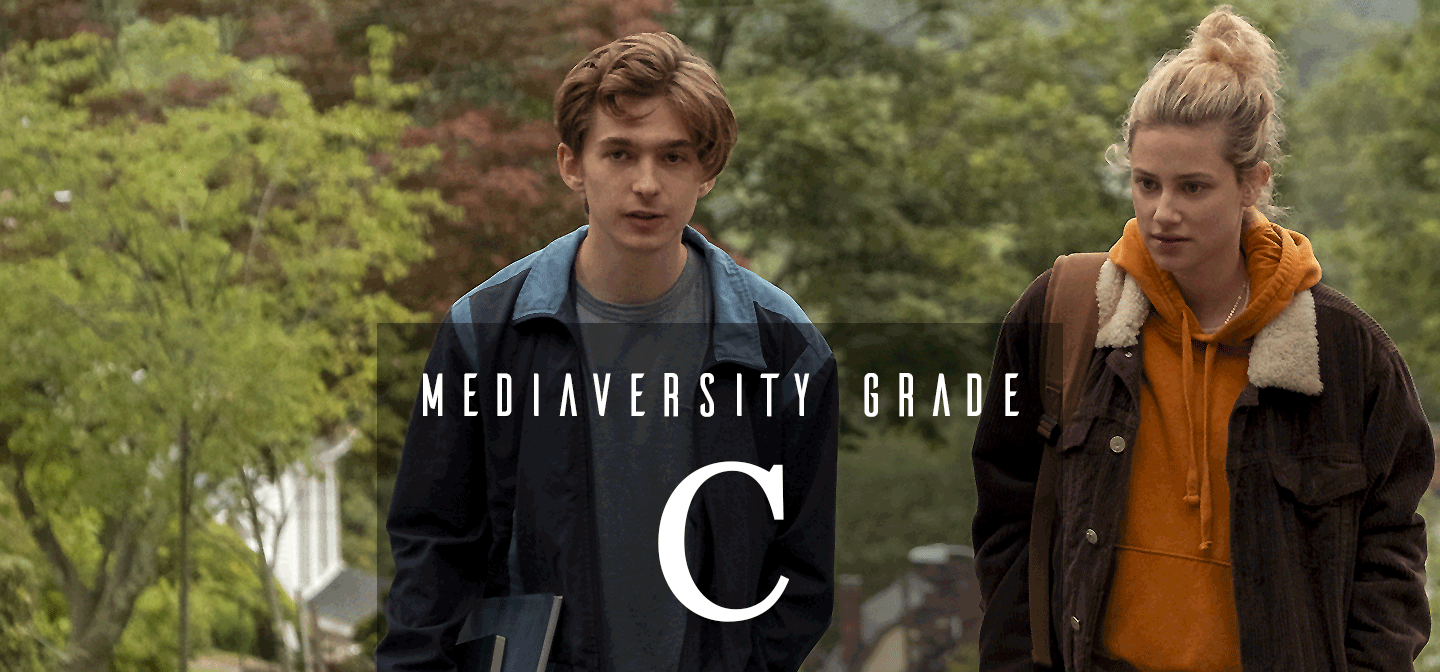
Chemical Hearts (2020)
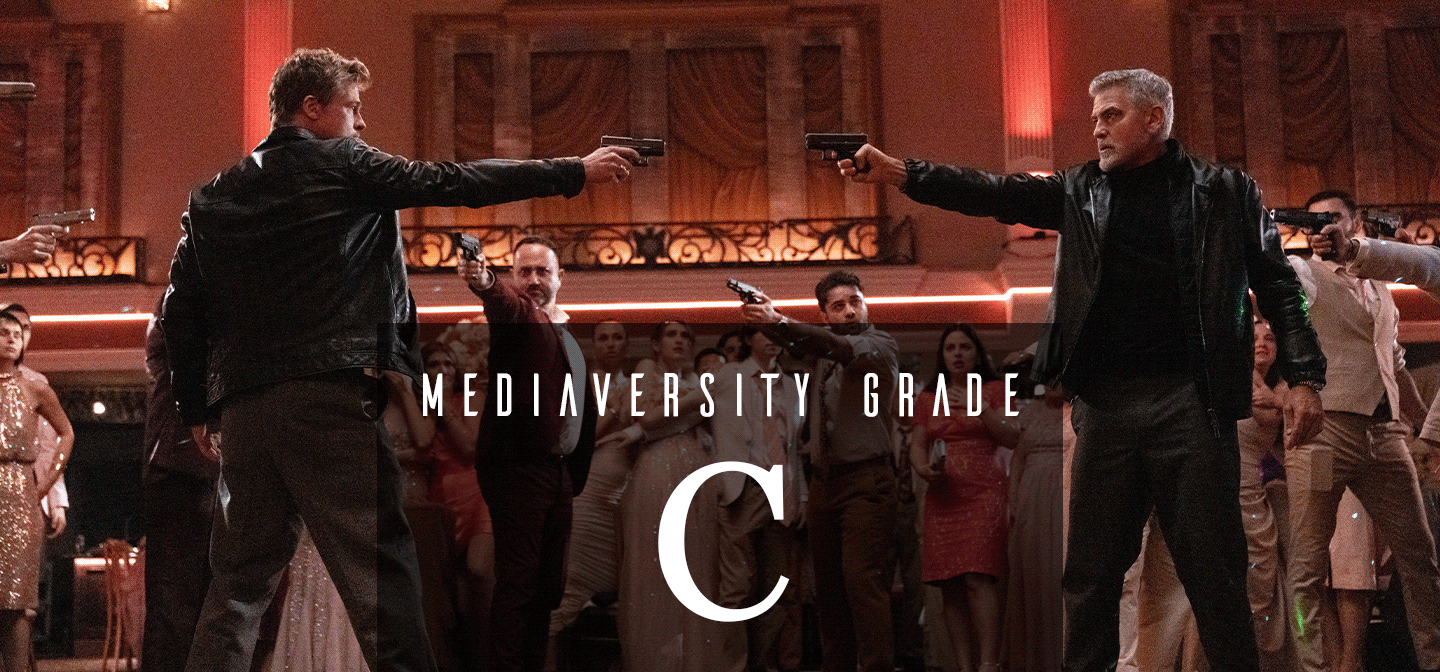
Wolfs (2024)