
Blind AF
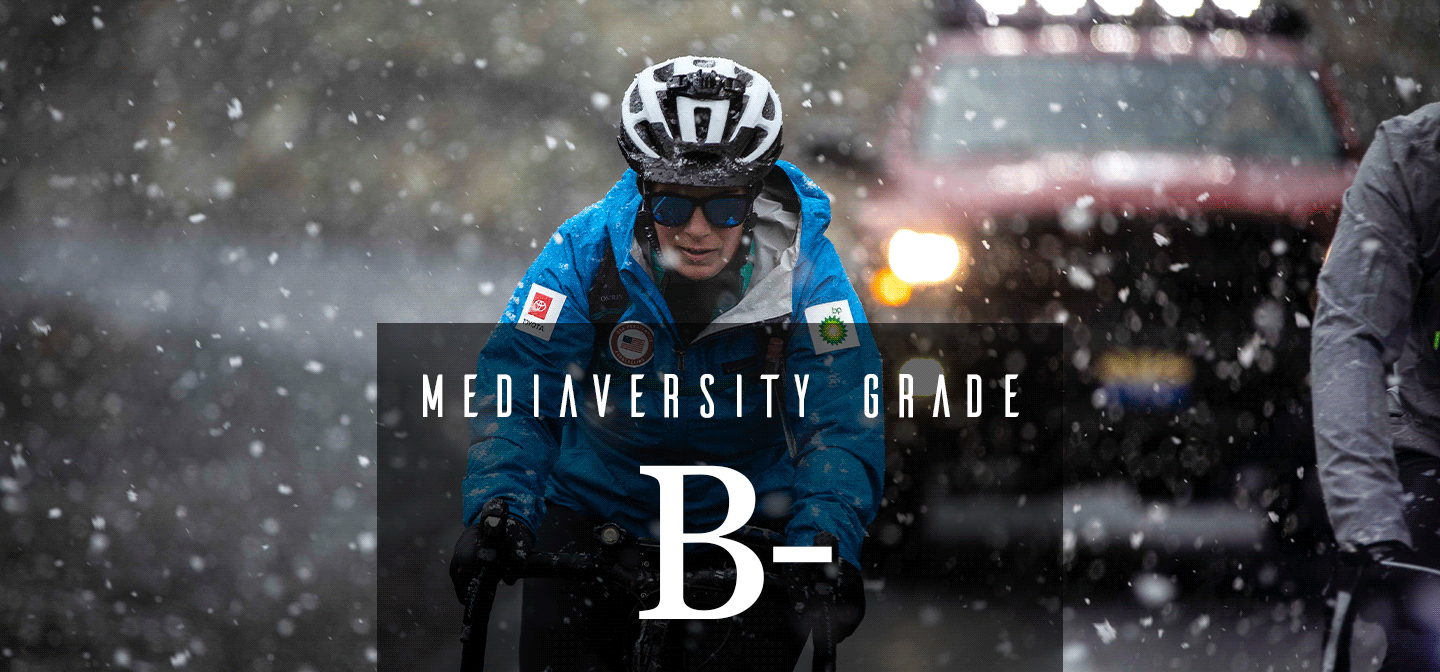
“Blind AF never sands down Shawn Cheshire’s rougher edges to the point where she becomes a disabled symbol rather than a gritty human being who lives with blindness and complex PTSD.”
Title: Blind AF (2026)
Director: Gina LeVay Goldstein 👩🏼🇺🇸
Producer: Gina LeVay Goldstein 👩🏼🇺🇸
Reviewed by Li 👩🏻🇺🇸
—SPOILERS AHEAD—
Technical: 3.5/5
Directed by Gina LeVay Goldstein, Blind AF follows Paralympian Shawn Cheshire on her 3,600-mile TransAmerica tour—the first-ever completed by a blind cyclist on a single, non-tandem bike. Along with the physical hurdles that this entails, audiences also ride along with Shawn’s excavations of the past.
The parallel format generally works well, with good pacing that never sags. The exception, however, comes at a key moment. The film’s physical and emotional climax sees Shawn confronting a major childhood trauma, but the narrative is a little confusing to follow. An important family meeting, where discussions of past abuse are brought up, is edited too quickly with footage of Shawn on another incredible undertaking: training for, and climbing Mt. Everest. The concept of Shawn overcoming two extraordinary feats simultaneously is neat in theory, but the back-and-forths are jarring and disrupt each other. Additionally, a couple of adult women who greet Shawn and sit next to Shawn’s dad aren’t labeled. So the viewer doesn’t really know who’s listening to Shawn’s harrowing past, blunting the overall impact. Even if this is done for privacy reasons, the resulting ambiguity contrasts with the rest of the documentary, which is compiled with patience and clarity.
—SPOILERS IN THE NEXT CATEGORY—
Gender: 5/5
Does it pass the Bechdel Test? YES
Directed by a female filmmaker, Blind AF also centers a female athlete. We meet Shawn in several different aspects of her life, lending a well-rounded picture. She talks about women’s issues, including being a mom to two kids and a grandmother. Her traumas also disproportionately affect women: Shawn bravely discusses being in an abusive marriage for 10 years, as well as the way that she and her half-sister were molested by Shawn’s dad when they were children. Throughout the film, Shawn wears Wonder Woman T-shirts and writes the superhero’s name in the sand on a beach. The documentary spends its entire runtime showing just how true that is.
—END SPOILERS—
Race: 1.5/5
This film is predominantly made up of white subjects. In one brief scene, Shawn greets and high-fives a Black family. In another scene at a Blind school, some of the students are people of color.
Bonus for Disability: +1.00
The film centers on a blind athlete, but other disabilities are organically woven into the documentary. Shawn also has complex PTSD, and her therapist gives an interview, shedding light on Shawn’s experience of it. Kim Fox, a US Army veteran and Shawn’s RV driver on the TransAmerica tour, talks about how his PTSD from surviving two IED explosions can trigger him at any moment. Shawn’s dad has Parkinson’s. These traumas, injuries, and disabilities are never oversimplified into becoming “inspiration porn.”
LeVay effortlessly shows how natural and commonplace disability is, and she doesn’t shy away from the challenges of being disabled. Shawn talks about her depression, especially after first suffering the head trauma that causes her blindness at age 36. Other scenes highlight the rampant ableism of strangers who insist Shawn is “faking it,” and show angry cyclists on the road who yell at Shawn and her team for not “following traffic laws” (which, of course, are designed for sighted people). The film also excels at conveying the intense, constant mental load that disabled people take on to navigate a world that’s been designed for nondisabled people.
Bonus for LGBTQ: +0.25
One of Shawn’s kids, Ryker, is trans. They’re given a platform to share their thoughts, and Ryker says, “I see my mom as someone who is exercising her agency and autonomy to make these decisions and choices despite the challenges and experiences she faces on a daily basis. To me that says, ‘fuck you trauma.’”
Mediaversity Grade: B- 3.75/5
Blind AF’s cross-cutting between Shawn’s athletic career and her inner life works well until the moment it matters most, when it makes her confrontation with her father confusing to follow. That technical flaw aside, however, LeVay’s portrait of Shawn shows off a funny, depressed, determined, triggered, and courageous person—often all at once. Shawn is a brilliant example of what women who go through deep traumas can achieve, while never sanding down Shawn’s rougher edges to the point where she becomes a disabled symbol rather than a gritty human being who lives with blindness and complex PTSD.
Like Blind AF? Try these other titles with positive Blind representation.
The Odyssey (2026)
Joybubbles (2026)
Star Trek: The Next Generation