
The Mother and the Bear
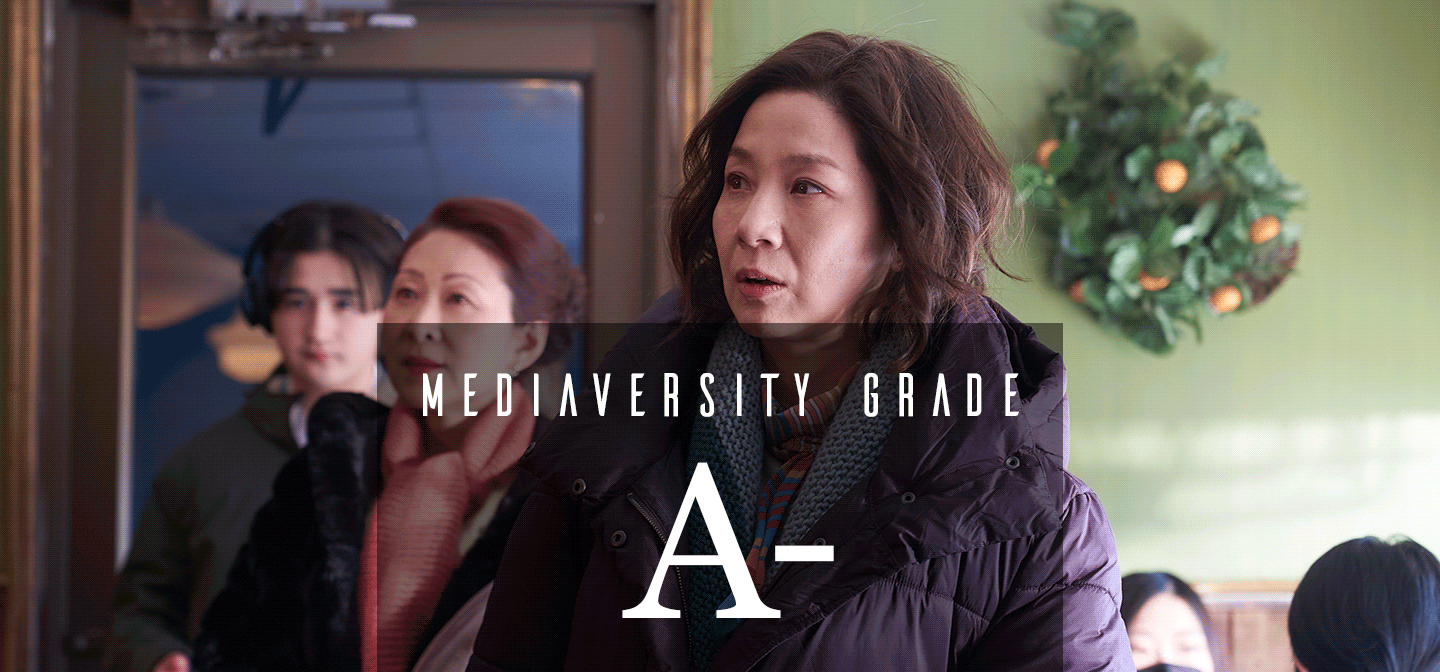
“The Mother and the Bear presents a powerful look at parenthood and celebrates personal growth at any age.”
Title: The Mother and the Bear (2026)
Director: Johnny Ma 👨🏻🇨🇳🇨🇦
Writer: Johnny Ma 👨🏻🇨🇳🇨🇦
Reviewed by Li 👩🏻🇺🇸
—SPOILERS AHEAD—
Technical: 3/5
Premiering at Toronto International Film Festival in 2024, The Mother and the Bear is Chinese Canadian director Johnny Ma's comedic drama about a Korean mom, Sara (Kim Ho-jung), who comes to Winnipeg after an accident lands her daughter, Sumi (Leere Park), in an induced medical coma. Beset with worry, Sara decides that “none of this would’ve happened if [Sumi] had a husband”—and sets out to catfish men on dating apps with the goal of finding her daughter a nice Korean Canadian husband to take care of her after Sara goes back to Korea.
The off-kilter, lyrical tale of generational and cultural differences has a tragicomic start that didn’t work for me. We’re introduced to Sara at her lowest—lonely, sad, and pathologically afraid of the outside world. Ma portrays her piteousness through flourishes like a grotesque face mask with ringed, panda-like eyes, and Sara singing “Unchained Melody” by herself in Sumi’s apartment in a warbling, voyeuristic scene that induces intense secondhand cringe.
But as Sara gets to know her daughter’s life and develops some confidence of her own, assuming more elegance and poise, the film shifts into smoother gear. Farcical elements pare back, and what’s left might be more conventional, but it’s also more impactful as Ma cuts right to the quick of what makes so many immigrant family dramas successful: A child and parent might not understand each other right away, but through the practice of open-mindedness and humility (on both sides), a beautiful, open relationship can result. This underpinning message doesn’t need the film’s more clownish elements to add interest; it shines perfectly well on its own.
Gender: 4.25/5
Does it pass the Bechdel Test? YES
Centered around a female lead, this film is primarily about Sara’s journey. She’s initially scared and insecure, clutching at patriarchal traditions and imposing them on her daughter in order to feel some semblance of control. But as Sara grows, she learns that her daughter doesn’t need a husband in order to thrive. Instead, she meets others who support Sumi, such as family friend Minji (Susan Hanson) and most of all, Sumi’s colleague Amaya (Amara Pedroso), who we later find out is actually Sumi’s girlfriend.
Male characters do have main roles that move the plot along, such as Korean restaurant owner Sam (Lee Won-jae), who understands Sara’s worldview as an immigrant himself. He’s a key factor in helping Sara realize that meddling in her daughter’s love life might not be the way to go. But in the end, it’s the mother-daughter relationship that forms the bedrock of the film’s emotional narrative.
Race: 5/5
The Mother and the Bear sits deep in its cultural pocket, presenting an interesting and specific worldview for audiences to dip into. Shanghai-born Canadian Ma showcases culture clash, immigrant alienation, and interracial dating with ease and naturalism. Main characters are Korean and Canadian, and Ma’s script mines humor from both identities—whether it’s snow jokes about Winterpeg or highlighting the love of karaoke as performed by enthusiastic Asian aunties.
Bonus for Age: +1.00
With Sara in her 50s and Sam in his 60s, both start the film clinging to what they knew growing up in Korea. But they’re the characters who change the most during this film, reconciling their ill-informed beliefs and therefore, embracing their adult children more fully. This film is theirs, not their kids’.
Bonus for LGBTQ: +0.25
Though it isn’t a focus, a queer relationship in the film helps to push Sara outside her comfort zone. When she slowly accepts, then eventually embraces Amaya—and by extent, the fact of her daughter’s queer identity—it’s tied up with Sara’s general evolution as a character.
Mediaversity Grade: A- 4.50/5
Though the uneven tone detracts from its core messages, The Mother and the Bear still presents a powerful look at parenthood and celebrates personal growth at any age.
Like The Mother and the Bear? Try these other titles featuring adults over 50 who are growing and changing for the better.
I’ll Be Right There (2024)
The Holdovers (2023)
Thelma (2024)