
Hamnet
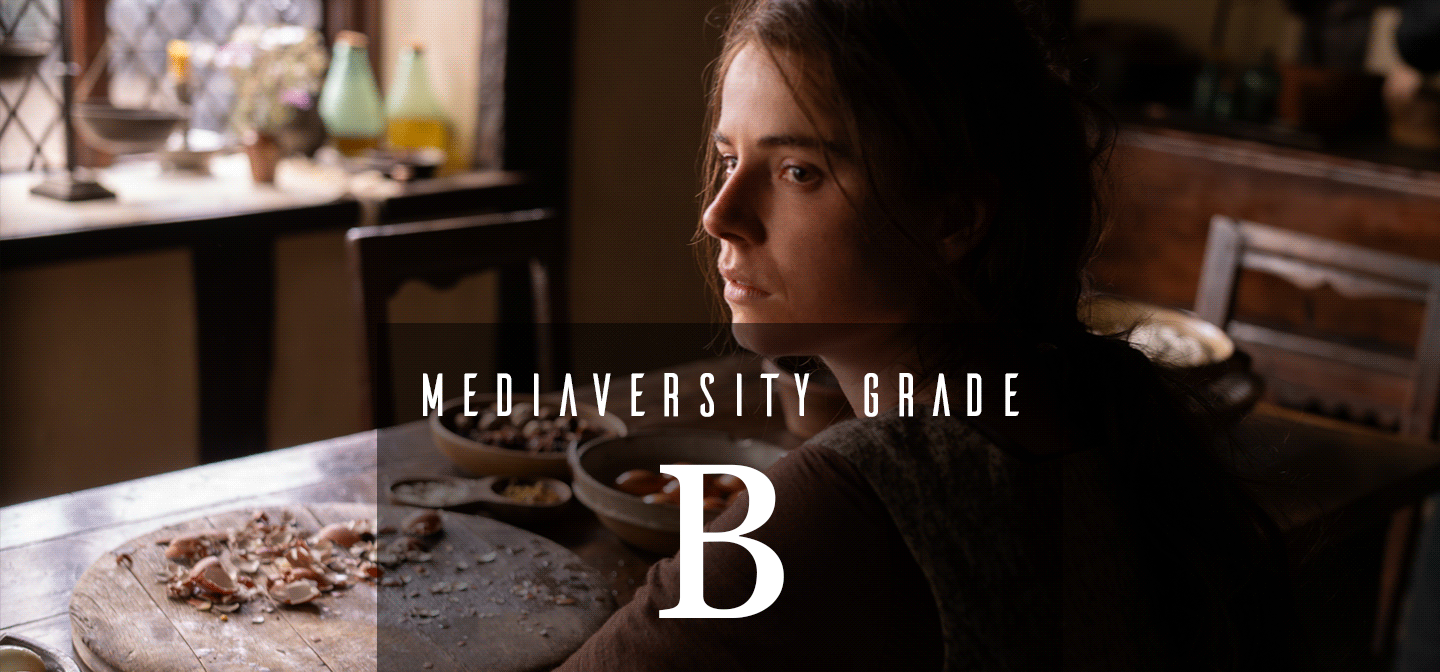
“Hamnet breathes life into an unknown woman.”
Title: Hamnet (2025)
Director: Chloé Zhao 👩🏻🇨🇳🇺🇸♿
Writers: Screenplay by Chloé Zhao 👩🏻🇨🇳🇺🇸♿ and Maggie O’Farrell 👩🏼🇮🇪
Reviewed by Carolyn Hinds 👩🏾🇧🇧🇨🇦♿️
—MILD SPOILERS AHEAD—
Technical: 5/5
Based on Maggie O’Farrell’s award-winning novel Hamnet, which envisions the life, loss, and grief of famed playwright William Shakespeare (Paul Mescal) and his wife Agnes Hathaway (Jessie Buckley), Chloé Zhao’s adaptation breaks the mold of historical convention by centering on mother and wife Agnes.
In this careful retelling, Agnes—played beautifully by Buckley—is shown as a woman in touch with nature and loved by the younger Will, who becomes enraptured by her at first sight. Unlike Agnes, who’s calm and resolute, Will is filled with passion for her and the words, ideas, and characters crowding his mind. But at home, his abusive father stifles the burgeoning artist, and Will’s mother, Mary (Emily Watson), is a devout woman of the Church who believes that Will is being bewitched and led astray by Agnes. Mary is stern, but her maternal love remains clear. These contrasts in temperament and in wide-ranging relationships provide some of Hamnet’s most compelling material.
Cinematography by Lukas Zal (The Zone of Interest) and nuanced performances support these complexities. For example, even though Shakespeare met his wife at 18, late-twenties Mescal doesn’t change his voice or don stage effects to appear younger. He conveys Will’s teen insecurity through his body: A slight hunch to his shoulders, and the way he doesn’t quite meet the eyes of others. Later, after becoming a father and finding ample audiences for his work, Mescal walks upright with an adult’s gait.
As for Agnes, historical analyses—all done by men—generally describe Hathaway as cold, jealous, and inconsequential to her husband’s life and work. Zal and Zhao shift this perception by shining a kinder light on her, quite literally through set design. Intimately nestled among trees and in the soil, her hair in disarray, Agnes becomes mysterious and intriguing, and the settings welcome her presence. Costumes tell a story, too. Agnes frequently wears a deep red dress that recalls Nathaniel Hawthorne’s novel The Scarlet Letter, in whichHester Prynne is publicly shamed for bearing a child out of wedlock. (Agnes is also pregnant before marrying Will.) On every level, Hamnet delivers something thoughtful, cinematic, and unconventional.
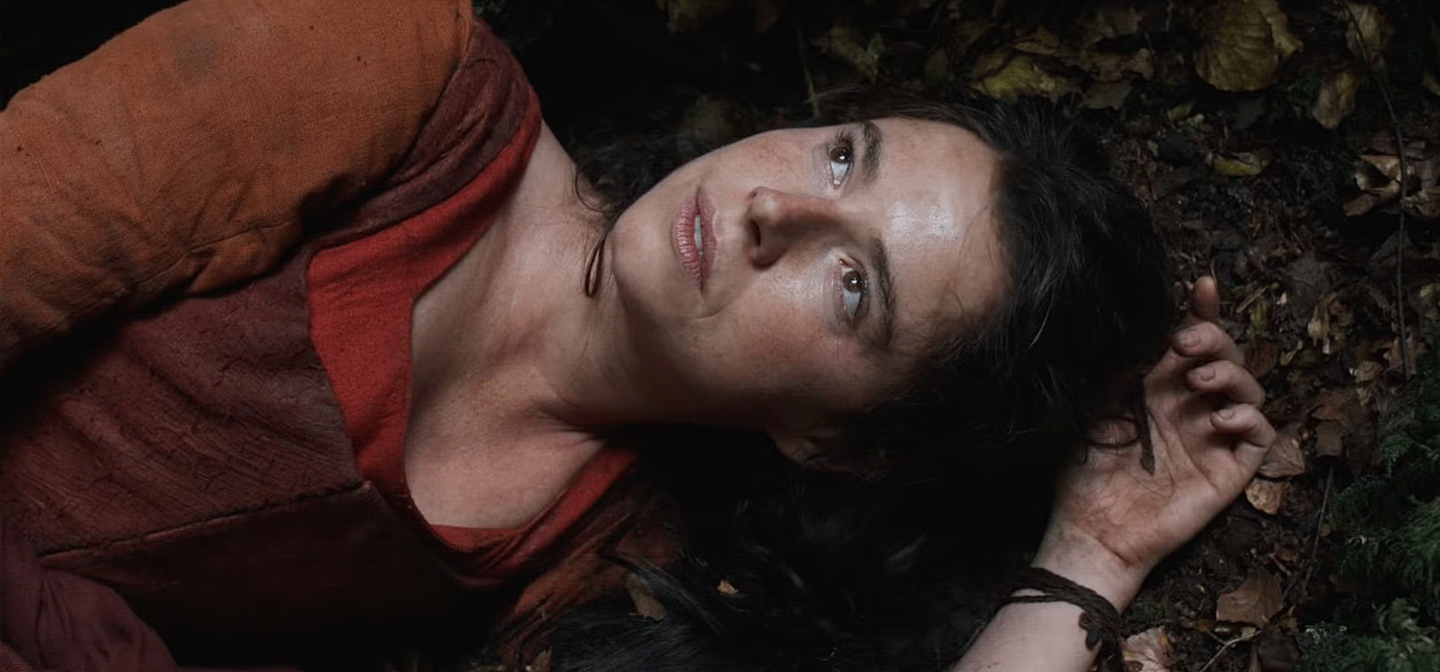
Agnes lies on the ground in a forest
Gender: 5/5
Does it pass the Bechdel Test? YES
Everyone has heard of Shakespeare. But what of the woman he married and who bore him three children? Barely any archival records detail who Agnes was, at least as an individual outside of her famous husband.
Zhao, O’Farrell, and Buckley breathe life into this unknown woman. We see Agnes as a child (Faith Delaney) being doted on by her mother, and as an adult, Agnes imparts her mother’s knowledge of herbal medicine to her own children.
As much as Hamnet is ostensibly about how Shakespeare’s grief shaped his life and writing, its more powerful message conveys the way that women, despite their differences, come together to form community in a man’s world. For example, Will’s Christian mother, Mary, initially looks down on Agnes and is suspicious of Agnes’ primordial communion with nature. But when Mary sees her son’s wife consumed by the agony of labour during childbirth, her judgments evaporate. The excruciating path to motherhood connects them both.
It’s amazing to watch Watson and Buckley shine in their shared and individual scenes, supported by sophisticated writing and dialogue that speaks to women’s realities. Younger female characters also deserve their due, for young Susanna (Bodhi Rae Breathnach) and Judith (Olivia Lynes) are both given full personalities, thoughts, and emotions.
Race: 1.5/5
Unlike many Hollywood films set in Tudor and Elizabethan England that cast all-white actors, Chinese-born Zhao’s Hamnet shows that Black people lived as free members of English society. Portrayed with realism, rather than with a fantastical, Bridgerton-style approach to diversity, only a few Black extras can be seen in crowd shots. But they are there, and that’s more than can be said for so many period films that choose to ignore historical diversity.
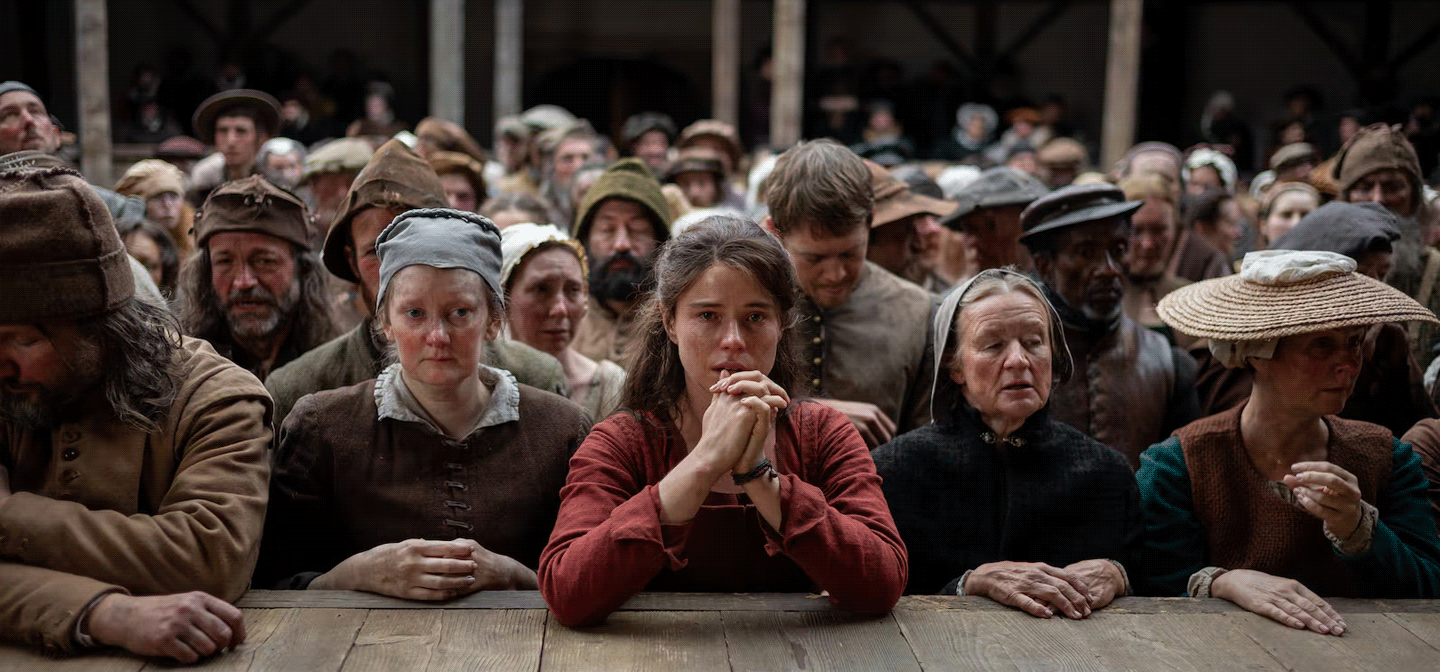
Agnes at the front of a crowd, watching a play with her hands clasped
Mediaversity Grade: B 3.83/5
As a film about love, loss, grief, loneliness, and healing, there’s an expectation to see all of these intense emotions right on the surface. But Zhao intentionally makes the atmosphere as peaceful as possible.
This intention is present in the sound of the wind blowing through the trees, and in the hush that settles around Agnes when she goes to an ancient tree covered in moss to give birth to her first child, Susanna. There’s contentment felt when Agnes explains the healing properties of mugwort to her children, as passed down from her own mother, and Will then leads them in a short performance of one of his plays.
There’s stillness in the hard-to-watch moments when Agnes suffers through giving birth, and in Will’s repressed grief as he assumes one of his own characters and delivers a monologue that condemns himself for failing to save his son. Agnes is in the crowd as he does so, finally mourning with her husband as a staged Hamnet (Noah Jupe) recites his tragic soliloquy to a captivated audience.
A quiet veneer can be enthralling, and Zhao understands this. Just because a film examines anguish and child loss, that doesn't mean the viewing itself has to be exhausting. Especially when seen in community—an intentional goal emphasized by Zhao’s guided meditation at Hamnet’s original premiere—it can even be grounding and connective.
Like Hamnet? Try these other films by Chloé Zhao.

Eternals (2021)

Nomadland (2020)

The Rider (2018)