
Ah Girl
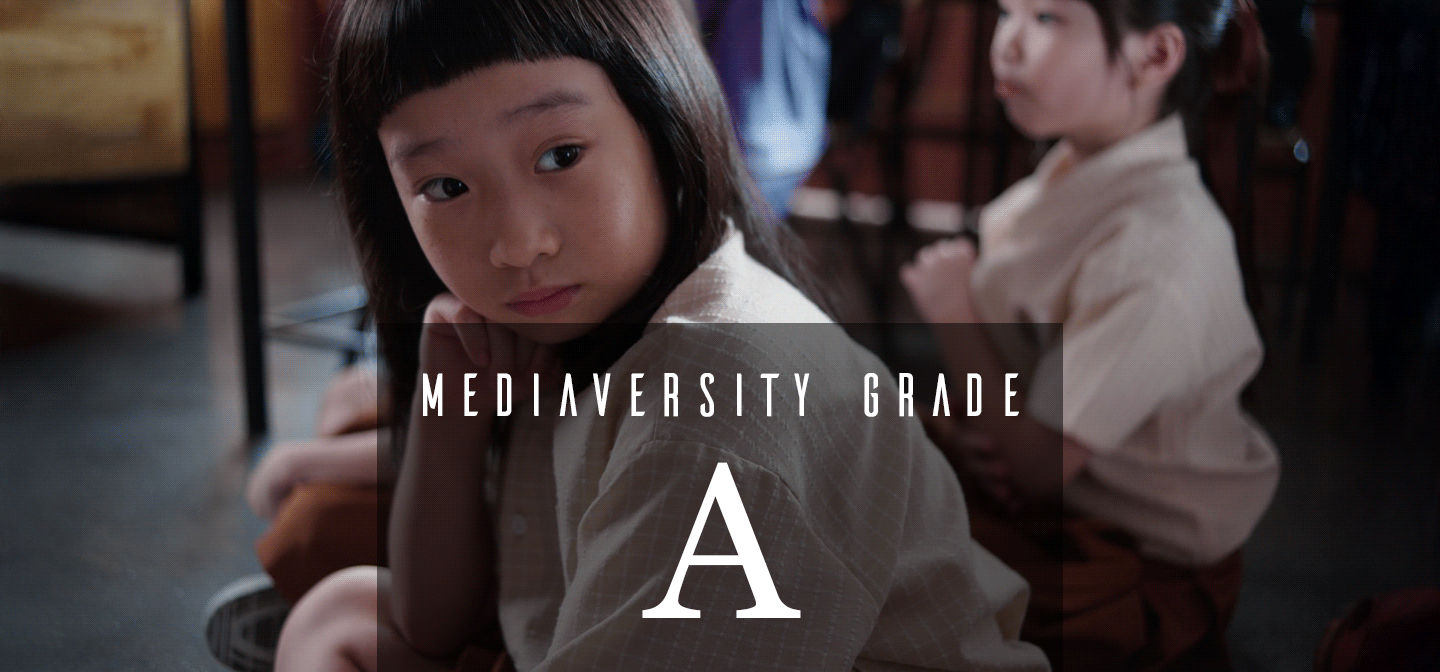
“Grandma initially seems harsh and disengaged, but she becomes the most complex adult in all of Ah Girl.”
Title: Ah Girl (2026) / Chinese: 泡泡糖女孩
Director: Ang Geck Geck Priscilla 👩🏻🇸🇬
Writer: Ang Geck Geck Priscilla 👩🏻🇸🇬
Reviewed by Li 👩🏻🇺🇸
Technical: 3.5/5
In her director’s statement, Ang Geck Geck Priscilla says that she wanted her debut feature film, Ah Girl, to remind viewers that every child deserves to be seen and heard. She succeeds: 7-year-old Ah Girl (Ong Xuan Jing) is front and center in this humble but intimate character study. With low camera angles and over-the-shoulder shots, Ah Girl and her little sister, 5-year-old Ah Tian (Sydney Wong), lead us through both devastating and lighthearted moments in their lives. Meanwhile, domineering and dismissive adults feel far away, as if seen through a veil.
Within that gap, Ah Girl (and by extension, audiences) are forced to piece together the world happening over their heads. It’s a mystery why father Ah Pa (James Seah) and Mummy (Carrie Wong) are no longer together and why Ah Pa seems to be sending Ah Tian away to live with another family in Australia.
Through this shared experience of trying to understand Ah Pa, Mummy, and grandma Ah Ma (Doreen Toh), we come to know Ah Girl well. It might be inscrutable to their family why she hotly talks back, or why Ah Tian hides in a rubbish bin, but with the stress and anxiety of being tugged to and fro without a say in the matter, it’s entirely obvious to the audience why these children are “acting out.”
At the same time, Ang tactfully refuses to demonize anyone. Ah Pa and Mummy are hardly shown in a good light, but their failings are never malicious. Pulling these character portraits together, Ang spotlights the real difficulty of maintaining a functional family system when parents, like their children, are just trying to survive and find happiness in an unforgiving world.
Gender: 5/5
Does it pass the Bechdel Test? YES
With Ang at the helm, supported by producers Charlyn Ng and Wendy Lie, Ah Girl is a female-led production—and it shows. The cast is predominantly female, and in a role reversal of most movies, it’s the men and boys who are attached to girls’ emotional journeys. Ah Pa is defined by his daughters and his parade of girlfriends. At school, Ah Girl has a crush on a boy, Shawn (Leong E-Xuan), who’s portrayed mainly as an object of interest, no more or less interesting than the Miss Singapore competition on TV as Ah Girl practices her catwalk.
Race: 4.75/5
This Singaporean film centers around Chinese residents, who made up over 75% of the population in the 1990s when the film is set. Thankfully, Ang doesn’t ignore the other quarter of the population that isn’t Chinese: Notably, a Malay wedding takes place. And while it’s not exactly accurate when the girls label Ah Pa’s girlfriends by region—Aunty Japan (Vivianne Li), Aunty China (Joey Sin), and Aunty Malay (Jasmin Kamal)—it does show the girls’ experience of living within a racially diverse milieu. It should be noted, though, that Indian Singaporeans, the third largest ethnic group in the country, are nowhere to be seen.
Bonus for Age: +0.50
With women over 50 falling off a cliff in onscreen representation, it’s positive that supporting character Ah Ma receives equal screen time as Ah Pa and Mummy, the three forming an intergenerational care system for the girls. Ah Ma initially seems harsh and disengaged, shown reluctantly watching her grandchildren and asking Mummy for an allowance—a request that Ah Girl overhears and finds grating and leech-like. And when Ah Pa tries to send Ah Tian abroad to be with a new family, Ah Ma doesn’t go against her son’s decision, though her concerned expression is palpable.
Later, after heart-wrenching scenes of the sisters crying and forcibly separating, Ah Tian is blessedly reunited with her sister. Ah Ma is the one to bring her over, implying involvement behind the scenes. With this nuance, Ah Ma actually becomes the most complex adult in the entire film.
Bonus for Body Diversity: +0.25
Ah Pa demonstrates a preference for fat women after he and Mummy have broken up—a fact that Ah Girl interprets as a rejection of Mummy, who’s skinny. On the one hand, it’s uncomfortable to watch as Mummy picks a fight with one of the girlfriends and fat-shames her. But the film doesn’t encourage that fat-shaming; notably, each girlfriend has a different personality. Yes, some are portrayed as trashy, getting in hair-pulling fights or becoming pregnant. But Aunty Japan, as the kids dub her, is kind and gentle, forming a real (if brief) bond with Ah Girl.
Bonus for LGBTQ+: +0.25
Ah Tian is treated as a girl by everyone on screen. But described as “boyish” in press notes, Ah Tian wears trousers and polo shirts in contrast to Ah Girl’s frilly frocks and beloved red heels. In one scene, Ah Tian tells her dad that she’s not a girl, she’s a boy. Adults generally let her be, and nothing much is made of Ah Tian’s preference. Her gender identity isn’t a focus, but it’s still positive to see implied diversity in this arena.
Mediaversity Grade: A 4.75/5
Ang’s film brings the best that indie filmmaking has to offer: personal, character-driven stories that might be modest in cinematography or production values, but with authenticity that gifts viewers a peek into a heartfelt life you might otherwise never get to see.
Like Ah Girl? Try these other titles shown through a child’s perspective.

Cookie Queens (2026)

Janet Planet (2024)
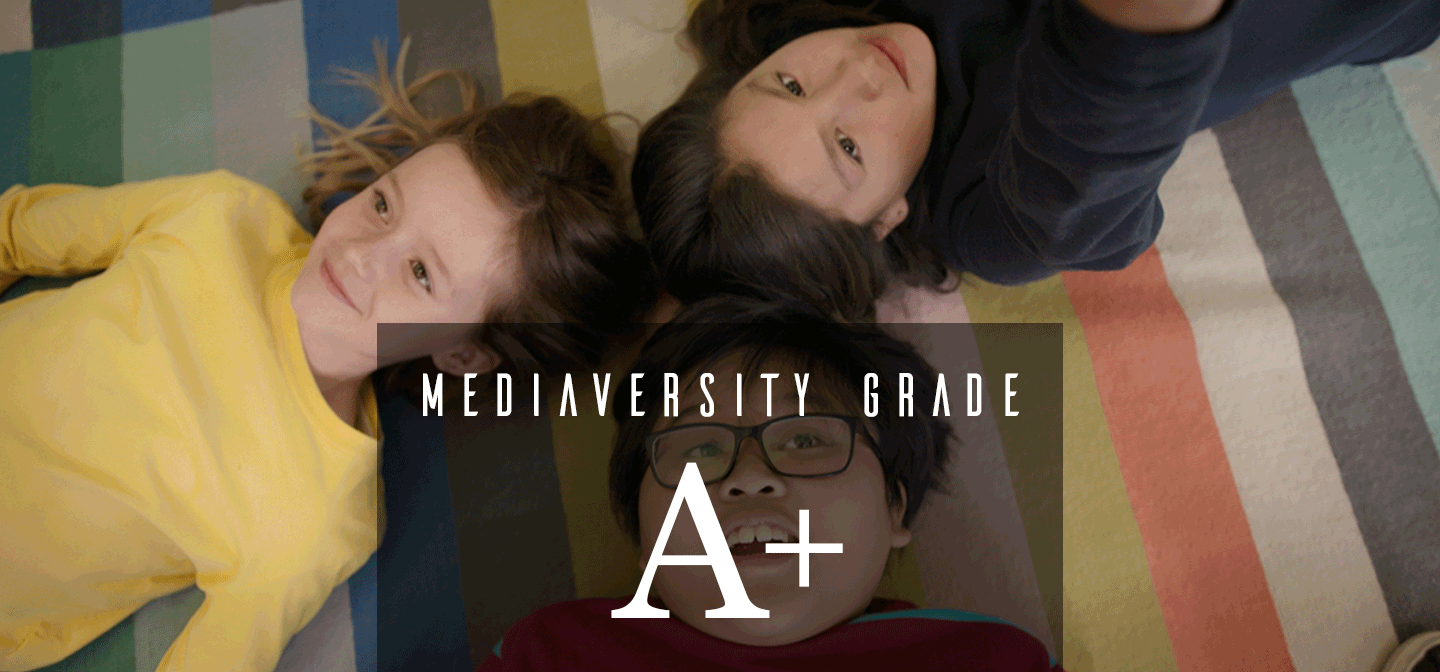
Scarborough (2021)