
Swapped
“Swapped has a racially diverse voice cast. But the male-centric narrative and colorism don’t add much to the genre of kids’ media.”
Title: Swapped (2026)
Director: Nathan Greno 👨🏼🇺🇸
Writers: John Whittington 👨🏼🇺🇸, Christian Magalhaes 👨🏼🇺🇸, and Robert Snow 👨🏼🇺🇸
Reviewed by Li 👩🏻🇺🇸
Technical: 3/5
Netflix’s Swapped, produced by Skydance Animation (Luck), isn’t particularly original. And coming on the heels of Pixar’s Hoppers, which landed on streaming this week, it feels even more familiar: Both feature adorable rodents, a body-swap gimmick, and a reverence for natural habitats. (Both films are also older-skewing than you might imagine from their furry and feathered heroes; the preschooler and kindergartener I saw this with were both cowering and overwhelmed during the film’s scarier bits.)
That said, if you’re watching with a grade schooler, Swapped is still a solid entry to Netflix’s streaming selection. The film takes a while to get going, and its first half is weighed down by tiresome bickering between the main duo—woodland creature (or “pookoo”) Ollie, voiced by Michael B. Jordan, and bright green bird (“javan”) Ivy, voiced by Juno Temple. But once the two team up and (thankfully) stop squabbling, Jordan and Temple’s voice performances are allowed to deepen. In addition, they add a third helper, Tracy Morgan’s grouper-like fish named Boogle. Morgan keeps up the momentum with a playful, humorous performance, and when Swapped delivers a neat twist, it gives the actors yet more range. Silly creatures get serious, and baddies, like the snarling tree wolves, show their kinder sides. By the time writer-director Nathan Greno (Tangled) gets into the most dramatic elements of the story, Swapped had me hooked.
Gender: 3.5/5
Does it pass the Bechdel Test? YES
Even though female bird Ivy is one of the two main characters in this buddy adventure, male pookoo Ollie still takes center stage. The film’s main emotional arc develops between these two interspecial friends, so there isn’t much room for female relationships to flourish. Furthermore, when Boogle joins the group, Ivy’s impact becomes further diluted.
That being said, women have key supporting roles. Ivy’s competitive younger sister Violet (Ambika Mod) and their baby sister Lily (Lolly Adefope) present a compelling dynamic that’s complicated by their family history: When their parents passed away, Ivy was forced to raise her sisters, assuming a pseudo-parental role that Violet gripes about as Ivy simply being “bossy.” On Ollie’s side, his mom, Calli (Justina Machado), has a few scenes in which she’s portrayed as a straightforward, caring mom who worries about her son.
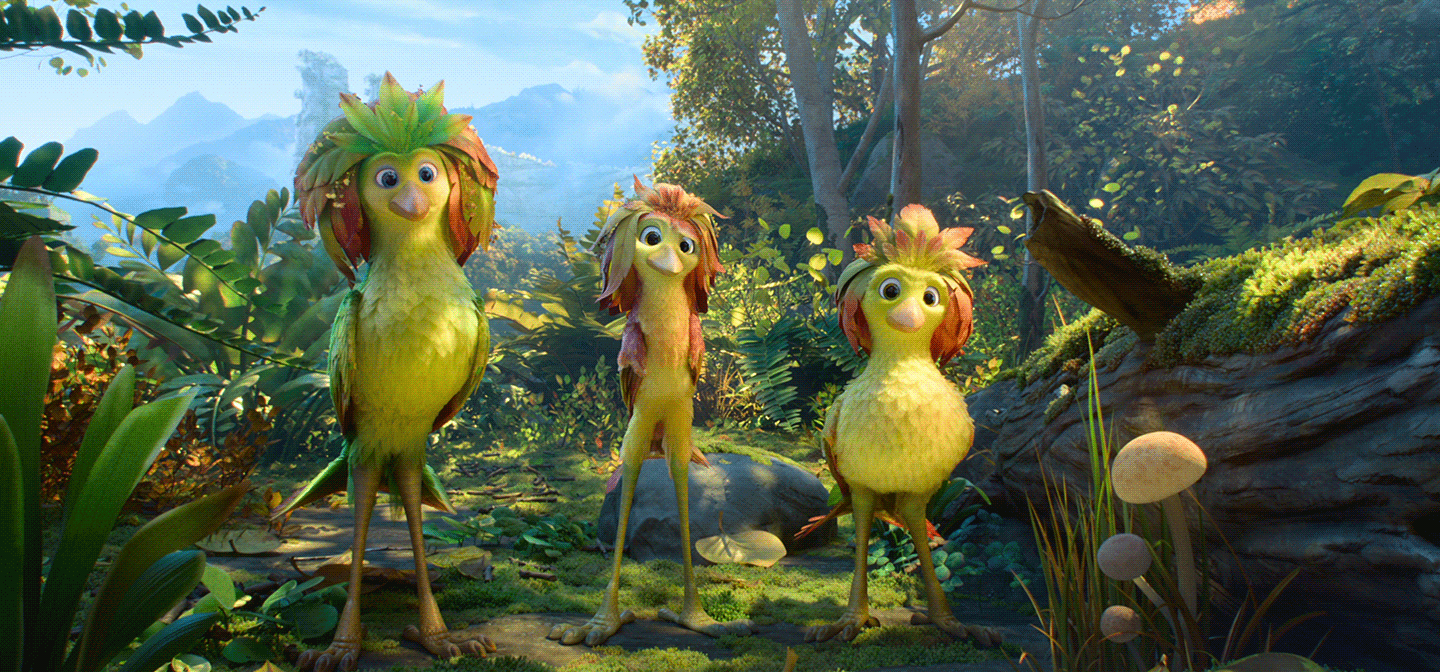
SWAPPED - (L-R) Ivy (voiced by Juno Temple), Violet (voiced by Ambika Mod) and Lily (voiced by Lolly Adefope). Cr: Skydance Animation/Netflix © 2026
Race: 3.5/5
With all characters being fantasy creatures, there’s no racial representation in the movie itself. Behind the scenes, though, voice actors are immensely diverse. Ollie, Boogle, and Ollie’s dad (Cedric the Entertainer) are voiced by Black men. In supporting roles, Calli’s Machado is Afro-Latina, Violet’s Mod is Indian, and Lily’s Adefope is a Black woman. In fact, the only character of any significance voiced by a white actor is Ivy’s Temple.
This is great casting, though the inclusion stops there. Greno and the three screenwriters are all white men (though co-screenwriter Christian Magalhaes is Brazilian on his dad’s side). The narrative focuses more on broad ideas about fear and mistrust getting in the way of human (animal?) connection than on allegories of systemic oppression. And, as a distracting detail, I couldn’t help but notice the colorism in depicting the film’s main villain, a “fire wolf,” as the darkest character, with its bark-like skin colored sooty black. “Scary” creatures like tree wolves and snakes are also darker than the protagonists, who are bright green (Ivy and her sisters), water-blue (Boogle), and warm, woodsy brown (Ollie and his parents).
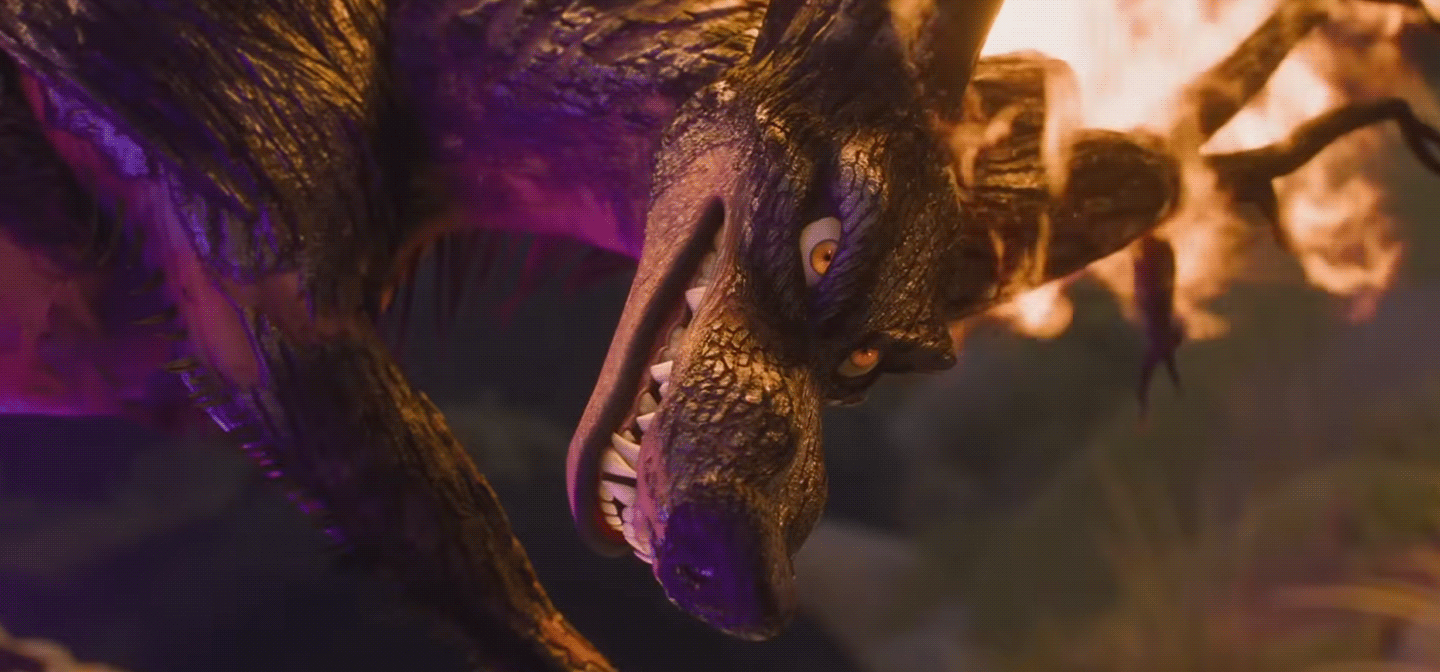
Fire wolf
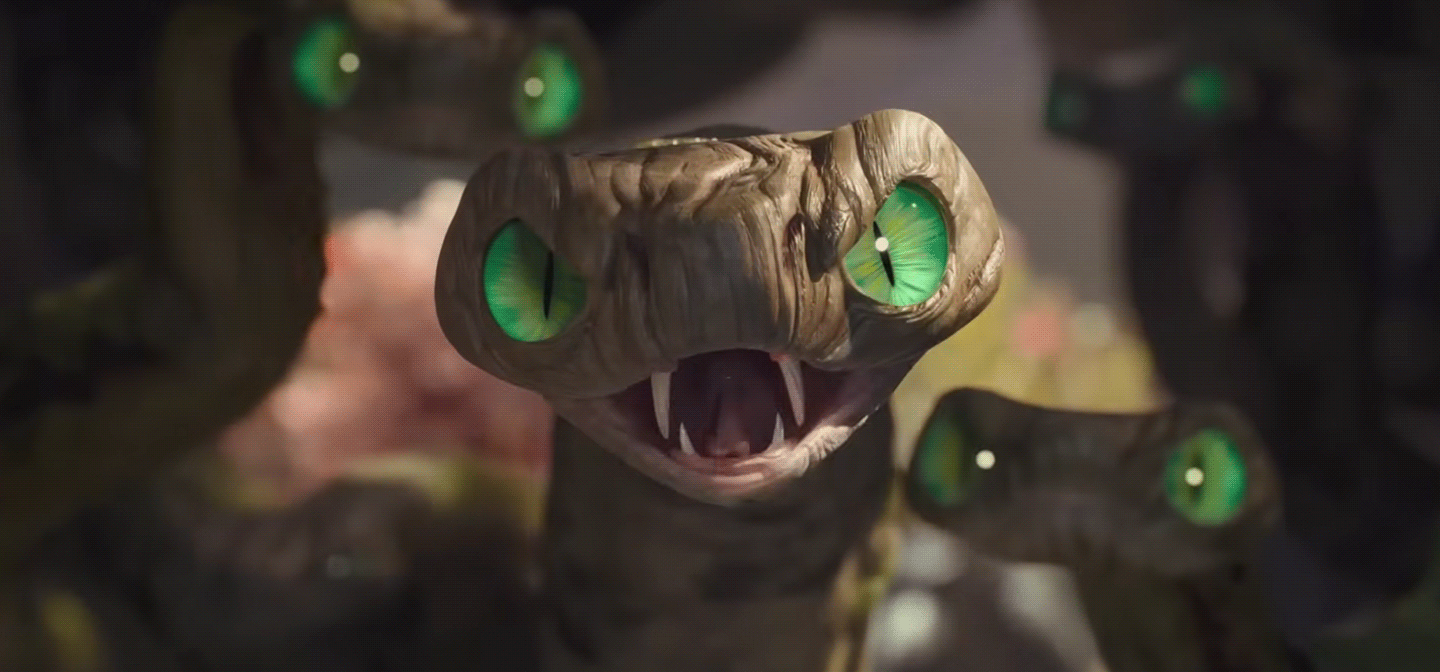
Snakes
The continued visual standard of using shadowy hues as “evil” and sunny brightness as “good” might be longstanding, and perhaps even partly rooted in human nature. (I don’t think my 3-year-old is scared of the dark and needs a nightlight because he’s already internalized racist messages—at least, I hope not!) Regardless, it’s a visual trope that harmfully assigns villainy to dark-skinned characters. There are ways to avoid colorism: Other family movies, such as GOAT (2026), are already doing this by designing heroes and villains alike in a range of skin colors. It’s not that hard.
Mediaversity Grade: C+ 3.33/5
It’s great that Swapped has a racially diverse voice cast. But the formulaic plot, male-centric narrative, and colorism don’t add much to the genre of kids’ media.
Like Swapped? Try these other titles starring Michael B. Jordan.
Sinners (2025)
Kin (2018)
Black Panther (2018)