
Love Chaos Kin
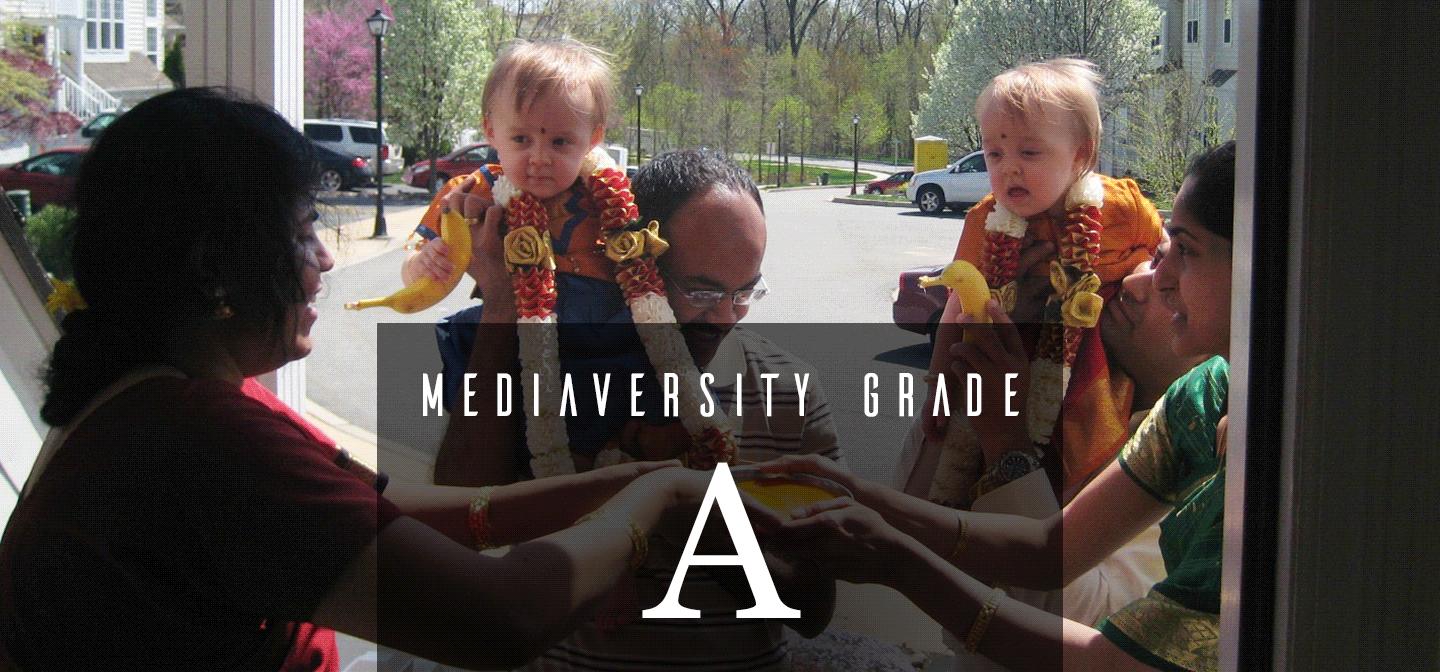
“Love Chaos Kin’s central figure, Lakshmi, is a wonderful guide who lets viewers in on her thought process of raising multicultural girls.”
Title: Love Chaos Kin (2026)
Director: Chithra Jeyaram 👩🏽🇮🇳🇺🇸
Producer: Chithra Jeyaram 👩🏽🇮🇳🇺🇸
Reviewed by Li 👩🏻🇺🇸
Technical: 4.5/5
Enjoying the festival circuit is Chithra Jeyaram’s Love Chaos Kin, which will be screening soon at Seattle International Film Festival. The documentary explores an intriguing premise of transracial adoption. A Philadelphia-based Indian immigrant couple, Lakshmi and Narayanan Iyer, adopts two white girls—twins Anjali and Cecilia Iyer—and Jeyaram tracks the family over the course of years.
The modest film doesn’t tout many bells and whistles, and you wouldn’t call it experimental. But Jeyaram cuts right to the quick of why documentary storytelling is so powerful. Love Chaos Kin is nuanced, intimate, and extremely honest about the complexities of a blended, modern family that doesn’t fit the mold. Patient storytelling doesn’t force an argument or point of view on how the Iyer family approaches culture, identity, and change. There’s no condescension towards the girls’ birth parents, Katherine Faye, or their largely absent father, Daniel. Instead, the film embraces life with all of its gray areas, meeting everyone where they are.
I would happily follow along with the Iyers and their extended family for a full docuseries. Love Chaos Kin touches on so many deep topics, from transracial adoption to ethnicity—at one point, the white girls describe themselves as Indian American—to adoptive identity, seen when Cecilia decides to revert to her birth name. But unlike many documentaries that flounder under the weight of complex material, Jeyaram manages to carry all of these overlapping themes without ever feeling unwieldy or digressive.
Gender: 5/5
Does it pass the Bechdel Test? YES
Whether it’s Jeyaram behind the camera or the onscreen subjects of Lakshmi and her three daughters, Anjali, Cecilia, and Sahana, Love Chaos Kin centers on women and girls. Furthermore, viewers enjoy a multitude of complicated mother-daughter and sister relationships.
It’s satisfying to watch as Lakshmi empowers her girls. During one scene, Lakshmi describes the Hindu festival of Navaratri to Cecilia and Anjali as they set up Golu, a traditional display of dolls and statues. Lakshmi explains that it’s one of the rare festivals that specifically celebrates women.
Another impactful, heartbreaking story delves into Kat’s visceral pain at seeing photos and hearing stories about her daughters’ lives, as shared by Lakshmi through a blog, while knowing that Kat doesn’t get to be with them every day. But whether it’s painful or joyous—or a mix of both—all of these female relationships are rich with nuance and underpinned with love.
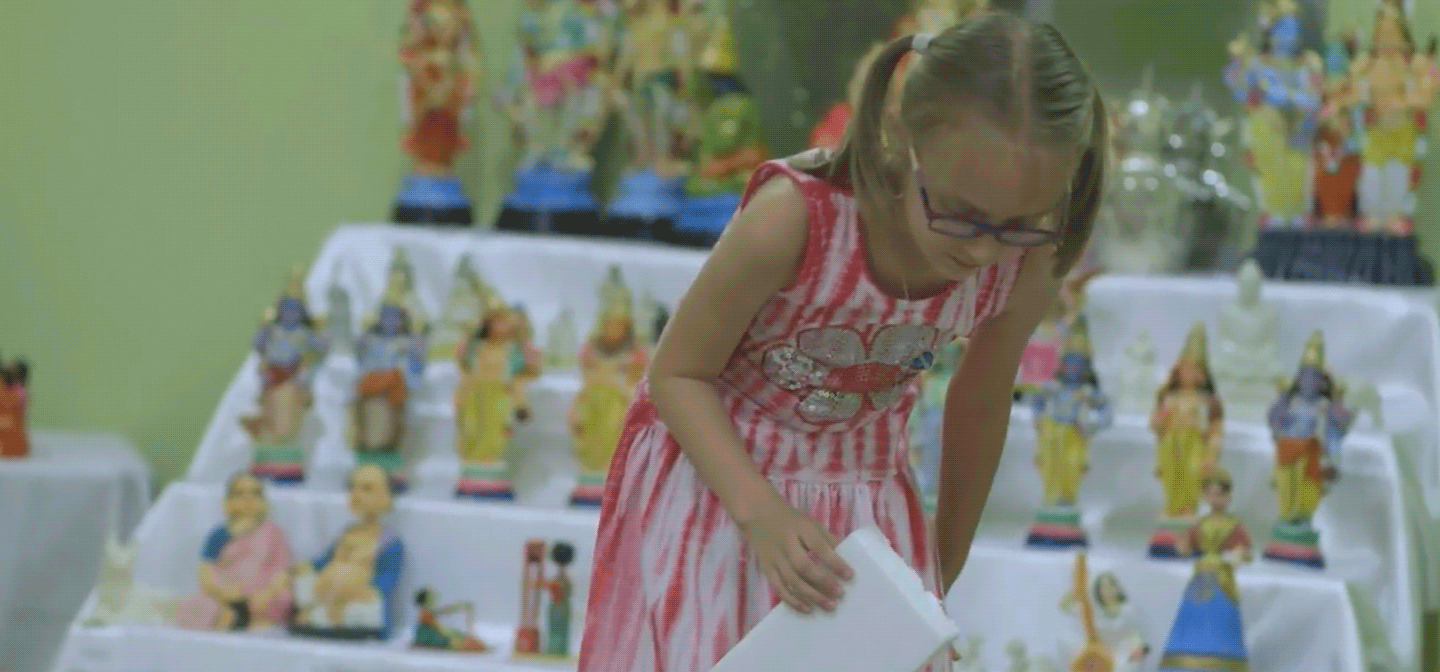
One of the twins stands in front of golu, a display of dolls for Navaratri
Race: 5/5
One of the documentary’s most striking traits is its multiculturalism. The Iyers are South Indian immigrants in Philadelphia who deal with microaggressions on the regular, like being asked if Lakshmi is Anjali and Cecilia’s nanny. Even then, it’s not as cut-and-dry as South Asian parents with white kids; Anjali and Cecilia have Navajo heritage from their dad’s side, and the fact that they’re white-passing comes with its own privileges and pitfalls. Meanwhile, Lakshmi and Narayanan experienced a major surprise when, after years of trying (and failing) to get pregnant, they saw the “two pink lines”—enter Indian American daughter/sister Sahana.
Tamil filmmaker Jeyaram spends a lot of time exploring the porous borders of these identities. Lakshmi is a wonderful guide in this respect, letting viewers in on her thought process of raising multicultural girls. The documentary moves chronologically, showing the Iyers’ progression that starts with Lakshmi and Narayanan steeping their young girls in Hindu culture, to teens Cecilia and Anjali taking a family trip to South India (and being appropriately teenage-bored by their dad’s stories). Meanwhile, the final scenes of Love Chaos Kin show the Iyers connecting with Anjali and Cecilia’s birth father, Daniel, through a process that’s both frustrating—they’re asked to provide DNA proof before Daniel and the Navajo Nation will recognize them—yet gratifyingly realistic. When Anjali and Cecilia eventually “prove” their bloodline, the girls are shown meeting with an elder on a reservation. The teens don’t have much to say as the elder shares traumatic stories about government-mandated family separation and residential schools. It’s a lot of history, a lot of pain to put on two girls who are just trying to make sense of themselves. Ultimately, it’s a privilege for the viewer to watch as two girls grow up and navigate what feels honest to each of them.
Bonus for LGBTQ: +0.25
Behind the lens, queer creatives include nonbinary artist Veev Heron, who made the film’s textural, cozy animated scenes, and trans executive producer Nico Opper.
Mediaversity Grade: A 4.92/5
Love Chaos Kin was a very personal project for Jeyaram. She tells Joe Vanourney of Cherry the Geek TV that the project began when she herself was looking to adopt in 2017, but as an Indian immigrant, she wasn’t even sure if she could adopt. And if allowed, how would she go about raising a multicultural child? During this journey, she learned about the Iyers through HuffPost. The rest is history, and audiences reap the benefits of wonderful filmmaking that lets Lakshmi and Jeyaram’s relatable, yet fascinating stories shine.
Like Love Chaos Kin? Try these other titles featuring Asian adoptees or adoptive parents.
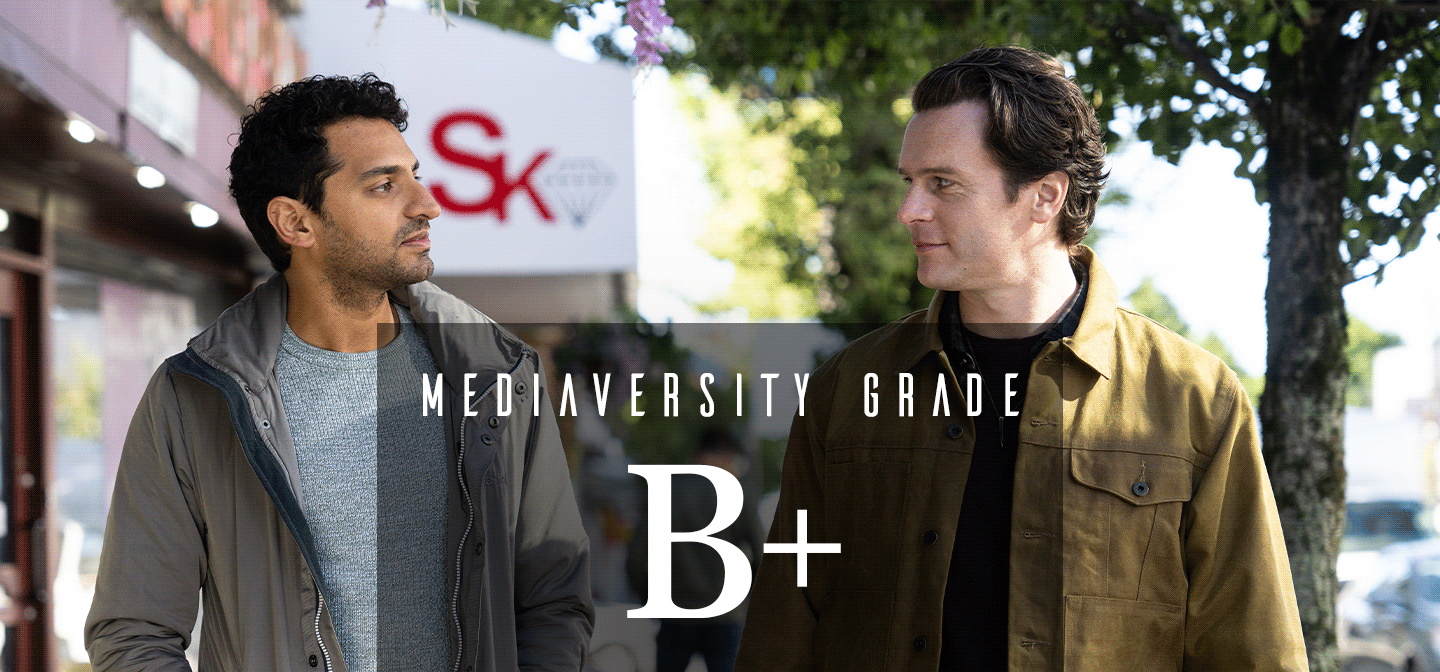
A Nice Indian Boy (2025)

Lion (2016)
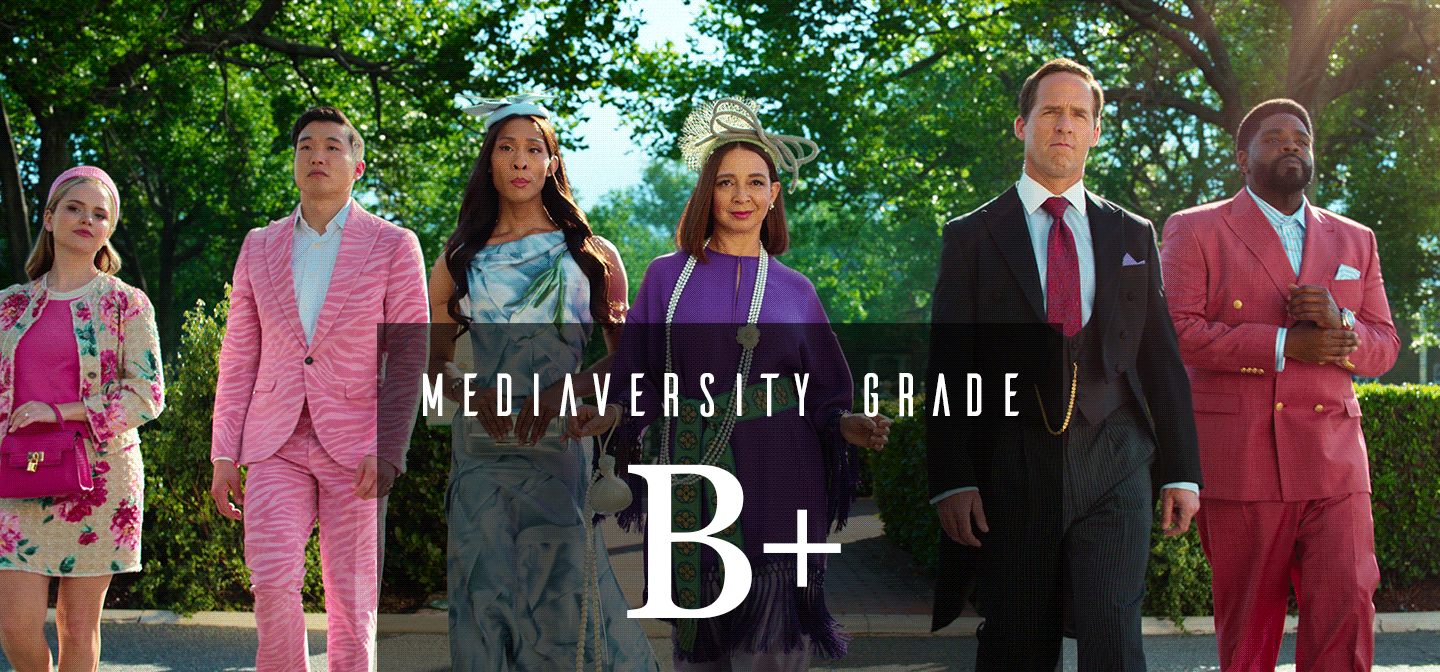
Loot - Seasons 1-3