
F1
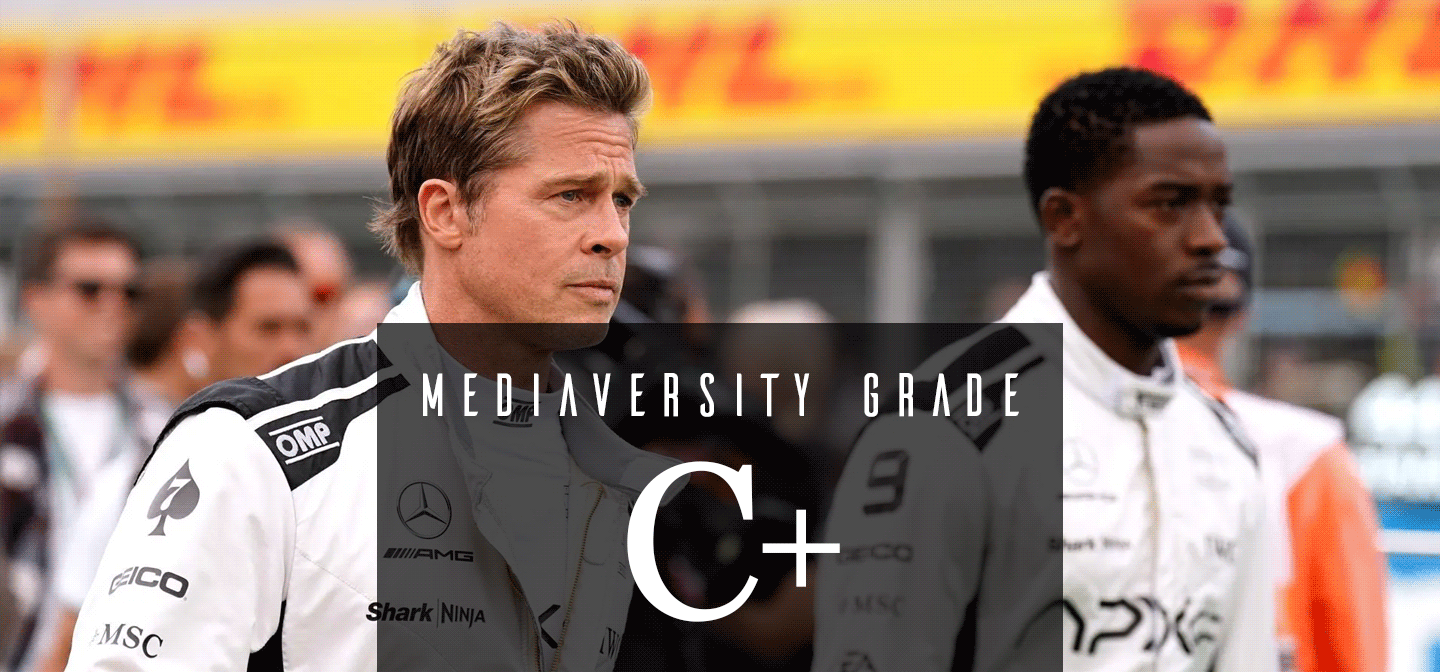
“While it’s racially diverse with men of color in prominent roles, F1 stumbles over several tropes.”
Title: F1 (2025)
Director: Joseph Kosinski 👨🏼🇺🇸
Writer: Story by Joseph Kosinski 👨🏼🇺🇸 and Ehren Kruger 👨🏼🇺🇸 and screenplay by Ehren Kruger 👨🏼🇺🇸
Reviewed by Li 👩🏻🇺🇸
—SPOILERS AHEAD—
Technical: 3.75/5
If you’ve seen director Joseph Kosinski’s Top Gun: Maverick, his follow-up F1 will put you right back into the bucket seat. Both films use breakneck velocity and feel-good teamwork to propel viewers to a great time. Predictable clichés keep it from fully taking off, however: A racing old-timer, Sonny Hayes (Brad Pitt), comes out of seclusion to lift a losing team, APXGP, to soaring heights. Meanwhile, a hotheaded rookie—Joshua Pearce (Damson Idris)—learns from the wise mentor and is passed the torch.
The familiar beats don’t stop there. Expect the token love interest and the likable teammates that exist to support the main character. But for all its roteness, Kosinski delivers a seamless integration of Formula One references and team dynamics. These aren’t meant to be factual, exactly, but they benefit from feedback from actual F1 drivers such as executive producer Lewis Hamilton. Add to the mix Hans Zimmer’s catchy soundtrack and visceral sound effects, and F1 will leave you wholly entertained.
Gender: 2.75/5
Does it pass the Bechdel Test? NOPE
The film is male-dominated, with only two significant female characters: Joshua’s mom, Bernadette (Sarah Niles), and APXGP’s technical director, Kate McKenna (Kerry Condon).
Bernadette falls into a two-dimensional role as Joshua’s commanding but supportive mother. Kate gets a little more depth, described as “the world’s first female tech director” and portrayed as someone who has her own mind. She isn’t afraid to call out Sonny when he’s being reckless or stubborn. Unfortunately, Kate’s potential as a character gets squandered when Kosinski and writer Ehren Kruger turn her into a love interest, and viewers see more of her screen time ceded to playing the emotional support.
In no scene does she feel more pigeonholed as “The Female Character” than when she sets up a surprise meeting between Sonny and Joshua to mediate their childish resentments against each other. What is a technical director—the person responsible for designing and engineering cars—doing as a people manager? An intervention to smooth out team dynamics should have come from the principal, Kaspar Smolinski (Kim Bodnia), or owner, Ruben Cervantes (Javier Bardem). But per Hollywood norms, it’s up to a woman to provide free emotional labor so that male characters can mature.
In minor roles, though, women do just fine. Jodie (Callie Cooke), as part of the pit crew, is shown making a mistake, and Sonny defends her to the rest of APXGP. She later tells him not to stand up for her again, because it makes her look like she needs help—a nice line of dialogue that shows Jodie’s independence. There’s also Pippa (Rosie Dwyer), who pops up in a few scenes to help run the team’s racing simulator. Still, if you’re looking for a movie where women get to stand on their own two feet, drive right past F1.
Race: 3.75/5
Joshua, who’s Black, has a main role as a talented rookie. He has plenty of scenes and shows a little character development, going from being insecure and image-conscious to focusing more on his driving. But this growth is due to the mentorship of a white lead, Sonny. On the race track, Sonny singlehandedly orchestrates all of APXGP’s strategies while his teammates scramble to keep up. This dynamic not only plays down Joshua’s intelligence but echoes racist assumptions seen in American sports, where Black athletes are celebrated for physical talents yet excluded from “thinking” positions like quarterback.
The film doesn’t even try to put Joshua and Sonny on equal footing. When the two go head-to-head, you can guess who comes out on top every time. Whether it’s a card game where Sonny lets Joshua win to boost his confidence, or a race where Sonny drops back and says, “Go win it, kid”— the white driver remains in control.
Thankfully, Kosinski slightly offsets this patronizing dynamic with a scene of self-sacrifice on Joshua’s end. He forfeits his position so that Sonny can take the victory. But in no case does Sonny ever lose to Joshua in a fair fight, which ultimately feels tiresome.
Outside of Joshua, the film showcases F1 racing as the international sport it is. APXGP boasts a diverse team, including a Black chief mechanic, Dodge (Abdul Salis), while other racecar drivers highlighted in the film are Luca Cortez (Luciano Bacheta, who’s British Indian-Italian) and Lewis Hamilton as himself—still the only Black driver competing in F1 today.
Mediaversity Grade: C+ 3.42/5
While it’s racially diverse with men of color in prominent roles, F1 stumbles over several tropes. It refuses to unclench its fists and loosen the time-worn narrative of a white male renegade going up against the world (and being right, of course). If you’re looking for nuance, F1 won’t satisfy. But as popcorn fodder—you bet it will.
Like F1? Try these other high-octane titles.

Top Gun: Maverick (2022)
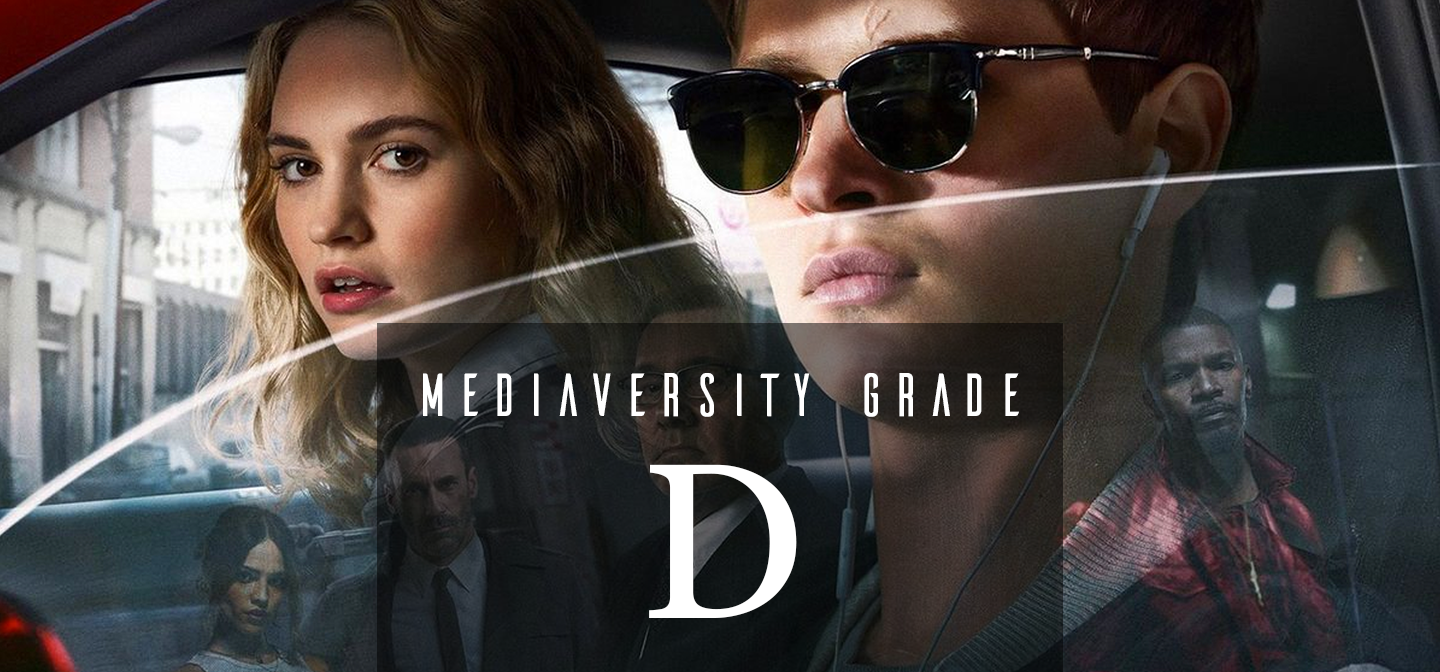
Baby Driver (2017)
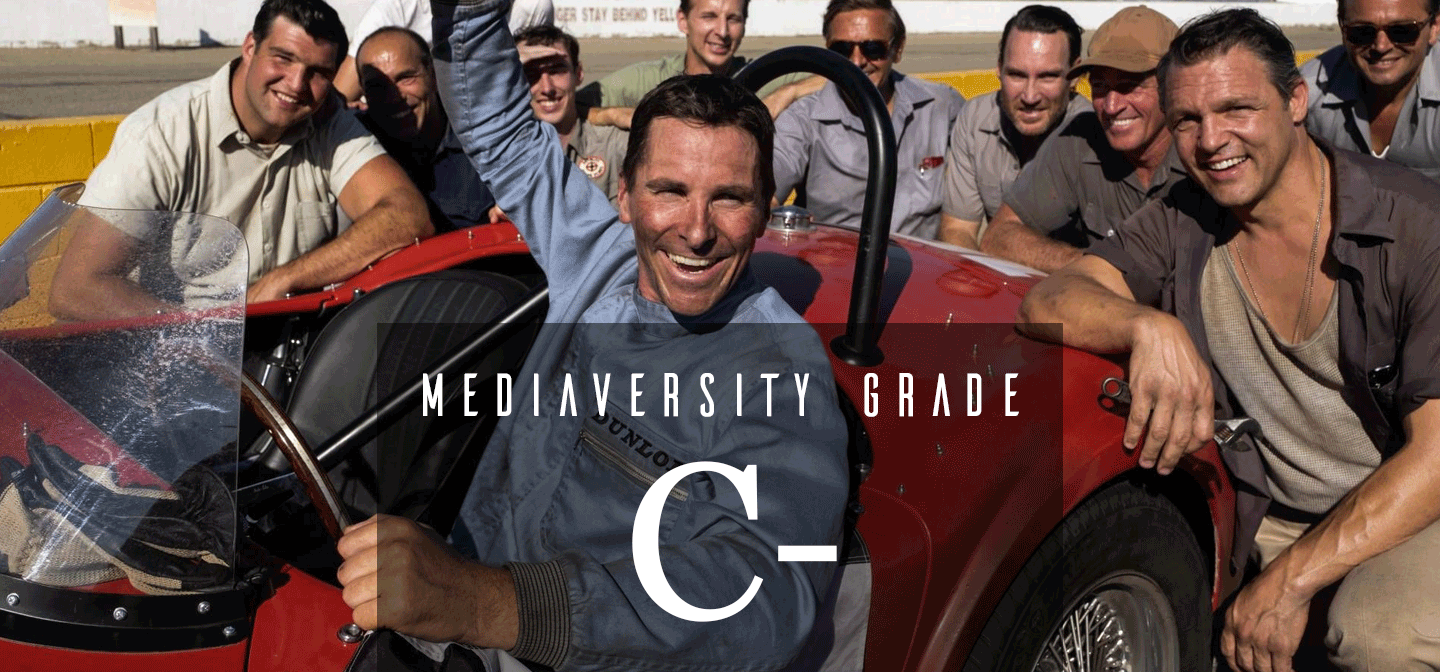
Ford v. Ferrari (2019)