
Law & Order - Seasons 1-26
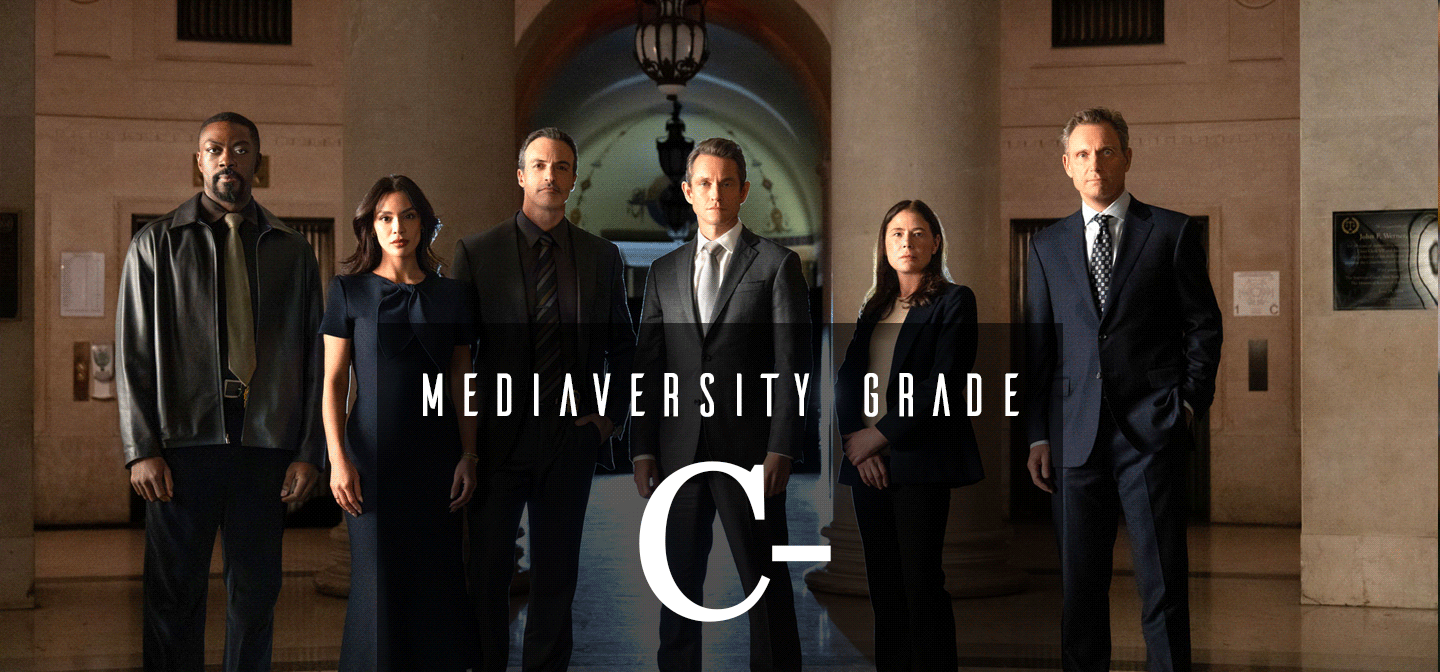
“Law & Order thrusts women and queer people into melodramatic roles as killers and victims, yet underrepresents them as human beings who work with the law.”
Title: Law & Order
Episodes Reviewed: Seasons 1-26
Creator: Dick Wolf 👨🏼🇺🇸
Writers: Richard Sweren 👨🏼🇺🇸 (55 eps), René Balcer 👨🏼🇨🇦🇺🇸 (50 eps), Ed Zuckerman 👨🏼🇺🇸 (38 eps), and various
Reviewed by Monique 👩🏾🇺🇸
—SPOILERS AHEAD—
Technical: 3.75/5
Law & Order’s procedural style has become a go-to template for many crime dramas. It follows New York City detectives as they track down and interview suspects, find evidence, and hand their findings to the District Attorney’s office, which then prosecutes the perpetrator.
While shows like this existed before, such as spiritual ancestor Dragnet (1951–59), Law & Order brought the format to greater, more lucrative heights. Using “ripped from the headlines” stories, detectives and lawyers get caught up in each case’s politics and social dynamics. At its most compelling, the show has characters navigate moral gray areas.
Law & Order’s earliest work was its tightest. Still, in the vein of many long-running shows, later seasons leaned into the dramatic flourishes that now define later Dick Wolf shows: soapy, improbable storylines like those in the One Chicago franchise, featuring dirty cops, violent tactics, medical mysteries coming into the ER, and more.
Gender: 2.5/5
Does it pass the Bechdel Test? YES, but barely
Law & Order has prominent female characters, but the precinct and DA’s office are male-driven. The police force has only had one female commanding officer in the show’s history so far: Lieutenant Anita Van Buren (S. Epatha Merkerson). (She’s also the only Black lieutenant.) Van Buren is portrayed as powerful, true, but women can only be so empowered when they rarely speak to one another. At most, she might interview a female suspect, or a female Assistant District Attorney might meet with a woman involved in a case. Otherwise, female characters usually only interact with the men in their lives.
In addition to fewer roles, gender-based tropes develop over the series’ run. A recurring formula is a female ADA partnering with the longstanding character of Executive ADA Jack McCoy (Sam Waterson). Whereas McCoy sticks around for 19 seasons, ADAs act like a revolving door for women to come and go. McCoy’s character starts to feel paternalistic as he pairs up with younger, less experienced female partners who swap out every few seasons.
To be fair, McCoy reports to a woman in Season 11: District Attorney Nora Lewin (Dianne Wiest). But for the rest of the time, and after McCoy becomes DA himself, Law & Order shows male lawyers calling the shots.
Bizarrely, women are disproportionately shown as criminals. A 2017 paper notes that while women only make up 10% of murder arrests in New York City, in the series, they comprise between 40% and 60% of murder suspects. Women are also featured as victims of crime more often—at least 40% of the series’ victims (compared to 20% in real life). In short, Law & Order skews the image of women, thrusting them into melodramatic roles as killers and victims, yet underrepresenting them as human beings who work with the law.
Race: 3/5
Race gets complicated in Law & Order, as its faux-journalistic approach clashes with Hollywood’s penchant for stereotyping. On the surface, characters appear to be racially diverse. But the 2017 study that looks at gender representation in Law & Order also examines race, and it shows that only 10% of the series’ murder victims are Black, when in reality, Black people make up about 50% of people murdered in the U.S. In addition, the series seldom shows non-Black people of color as victims, even though Native Americans and Latinos have higher homicide rates than white people. Above all, whiteness—white maleness, in particular—over-indexes on Law & Order, whether you’re seeing a cop, a lawyer, or a criminal on your screen.
Having people of color portray cops on television has also gotten dicier as years go by. With viewers becoming more aware of “copaganda,” showing people of color engaging in police brutality serves a bigger racial and political agenda. Namely, it provides racial cover for a system born of white supremacy. However, people of color are cops in real life, and not every cop lives by the “thin blue line” mindset.
When it comes down to it, Law & Order seems fair on the surface in how it portrays cops and criminals. As the seasons go on, writers try to correct some of their earlier mistakes. Later episodes, especially those after George Floyd’s murder in 2020, leave behind clichés like depicting people of color as gang members and try to address racial bias in policing. But depending on the viewer, your mileage may vary with the show’s approach to race.
LGBTQ: 1.5/5
Law & Order doesn’t focus on LGBTQ issues, except when it’s the subject of a “special episode.” For example, Season 5’s “Pride” stars John Cameron Mitchell, creator and star of Hedwig and the Angry Inch (2001). But stereotypes about gay people (particularly queer sex workers) persist, and they’re portrayed as outside the norm of “regular” society. These episodes can also come off as forced, even when well-intentioned. In “Pride,” which is based on the 1978 assassination of gay politician Harvey Milk, a councilman is thought to be killed by his conservative opponent as a hate crime. The episode treats homophobia as a scourge and makes a point of showing how anti-queerness is upheld by a justice system and society that’s slow to learn better.
Some episodes end with queer characters dying (including “Pride”)—a trope so common, it’s earned the moniker “Bury Your Gays.” To add insult to injury, guest characters, such as bisexual sex worker/hitwoman Chesley Purcell (Delissa Reynolds) in Season 9’s “Sideshow,” aren’t only killed, but they’re murderers as well. Another, Maggie Hayes (Tessa Kim), is killed in Season 20’s “For the Defense” for being a witness to a murder.
Throughout Law & Order thus far, there has been only one queer character in the main cast. ADA Serena Southerlyn (Elisabeth Röhm) appears in Seasons 12-15, but the audience only finds out that she’s gay in her final episode, when she asks if she’s being fired because of her sexuality. All in all, Law & Order has no idea what to do with queer characters beyond sensationalizing them.
Deduction for Disability: -0.25
Thankfully, Law & Order doesn’t often reach for mental illness as the cause of a crime, making it better than many other procedurals that use it as a lazy plot point. But when it does focus on the topic, it still falls prey to melodramatic stereotypes, such as showing people with mental disorders as dangerous and separate from society.
In Season 6’s “Pro Se,” an unhoused attorney with schizophrenia, James Smith (Denis O’Hare), demands to represent himself in court against multiple murder charges. The episode tries to say that most people with schizophrenia aren’t violent, but then backtracks on its own statement. A clinician singles out James as a “specific case” and implies that he is actually the one carrying out the murders.
Mediaversity Grade: C- 2.63/5
As the hit series that spawned several spin-offs over decades, Law & Order competently shows how applying the law can quickly become morally gray. It also critiques the criminal justice system and shows that detectives and lawyers aren’t above scrutiny. However, the series still can’t escape its outdated portrayals of race, sexuality, gender, and mental illness.
Like Law & Order? Try these other “ripped from the headlines” TV shows.
Criminal Minds - Season 15
Murphy Brown - Season 11
Law & Order: SVU - Seasons 1-20