
It's Always Sunny in Philadelphia - Seasons 1-17
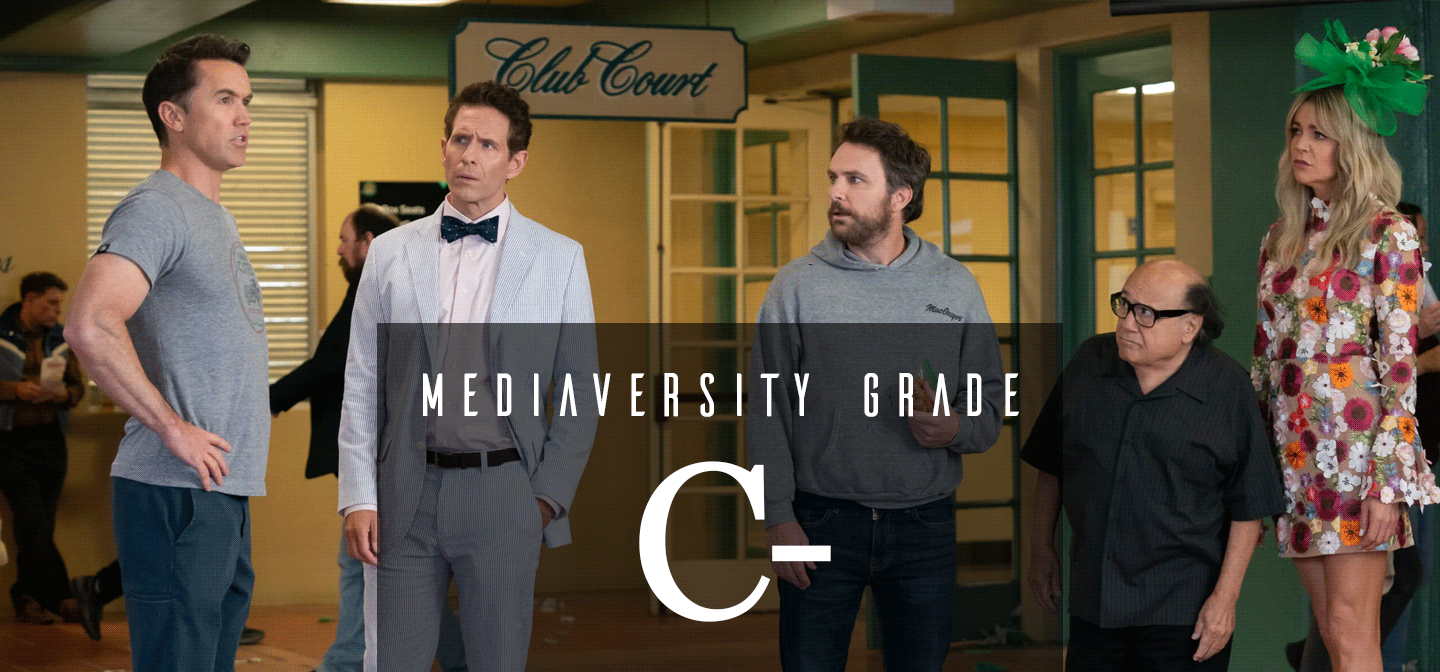
“Even as It’s Always Sunny in Philadelphia drops the ball on gender and racial representation, it has a moving storyline about queerness.”
Title: It’s Always Sunny in Philadelphia
Episodes Reviewed: Seasons 1-17
Creator: Rob Mac 👨🏼🇺🇸
Writers: Charlie Day 👨🏼🇺🇸 (63 episodes), Rob Mac 👨🏼🇺🇸 (61 episodes), Glenn Howerton 👨🏼🇺🇸 (42 episodes), David Hornsby 👨🏼🇺🇸 (33 episodes), Scott Marder 👨🏼🇺🇸 (25 episodes), Rob Rosell 👨🏼🇺🇸 (24 episodes), and others
Reviewed by Sam 🧑🏻🇺🇸🌈
Technical: 3.5/5
Created by Rob Mac (Mythic Quest), FX show It’s Always Sunny in Philadelphia premiered in 2005 and broke the mold by tackling controversial topics like welfare and gun control in equally controversial ways. It follows a group of friends—Mac McDonald (Rob Mac), Charlie Kelly (Charlie Day), and twins Dee Reynolds (Kaitlin Olson) and Dennis Reynolds (Glenn Howerton). Dubbed “The Gang,” they live in Philadelphia and run a bar with Dee and Dennis’ rich and unhinged father, Frank Reynolds (Danny Devito).
This sitcom has countless iconic moments that have produced fun memes, like Charlie pointing to a conspiracy corkboard. But the series’ quality begins to decline around Season 12. A few episodes in recent years have been great, such as “The Gang Carries A Corpse Up A Mountain” (Season 15, Episode 8), in which Charlie comes to terms with being abandoned by his father. But most are forgettable—a ratio that has flipped since its golden days.
Gender: 2.5/5
Does it pass the Bechdel Test? Sometimes
As part of the main cast, Dee does much of the heavy lifting on topics related to women and feminism, serving as an example of a “bad” woman with her tendency to be rude and crass. It’s a clever subversion of the one-note female character, but It’s Always Sunny in Philadelphia still operates heavily through the male gaze by making Dee the constant butt of the joke. The rest of The Gang often call her a “bird” and tell her to shut up more than they do to other male characters, compelling the audience to laugh at Dee.
Additionally, because the rest of The Gang is male, that doesn’t leave much screen time for other women to play a part. Two prominent recurring characters are The Waitress (Mary Elizabeth Ellis), a woman who lost her job because of The Gang, and Artemis (Artemis Pebdani), Dee’s friend from acting class. However, both are tied to relationships with male characters: The show positions The Waitress as the victim of Charlie’s obsessive stalking and Artemis as the subject of a raunchy sexual relationship with Frank.
The show acknowledges its own shortcomings on this front, poking fun at its own frequent failure of the Bechdel test with “The Gang Beats Boggs: Ladies Reboot” (Season 13, Episode 3), in which Dee arranges an all-female group to take on the Wade Boggs drinking challenge. But this self-referential episode is no substitute for simple inclusion—either through more balanced casting or character development. It merely reinforces the show’s male-centric approach and tendency to portray women in a reductive light.
Race: 1/5
For a show with an entirely white main cast and startling lack of characters of color in supporting or minor roles, it isn’t surprising that It’s Always Sunny in Philadelphia mishandles racial commentary. At its most wrong-footed, “Dee Reynolds: Shaping America’s Youth” (Season 6, Episode 9) was pulled off streaming platforms for featuring Mac in blackface in a Lethal Weapon parody. Although the use of blackface was intended to satirize white ignorance, perpetuating this racist form of mockery is more regressive than it is progressive.
The creators have since apologized for the episode and attempted to fix this with “The Gang Makes Lethal Weapon 7” (Season 15, Episode 2), in which The Gang tries to right their wrongs by hiring a Black character (Marcuis Harris) instead of using blackface. But these efforts still don’t address the fact that the show defines race solely through white ignorance. It’s also unfortunate that behind the lens, the show’s creator and writers’ room has been almost entirely white for most of its run. More inclusive hiring could help the show look beyond the lens of whiteness and meaningfully critique racism.
LGBTQ: 3.5/5
But even as It’s Always Sunny in Philadelphia drops the ball on racial representation, Mac has a very moving storyline about queerness. We meet Mac when he proudly identifies as a homophobe. But over time, the show hints at his sexuality with references to his attraction to men. He eventually comes out in “Mac Finds His Pride” (Season 13 Episode 10), an emotional episode about queerness featuring an honest depiction of what coming out to a homophobic family member can look like. It’s clear that the writers care deeply about portraying queerness with authenticity, and with Rob Mac himself growing up with two moms and two gay brothers, the actor has a personal stake in the storyline. On screen, It’s Always Sunny in Philadelphia deftly avoids making Mac’s sexuality the butt of the joke, especially compared to how often it does so with women and with people of color.
That being said, the sitcom still has a bad record with transgender representation. The Gang calls Carmen (Brittany Daniel), a transgender woman whom Mac meets, a derogatory slur and makes jokes about her anatomy, regarding her as less than human. The show later tries to assert its support for the trans community with “The Gang Solves The Bathroom Problem” (Season 13, Episode 6), but the episode treats transgender rights as a simple issue of which bathroom to use. So, while the show might have great gay representation, it still falls short of sensitive treatment for the other parts of the LGBTQ community.
Bonus for Religion: +0.25
In addition to focusing on his sexuality, the show also centers Mac’s Catholic conservatism and how it influences his beliefs. It’s uncommon for sitcoms to address religion openly, but It’s Always Sunny in Philadelphia offers a biting take on Christianity by having Mac wildly misinterpret what he believes is the “word of God.” With his character, Rob Mac intended to illustrate the hypocrisy of religious conservatives who express support for beliefs only when it benefits them. This social commentary exemplifies how the show can successfully use satire to push the envelope in comedy.
Mediaversity Grade: C- 2.69/5
Considering how well It’s Always Sunny in Philadelphia handled Mac’s queer storyline, the writers clearly have the ability to address real-world issues with both honesty and humor. It’s a shame that the show is 20 years in and still struggling to find that balance in other areas.
Like It’s Always Sunny in Philadelphia? Try these other comedies with main characters you love to hate.
Mythic Quest
Veep - Seasons 1-6
The Office