
Wuthering Heights
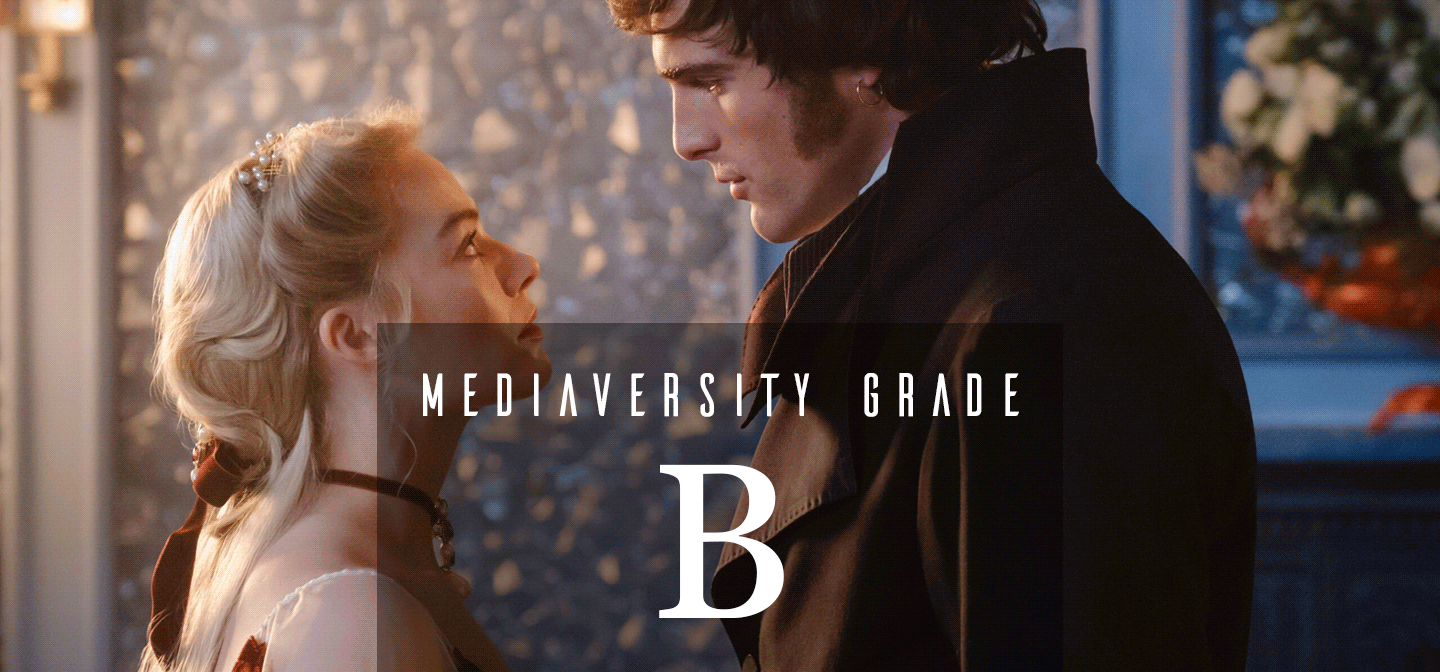
“The romance genre abounds with toxicity, but in ‘Wuthering Heights,’ I felt safe in Emerald Fennell’s hands.”
Title: “Wuthering Heights” (2026)
Director: Emerald Fennell 👩🏼🇬🇧
Writers: Emerald Fennell 👩🏼🇬🇧 based on the novel by Emily Brontë 👩🏼🇬🇧
Reviewed by Li 👩🏻🇺🇸
Technical: 4/5
As someone who furtively watched Heated Rivalry alone in the dark—after the kids went to bed and my partner was downstairs—I’m all for binging indulgent romances in the privacy of your own home. But Emerald Fennell’s latest freaky experiment, “Wuthering Heights,” is a dish best served hot, and with company.
In the vein of a campy horror movie, the film throws out icky moments made companionable when an entire theater groans in stereo. (Leeches, gross!) Dark humor, like when formerly demure ward Isabella (Alison Oliver) appears in manacles and masochistically barks like a pup, draws incredulous laughs to echo your own. Then there’s lovelorn Heathcliff’s (Jacob Elordi) one-handed lift of Catherine (Margot Robbie) by the corset strings. There’s no better reason to go to the movies than having a room full of strangers gasp in unison. That’s cinema, baby!
Plot? Unimportant. We’re just here to live in Fennell’s world—gaudy costumes fit for a ball (of the vogue variety) and weirdness everywhere you look, such as Catherine’s padded bedroom walls, veiny and bosom-like, painted to match her skin color.
On the one hand, the stylish irreverence takes away from the central romance, and Heathcliff and Catherine’s heavy, panting ardor borders on parody. Yet the ample screentime devoted to their love scenes feels earnest, as if viewers are meant to luxuriate in their lust—which I mostly found repetitive. (How many tongue kisses do you really need to see in one night?) Ultimately, “Wuthering Heights” can’t seem to decide if it wants to be a bodice-ripper or a punchy satire. By trying to be both, it’s a little of neither.
Gender: 5/5
Does it pass the Bechdel Test? YES
While the narrative didn’t sell me on technical merit, I’ll gladly fuck with the way Fennell writes women, any day. As I sat in my seat, I kept returning to a sense of gratitude at watching these messy bitches make mistakes and destroy everything around them.
On a personal level, I’m especially sensitive to seeing sexual violence against women on screen. You can imagine my track record for watching “dark love story” tentpoles—Twilight, Fifty Shades of Grey, and the like. (Let’s say that there’s more cringing than swooning.) The romance genre abounds with scenes of dubious consent and creepy stalking. Enter “Wuthering Heights,” where a maid gets bridled like a horse and ridden hard, and the aforementioned Isabella is humiliated—and loves it. But these women are empowered.
Sometimes Fennell addresses consent literally. Heathcliff repeatedly asks a shell-shocked Isabella, “Do you consent?” as he names all the awful things he’ll do and say to her. (As the audience held its collective breath, Isabella squeaks “yes” to every degradation. CONSENT IS SEXY, Y’ALL.) Other times, it’s organically woven throughout: When Catherine and Heathcliff go head-to-head in their games of revenge, they do twisted and cruel things to each other, but they’re on completely equal footing, which makes their power games intriguing rather than predatory.
I can only hope that future romances will adopt this balancing act. Dark, kinky romance doesn’t need someone transgressing your boundaries and gaslighting you to be steamy. I felt so safe in this director’s hands and with these women, who all suck but are so complicated, flawed, and bracingly themselves.
Race: 3/5
Like Emily Brontë’s original novel, in which the characters are implied to be almost all white, “Wuthering Heights” features mostly white actors. But whereas Heathcliff is introduced as a “dark-skinned gipsy" in the book, he’s played by white actor Elordi here.
Thankfully, though, Fennell’s work lives in the 21st century, and she indulges in a Bridgerton-style of racial consciousness. That is, she introduces characters of color into non-stereotypical roles and acknowledges their ethnicities on a need-to-know basis. It’s an improvement on the lazier form of diversity box-ticking, where people of color exist but actual mentions of race are given a wide berth. But neither does “Wuthering Heights” go deeper, using racial identities to inform and expand character arcs.
Specifically, we meet Catherine’s caregiver, Nelly, who has a substantial role in the film. Played by Vietnamese American actors—Vy Nguyen as a girl and Hong Chau as an adult—she’s described as the “bastard” child of a lord, hinting that Nelly is mixed-race. She’s a great character, serving as the audience’s avatar who rolls her eyes as Heathcliff and Catherine’s antics before tiring of their nonsense and joining in with her own chaotic meddling.
In another significant role, Catherine’s husband, Edgar, is played by British actor Shazad Latif, who’s multiracial with Pakistani heritage. His racial background is never referenced, however, falling more squarely into the realm of colorblind casting—not unwelcome, but not particularly progressive.
Mediaversity Grade: B 4.00/5
While I enjoyed seeing “Wuthering Heights” in a group setting, chuckling and squirming along with my seatmates, I’m not sure I would’ve felt the same watching the film alone at home. Fingers running through goopy egg yolk, or the close-up on a snail, might simply be revolting without like-minded folks nearby to soften the blow. And the endless angst probably would’ve bored me had I not the activity of noticing other people’s reactions to pass the time.
But long after it’s been out of theaters, “Wuthering Heights” will still have its demented, dizzyingly strong women at its core. For that reason alone, it’s worth a watch to see how romance can still be smutty and power-driven, without the toxicity.
Like “Wuthering Heights”? Try these other dark tales of obsession.
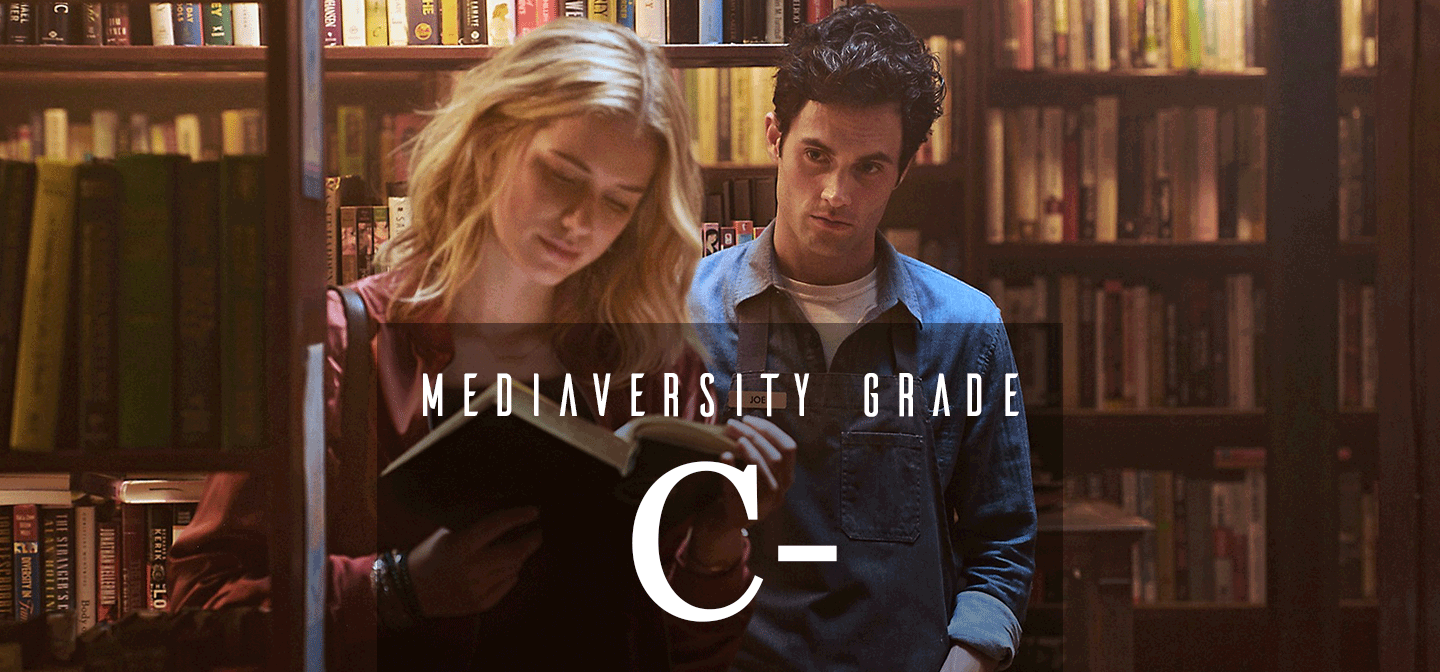
You - Seasons 1-2
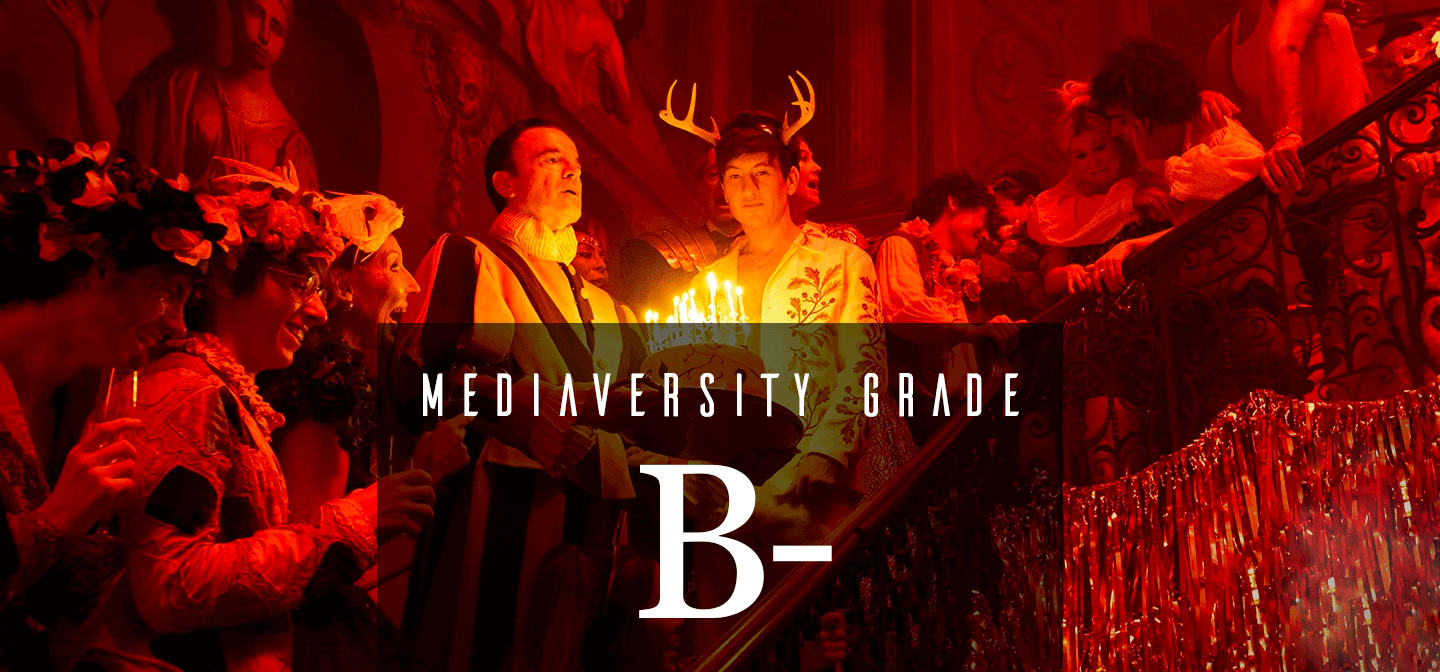
Saltburn (2023)
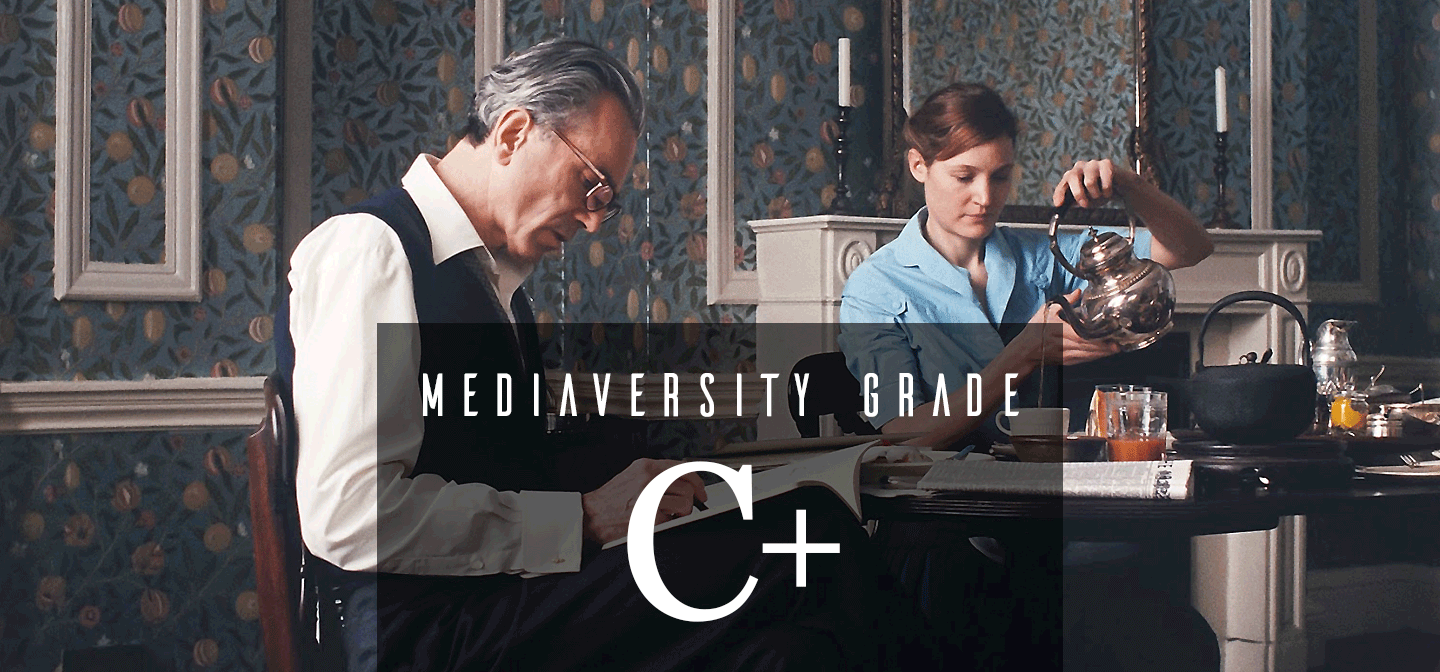
Phantom Thread (2017)