
Your Mother Your Mother Your Mother
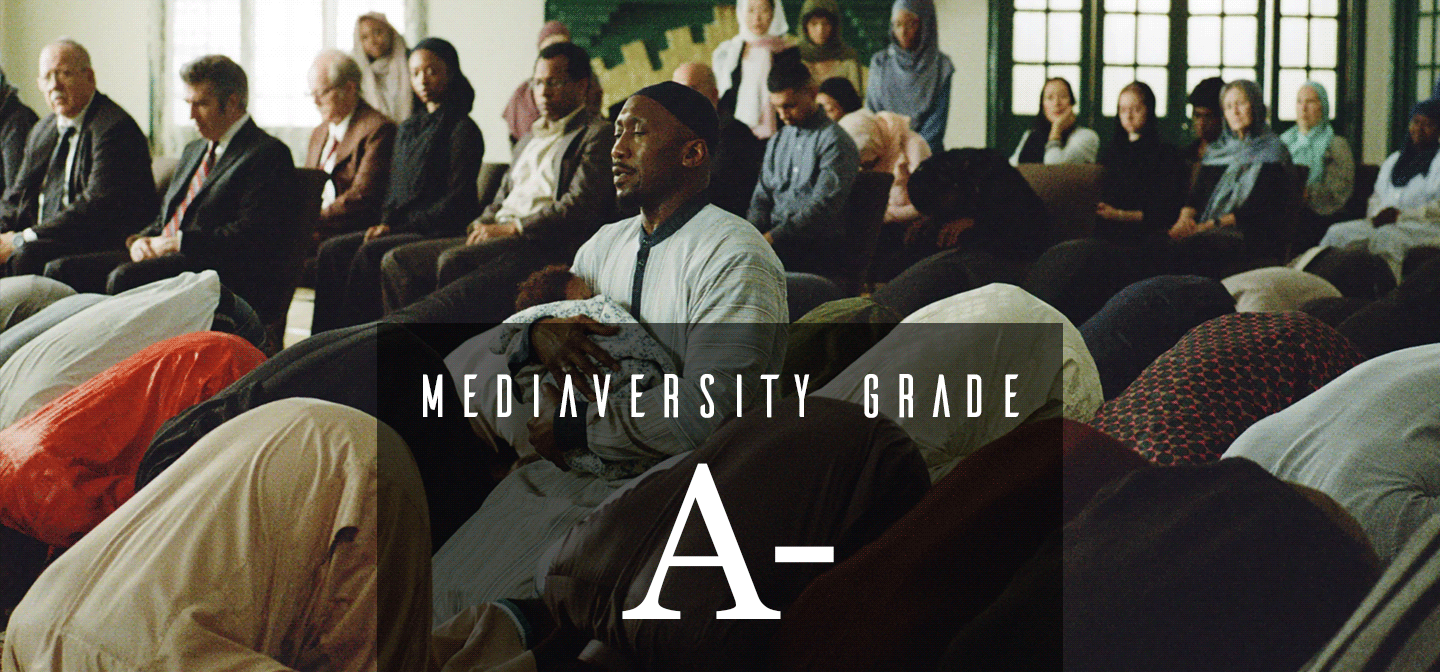
“Despite using a sexist genre trope to initiate the action, Your Mother Your Mother Your Mother more than makes up for it.”
Title: Your Mother Your Mother Your Mother (2026)
Director: Bassam Tariq 👨🏽🇵🇰🇺🇸
Writer: Bassam Tariq 👨🏽🇵🇰🇺🇸
Reviewed by Anthony Marcusa 👨🏼🇺🇸🇨🇦🌈♿
Technical: 4/5
Bassam Tariq’s Your Mother Your Mother Your Mother is the director’s second narrative feature, a unique thriller that blends faith, family, and humor into a mesmerizing story. Muslim dad Latif (Mahershala Ali) makes money as a righteous hitman in Houston, Texas, but when his wife dies and he’s given newfound duties as a single parent, something has to give.
Latif has three children. His thoughtful, responsible eldest, Fatiha (Adia), helps her dad care for her younger siblings. Ten-year-old Qadir (Jahleel Kamara) is a curious and devout Muslim, though he’s also very much a Gen Alpha kid. (He’s all about playing video games, and at one point, he says that a building looks “sus.”) But infant Aziza (Brooklyn Hughes and Jaxon Hughes) drives the narrative: She can’t tolerate baby formula and throws it up. Without his wife to provide breast milk, Latif seeks aid, both from his Muslim community and from social services.
During his quest, Latif’s mobster employer, Mike (Laith Nakli), pushes for a new job, demanding that Latif kill Pastor Hwan (John Cho), a former soldier turned evangelical leader who spreads Christianity through violence—and who has it in for Mike’s nephew, Hatty (Abubakr Ali). The story unfolds over a short period of time as Latif juggles obligations to his children, mosque, and employer. Ali's engrossing performance and Adia's terrific turn ground the story amid violence and absurd moments, such as when Latif walks in on Fatiha watching a video of two furries cuddling in bed.
Sometimes Tariq’s film falls into standard action-movie tropes, like killing a supporting character at the end of the second act or making it too easy for Latif to infiltrate the villain’s space. Still, the energy, superb acting, and an unexpected final scene make this an entrancing watch.
Gender: 3.5/5
Does it pass the Bechdel Test? YES, but barely
The majority of the cast are men, but Latif’s wife, Khadijah (Shakirah DeMesier), and daughter Fatiha have notable roles. Unfortunately, Khadijah falls into the tiresome “Dead Wife” trope—a woman who tragically dies at the start of the movie to kick off a man’s narrative arc. Seen briefly in photographs and flashbacks, she’s at least treated with respect, with the film's title positioning her as a sacred, pivotal figure in her husband’s and children’s lives.
Better yet, Fatiha is central to the story. After Latif, she gets the most screen time of any other character. She possesses agency, respect, and her own story arc. In a smaller role, sex worker Fugazi (Tiffany Boone) has a few scenes where she temporarily cares for Aziza. The film doesn't judge or debase her profession; instead, it shows her as generous, hopeful, and maternal.
Race: 5/5
The main cast comprises exclusively people of color, including Latif’s family, who are Black Americans. In supporting roles, Pastor Hwan is Korean American, Imam Abdul Malik is played by Italian-Black actor Giancarlo Esposito, Mike is played by British Syrian Nakli, and Hatty is played by Egyptian-born American Abubakr Ali. Many actors with only a handful of scenes or lines, as well as background actors, are also people of color. The main characters are fully developed and complex, while supporting characters are given purpose and meaning as well.
Bonus for Religion: +1.00
Islam is central to the story. Latif and his family pray (or at least discuss why they’re not praying), fast, and attend mosque frequently. They’re embedded in the Muslim community, with close ties to the wise, kindly Imam Abdul Malik. Muslim characters discuss ideas from the Quran and how they apply to their lives, exhibiting both curiosity and humor.
Furthermore, the film’s title comes from an Islamic hadith. It’s used as a dramatic storytelling device, uttered in the opening of the film. But the film doesn’t pigeonhole Muslim identity into one pious image. In his TED Talk, Tariq says he wants to show the diversity of Muslim life, and he does just that in Your Mother Your Mother Your Mother. On the one hand, Fatiha wears a hijab, and her little brother, Qadir, prays. Both also express creativity, ingenuity, and sexual curiosity. On the other hand, Mike is a violent mobster, and his nephew is a rich, obnoxious cryptobro who runs a porn empire with ads emblazoned with phrases like “Halal certified jizz.”
Tariq also says he wants to celebrate Houston’s religious diversity—an observation that struck him when he moved there for high school, as he shared during the Vancouver International Film Festival’s post-screening Q&A. On screen, viewers see Fatiha befriending (and potentially crushing on) a Latter-day Saint boy who lives in the same apartment complex. He and his LDS friends are friendly and polite, welcoming her and her family without question as Latif tries to get out of a tough spot. Even Pastor Hwan’s caricature of Christian extremism acknowledges the variety of faiths that coexist in Houston.
Mediaversity Grade: A- 4.50/5
Despite using the clichéd genre convention of killing a woman to kick off the action, Your Mother Your Mother Your Mother more than makes up for it. Unlike any other movie I’ve seen, it cleverly blends tension, humor, and thrills. Some moments are shocking, others laugh-out-loud, and some still are heartbreaking. It’s a credit to Tariq’s direction, as well as Mahershala Ali’s and Adia’s performances, that everything plays out so seamlessly.
Like Your Mother Your Mother Your Mother? Try these other Black- and brown-led action films with elaborate murder sprees.
Freaky Tales (2024)
Monkey Man (2024)

Proud Mary (2018)